SMS/Text 469-608-9944
Parashat Bereishit · Genesis 1:1–6:8

Bereishit: A Visual Journey

Ninety-six illustrated teaching slides from Benei Avraham walking through all seven aliyot of Parashat Bereishit and the haftarah Machar Chodesh (1 Samuel 20:18–42), from the architecture of creation to Noach finding grace. Tap any image to open the slideshow; use the arrows (or swipe) to move through all 96 slides.

Rishon · Genesis 1:1–2:3

First Portion
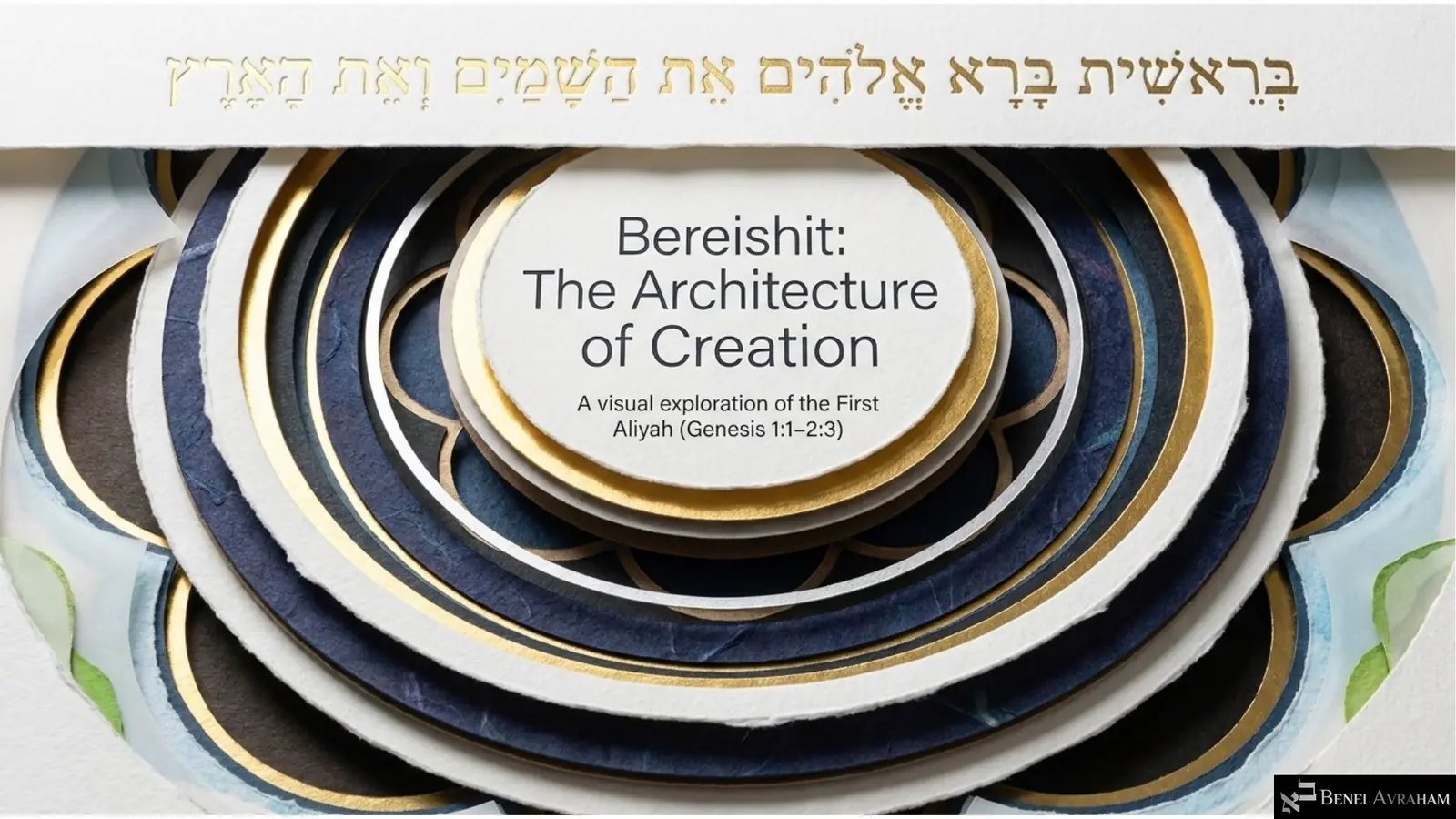
Bereshit: The Architecture of Creation — a visual exploration of the First Aliyah (Genesis 1:1–2:3)
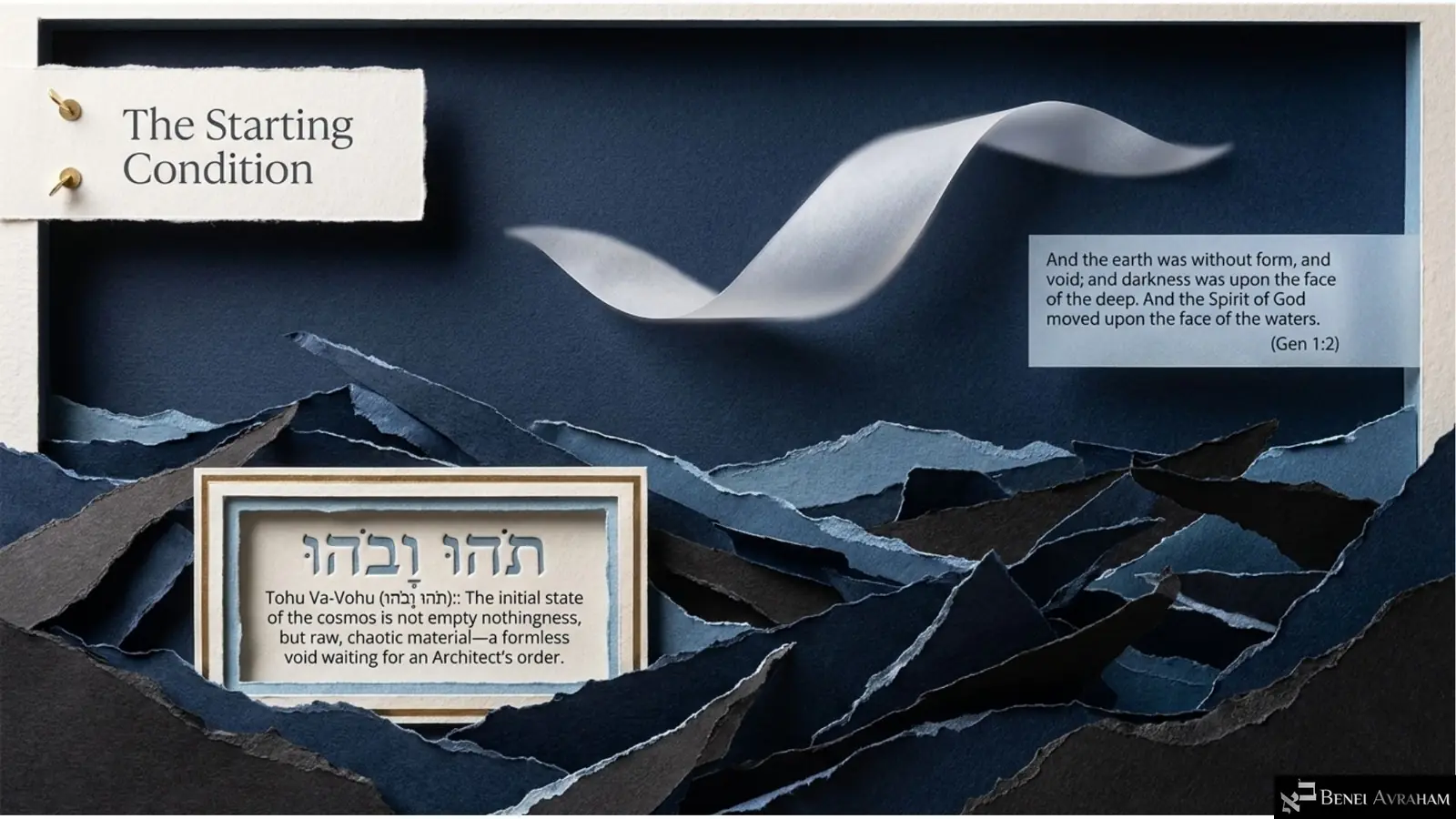
The Starting Condition: Tohu va-Vohu (Genesis 1:2)
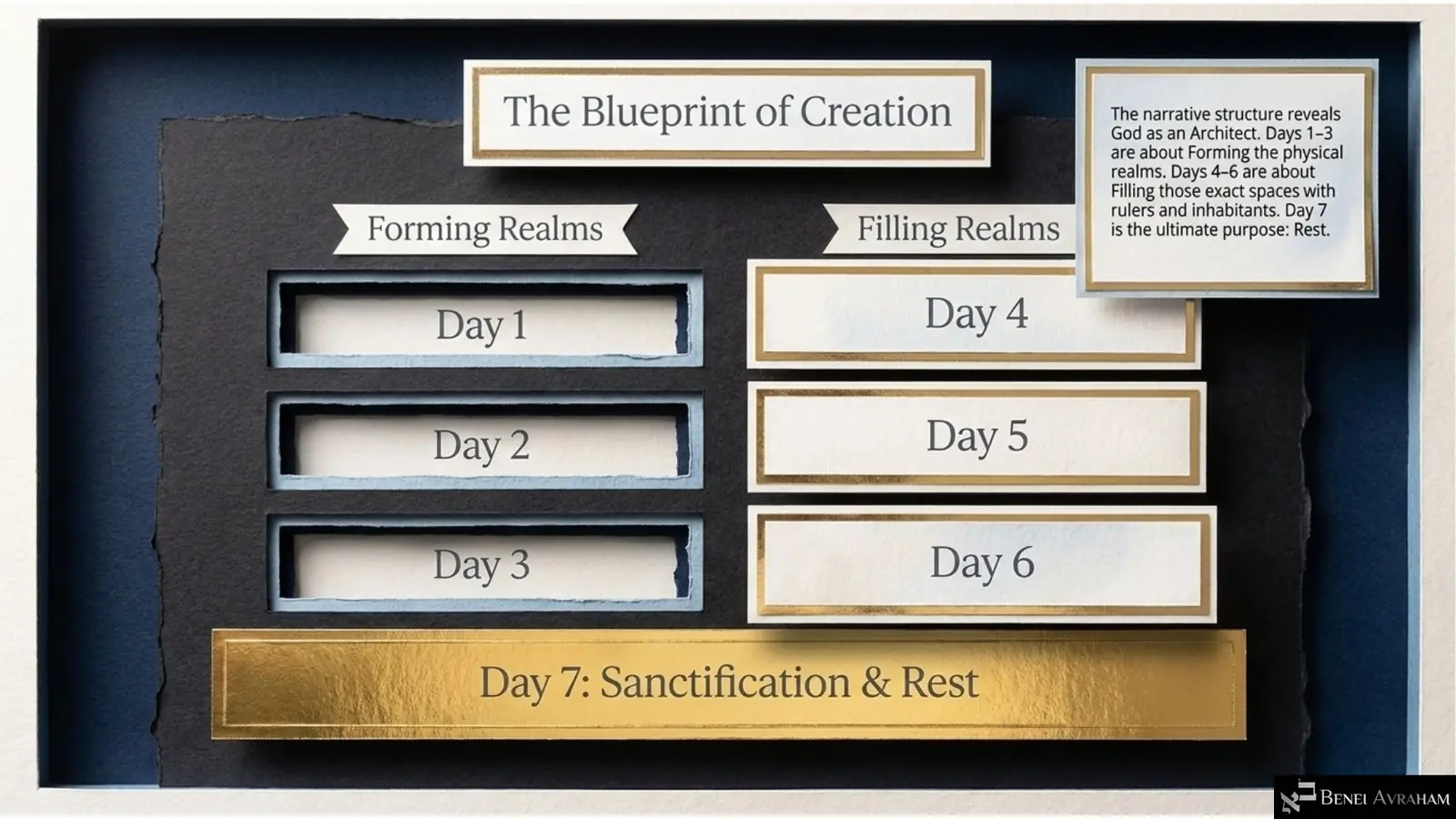
The Blueprint of Creation: Days 1–3 forming realms, Days 4–6 filling them, Day 7 rest
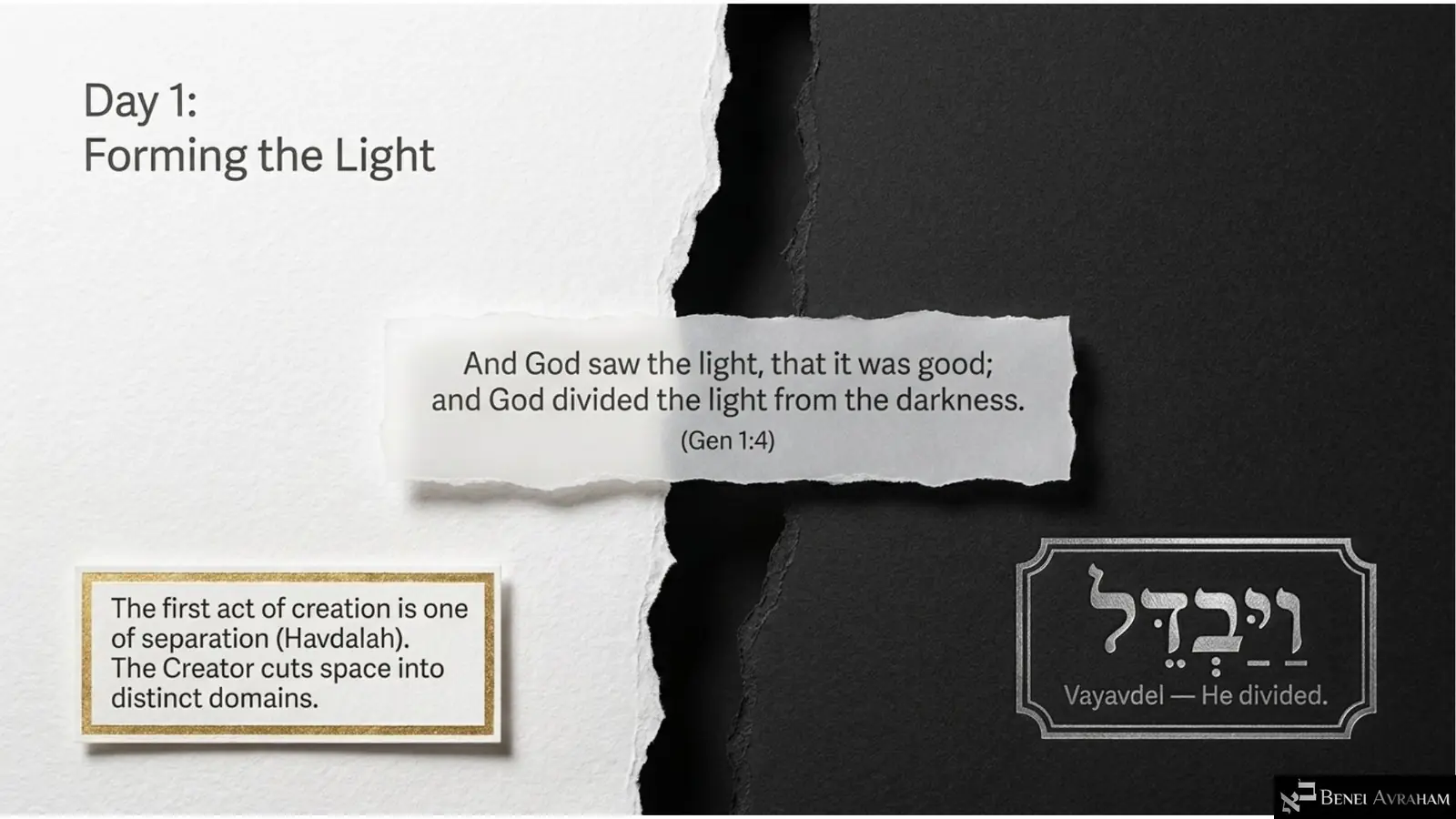
Day 1: Forming the Light (Genesis 1:4)
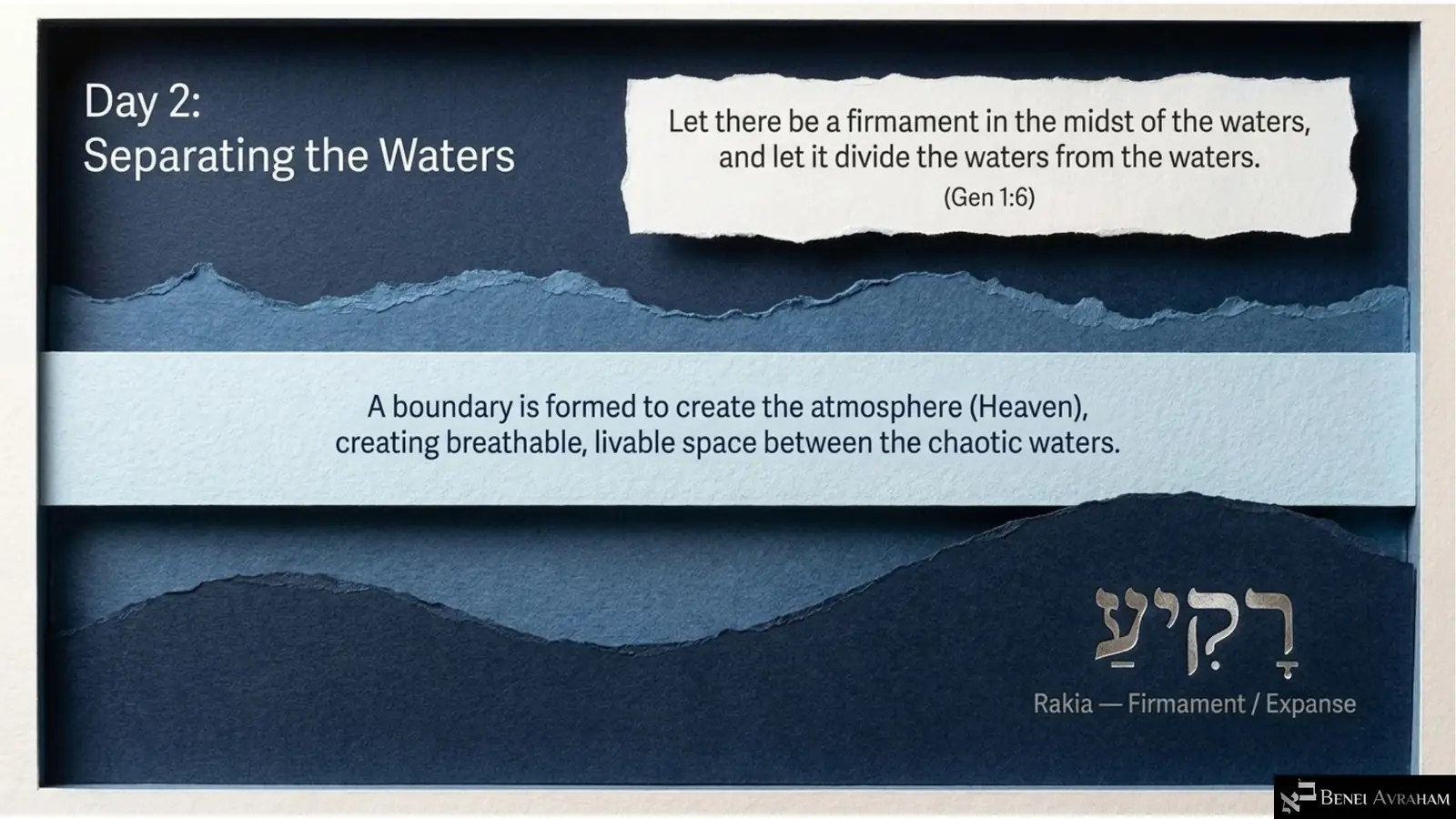
Day 2: Separating the Waters (Genesis 1:6)
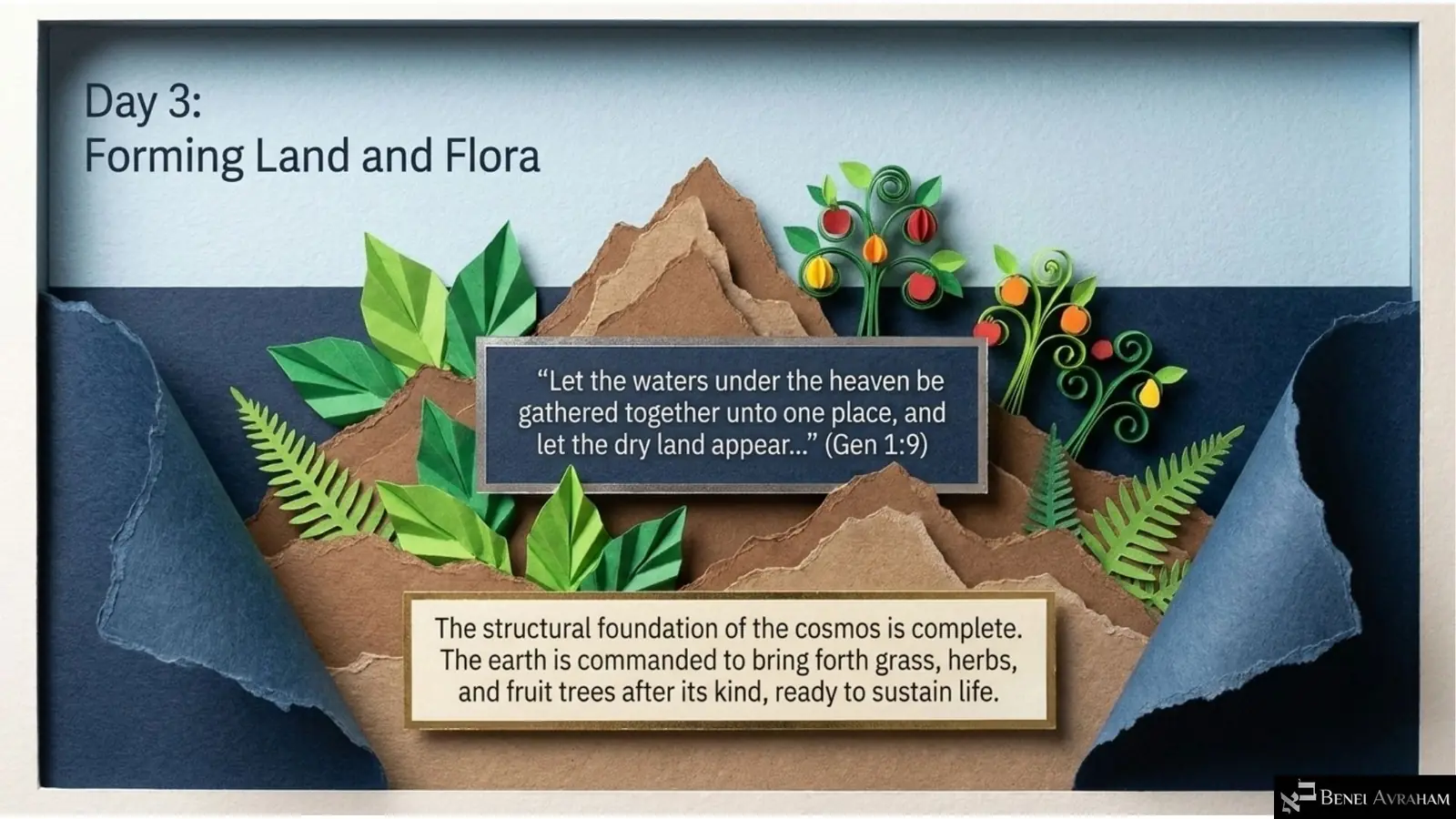
Day 3: Forming Land and Flora (Genesis 1:9)
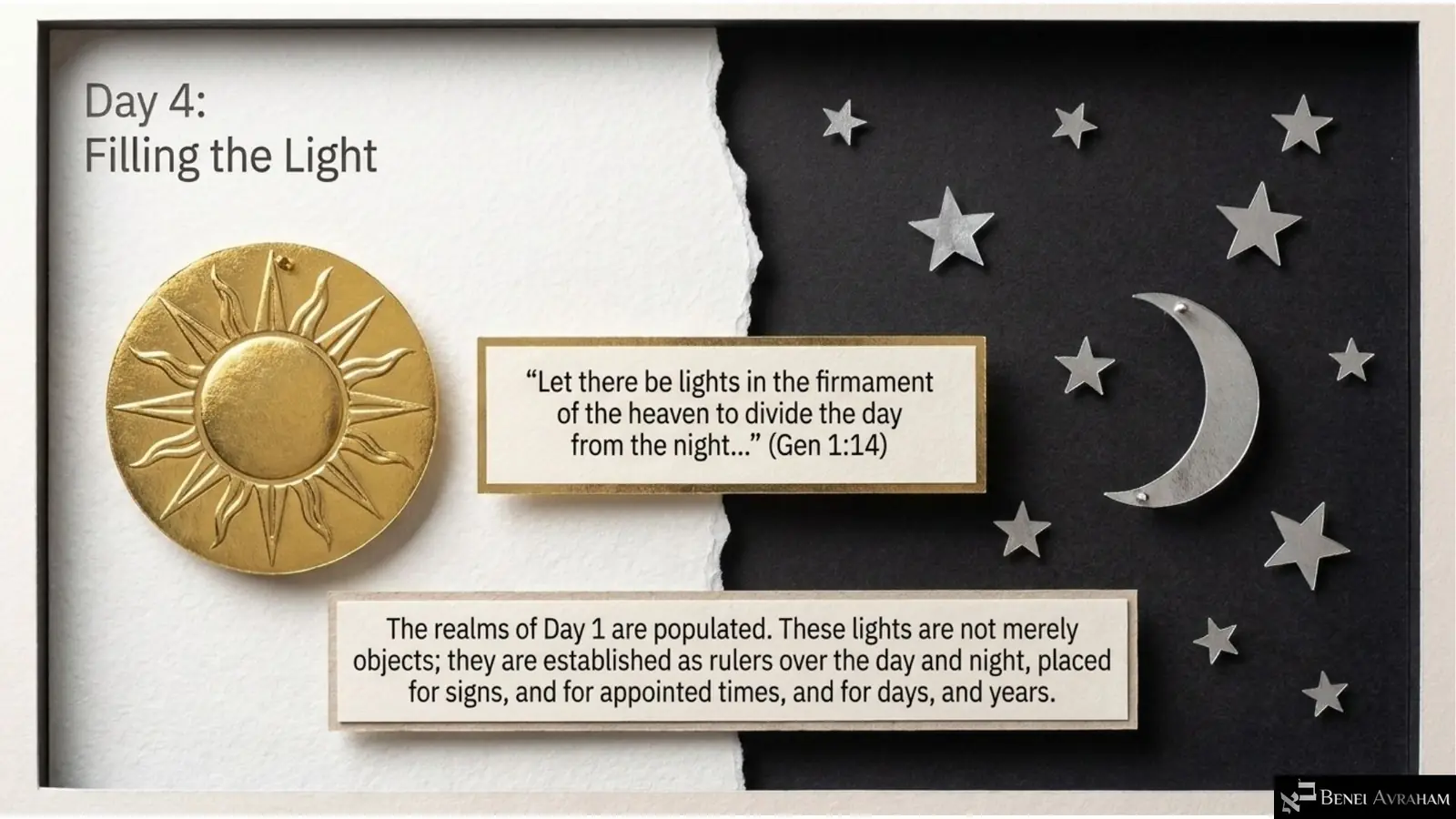
Day 4: Filling the Light (Genesis 1:14)
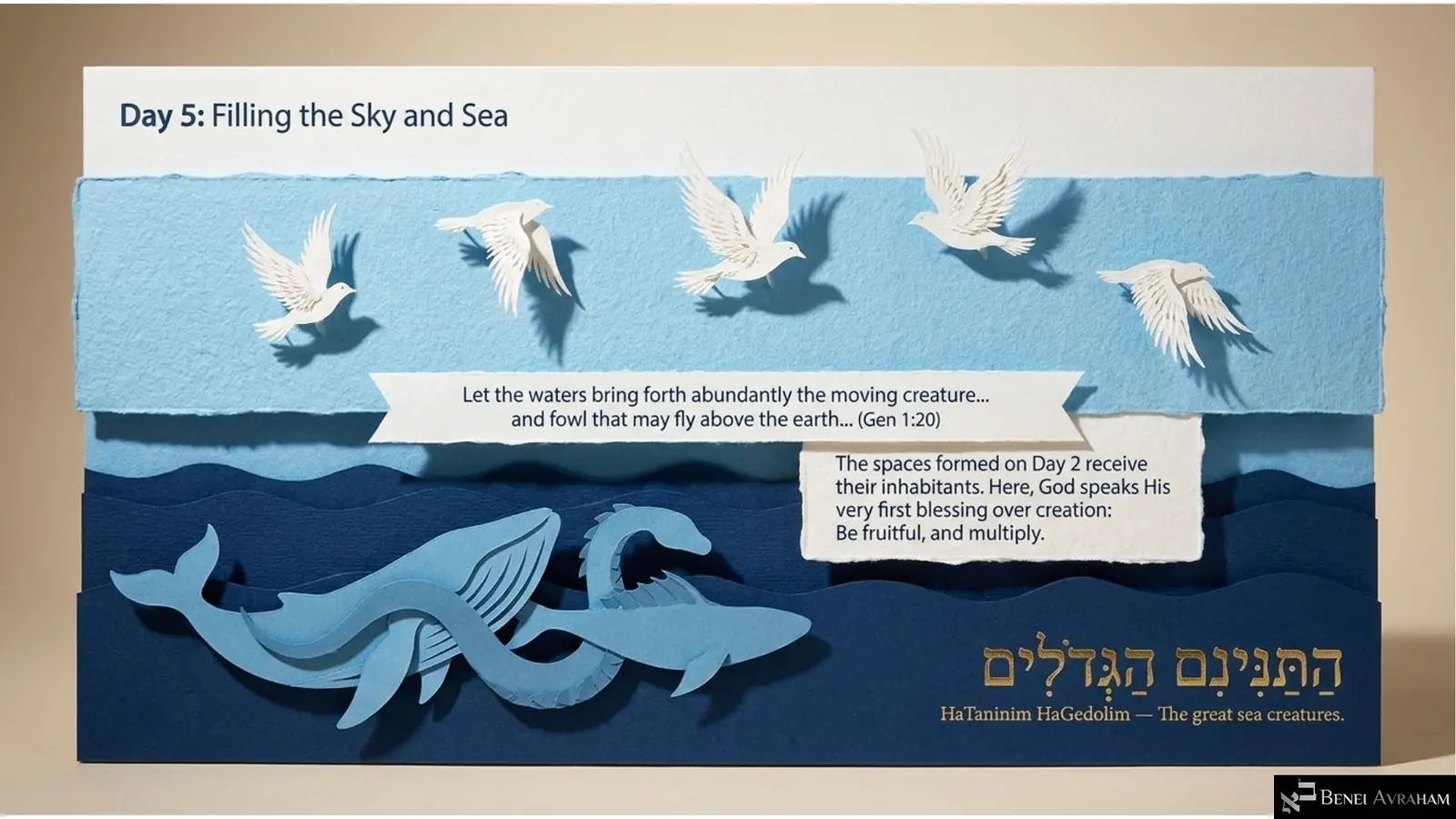
Day 5: Filling the Sky and Sea (Genesis 1:20)
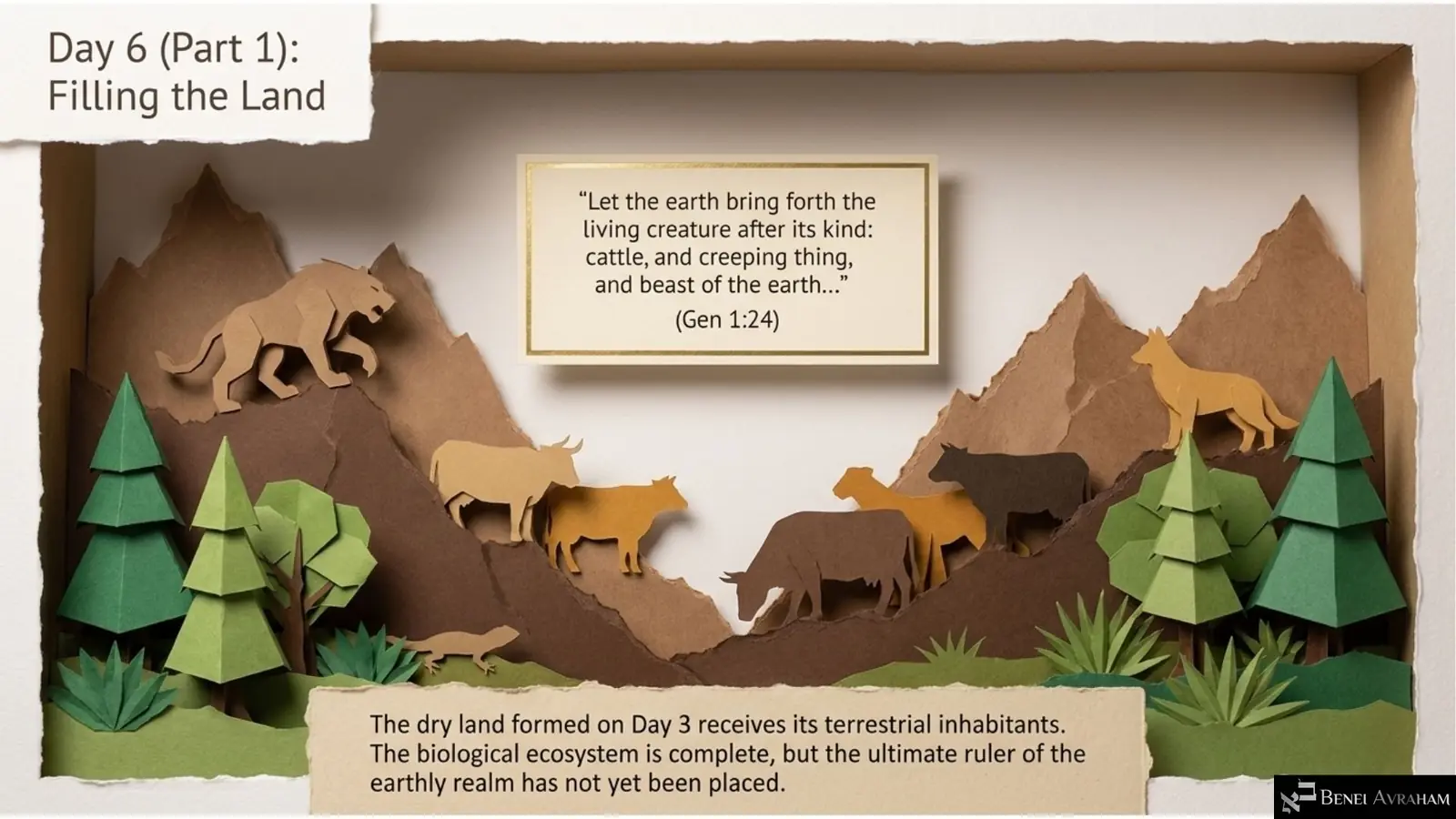
Day 6 (Part 1): Filling the Land (Genesis 1:24)
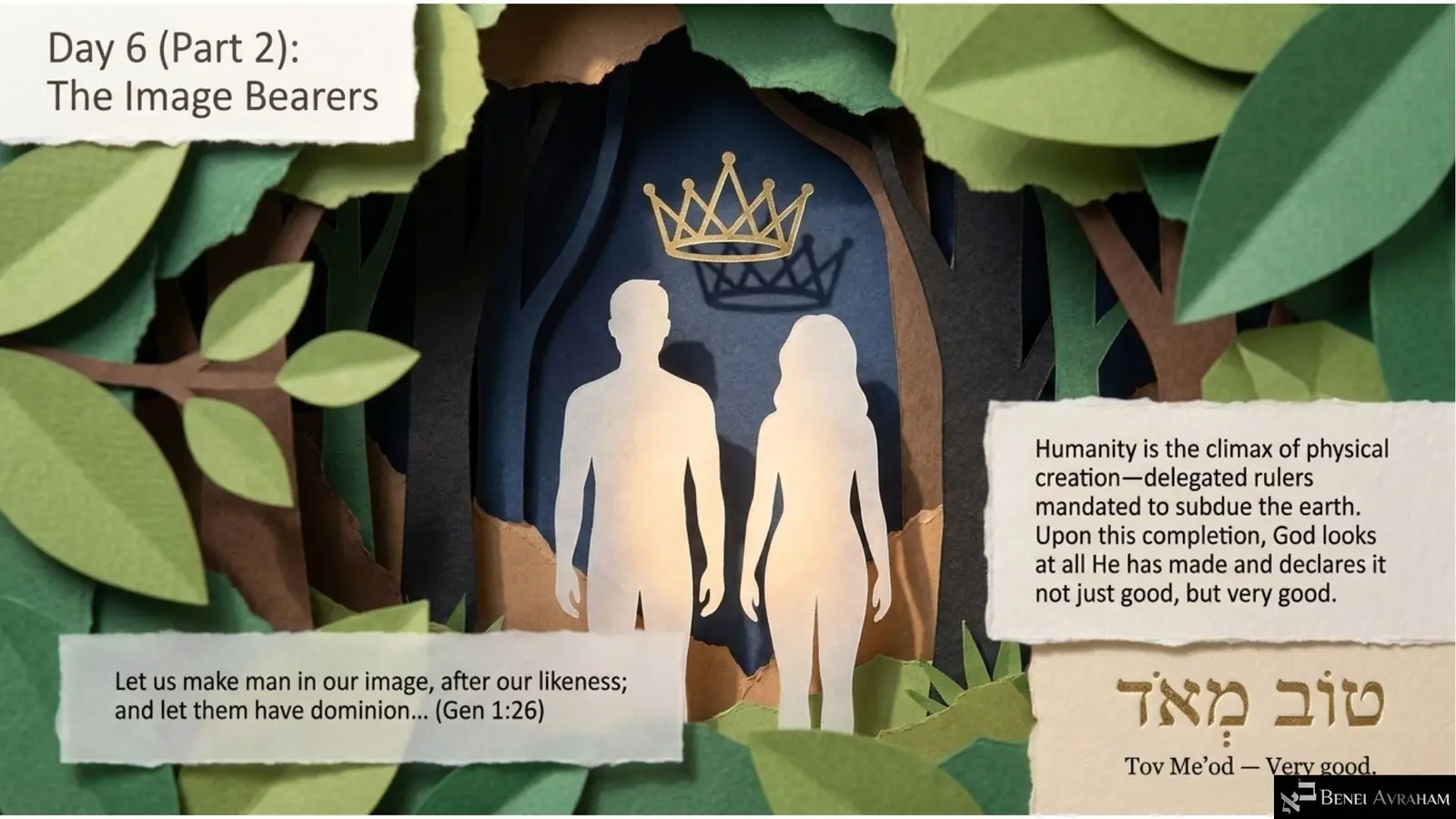
Day 6 (Part 2): The Image Bearers (Genesis 1:26)
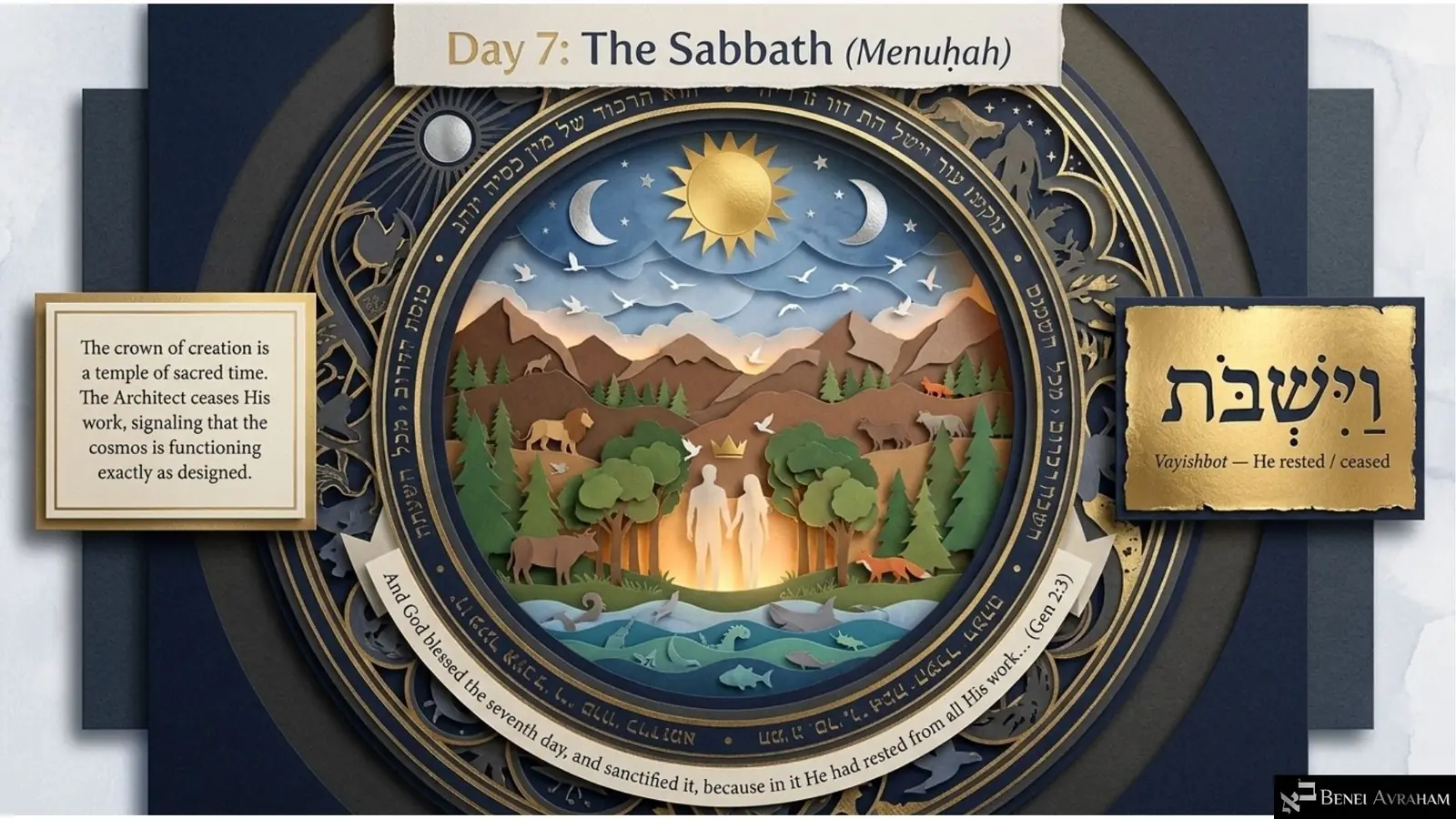
Day 7: The Sabbath (Menuhah)
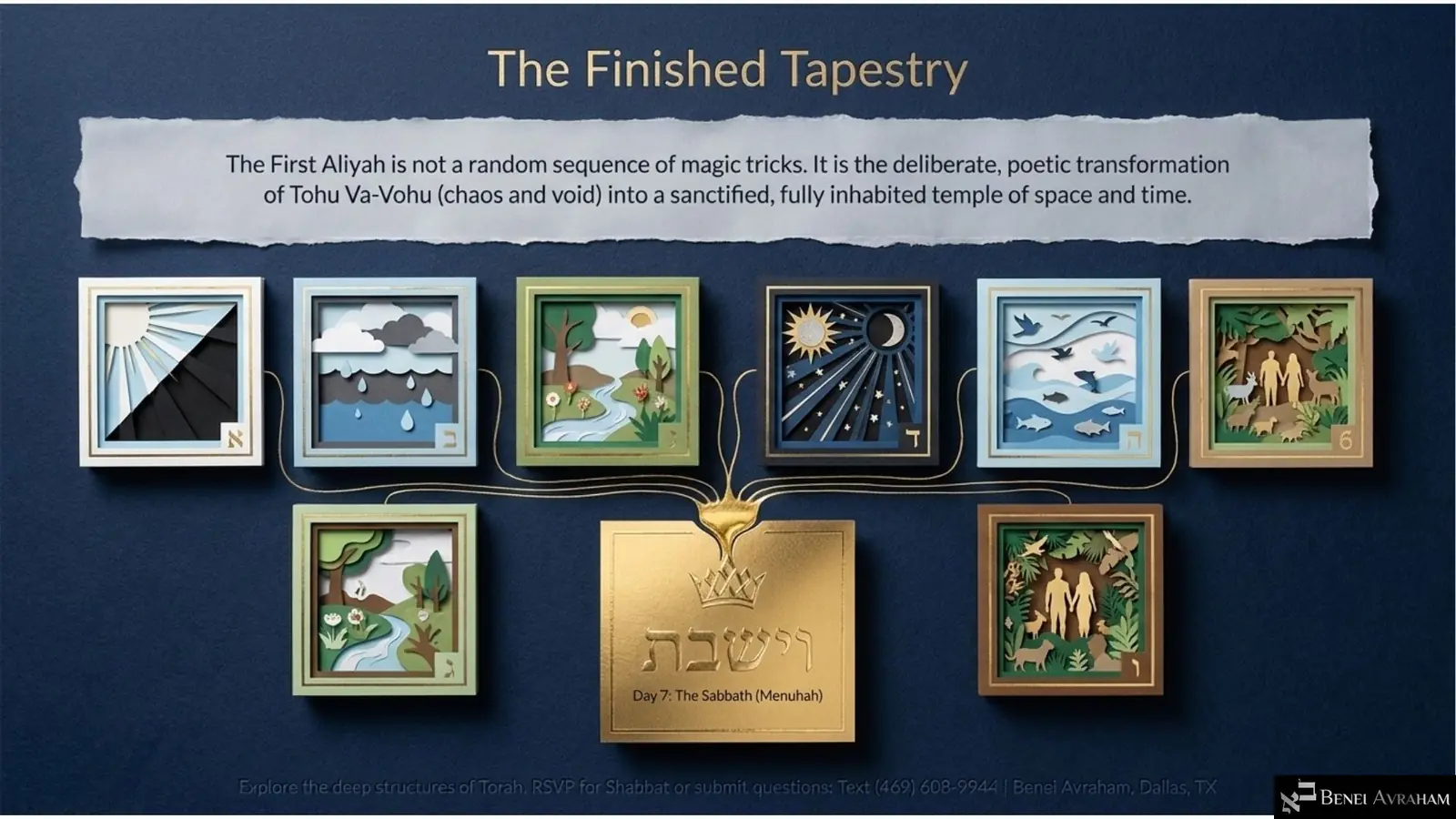
The Finished Tapestry: the seven days of creation
Sheni · Genesis 2:4–19

Second Portion
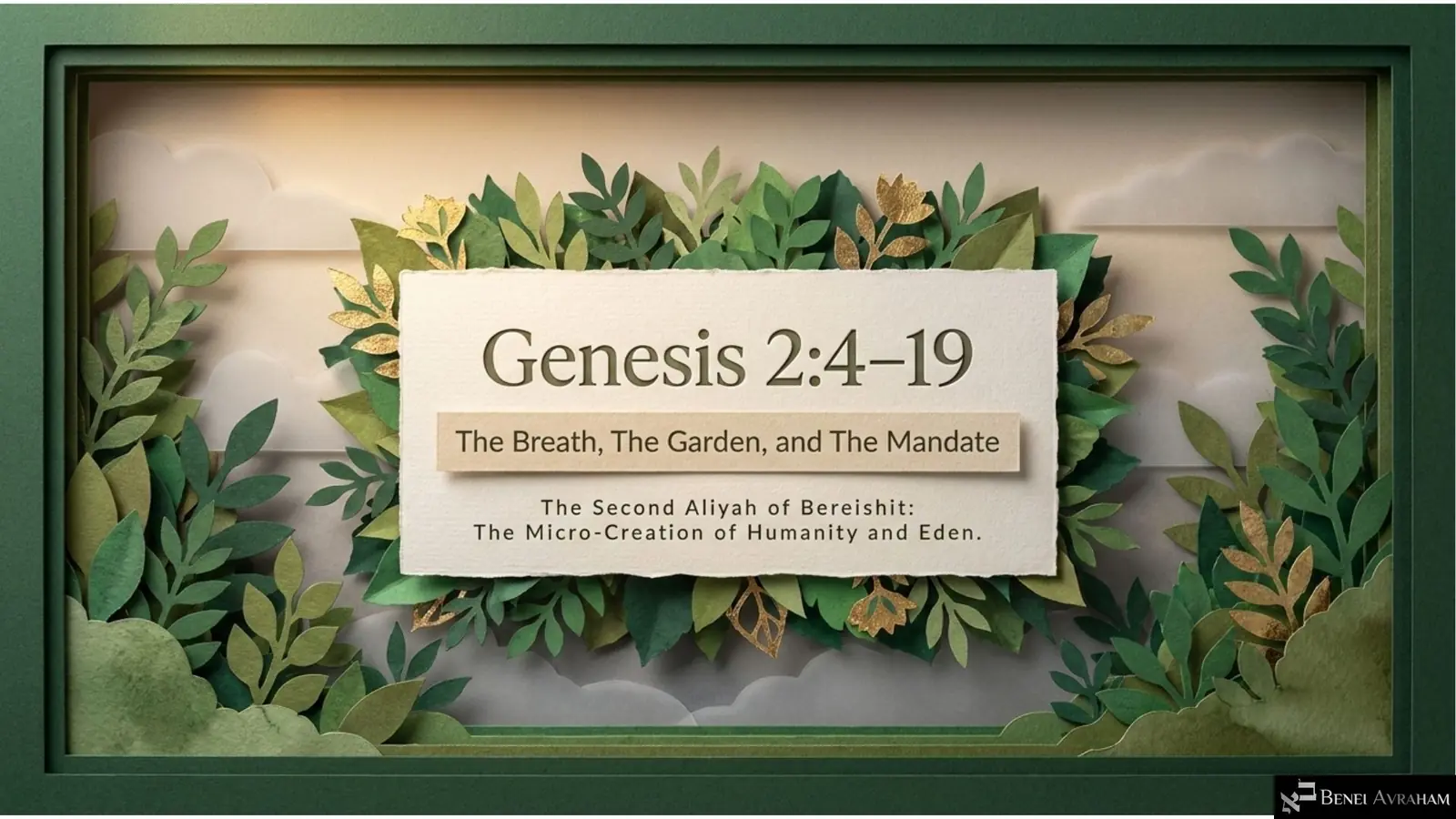
Genesis 2:4–19: The Breath, the Garden, and the Mandate — the Second Aliyah of Bereshit
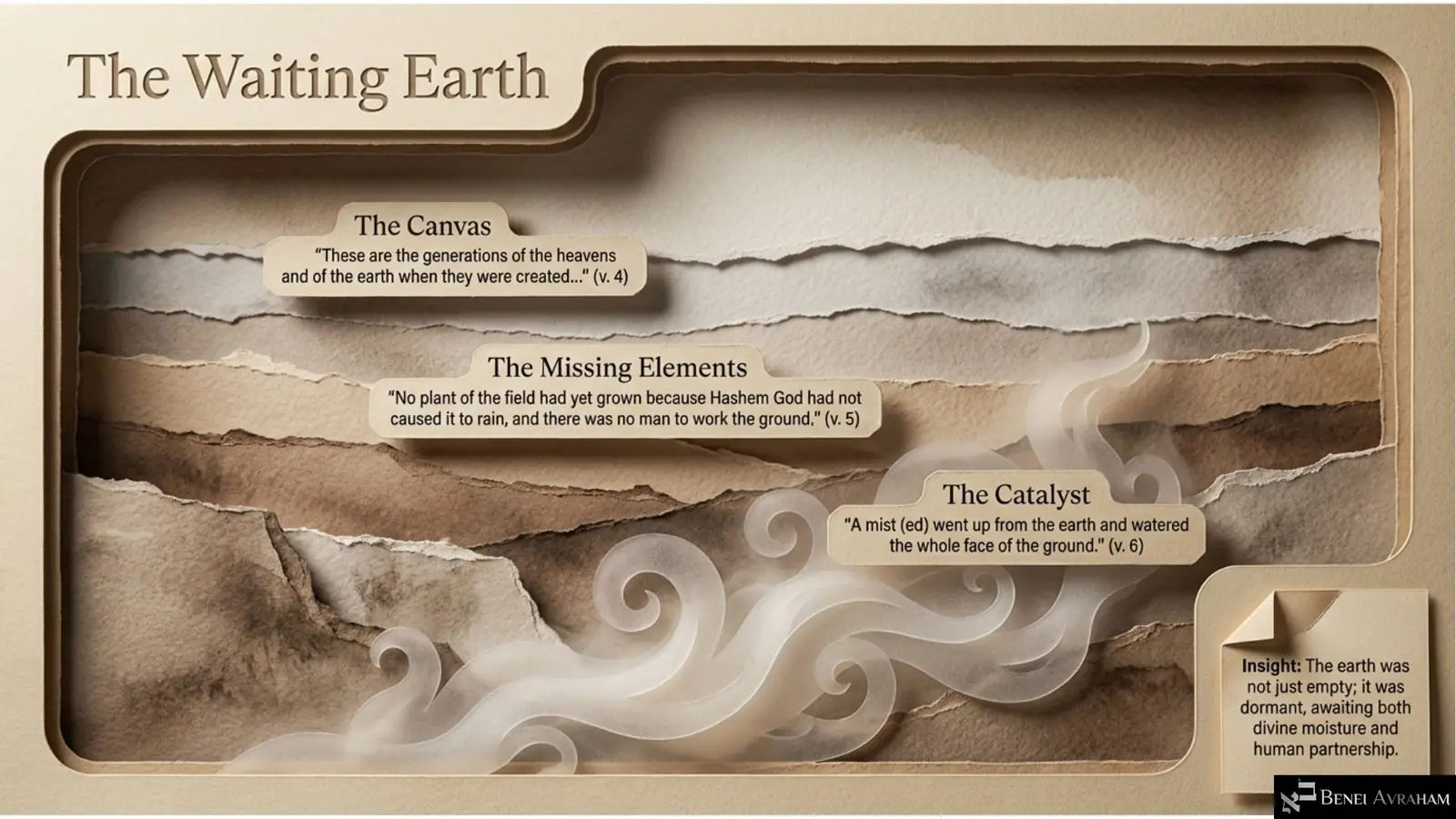
The Waiting Earth (Genesis 2:4–6)
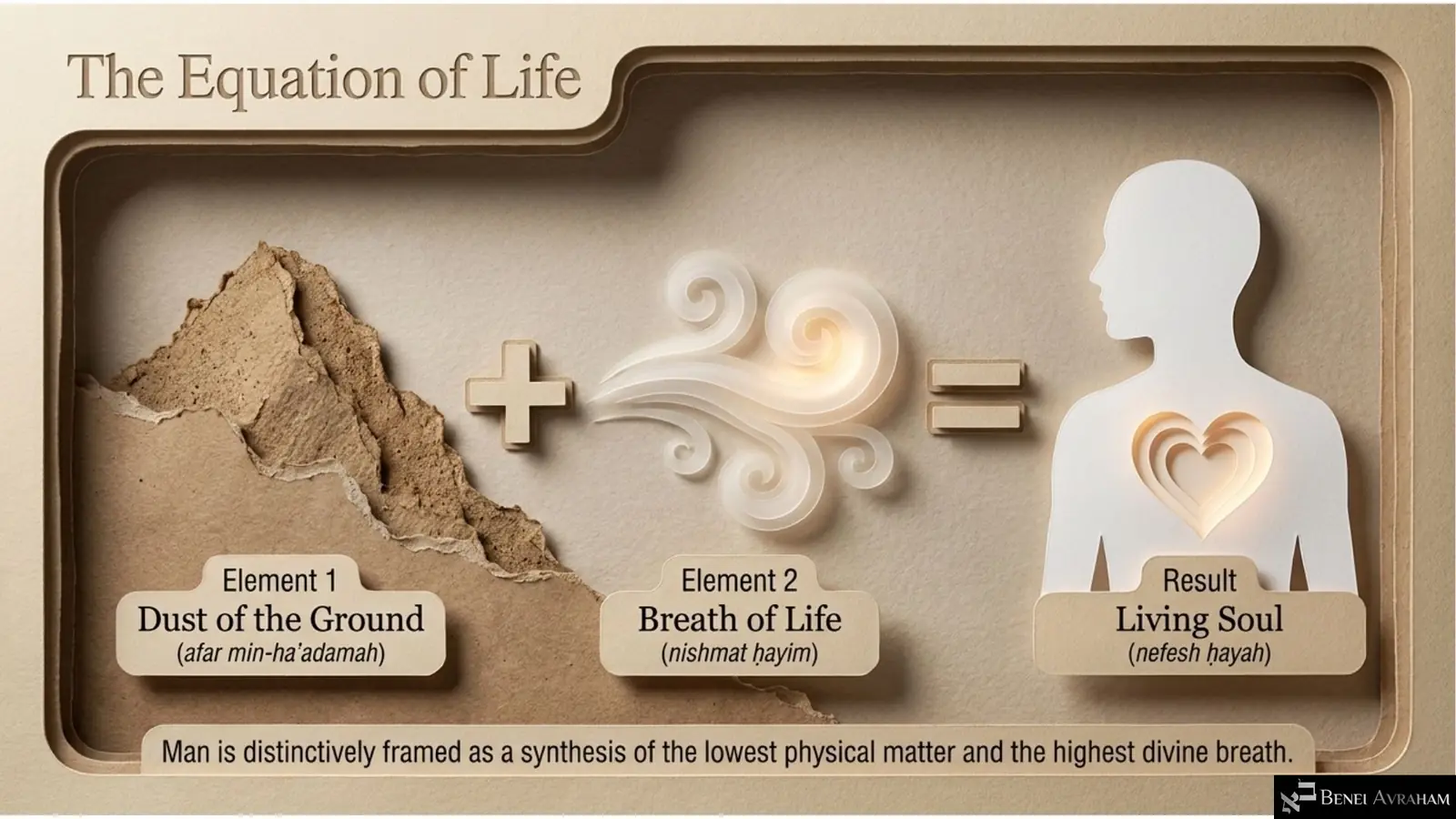
The Equation of Life: dust of the ground + breath of life = living soul (Genesis 2:7)
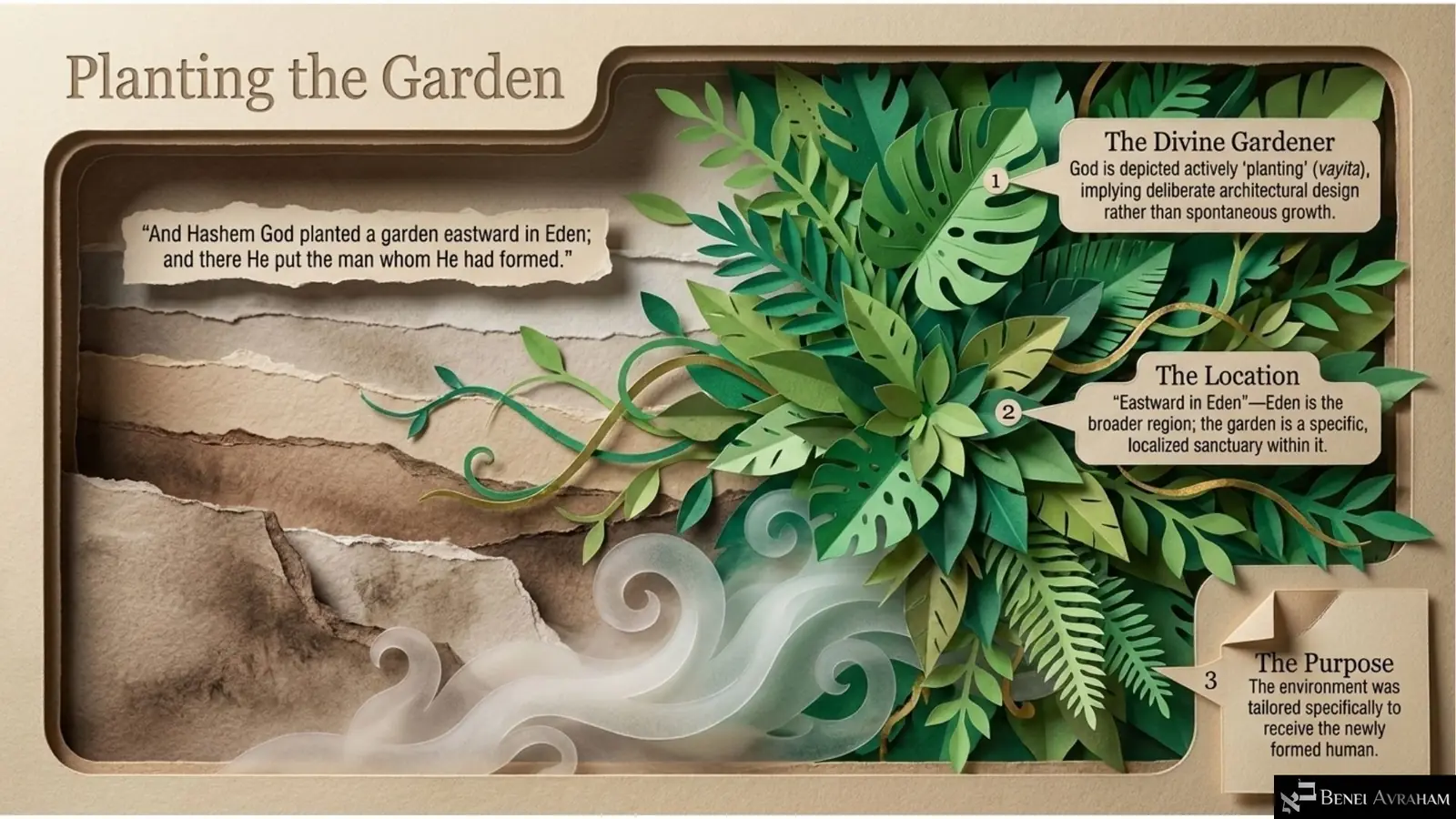
Planting the Garden (Genesis 2:8)
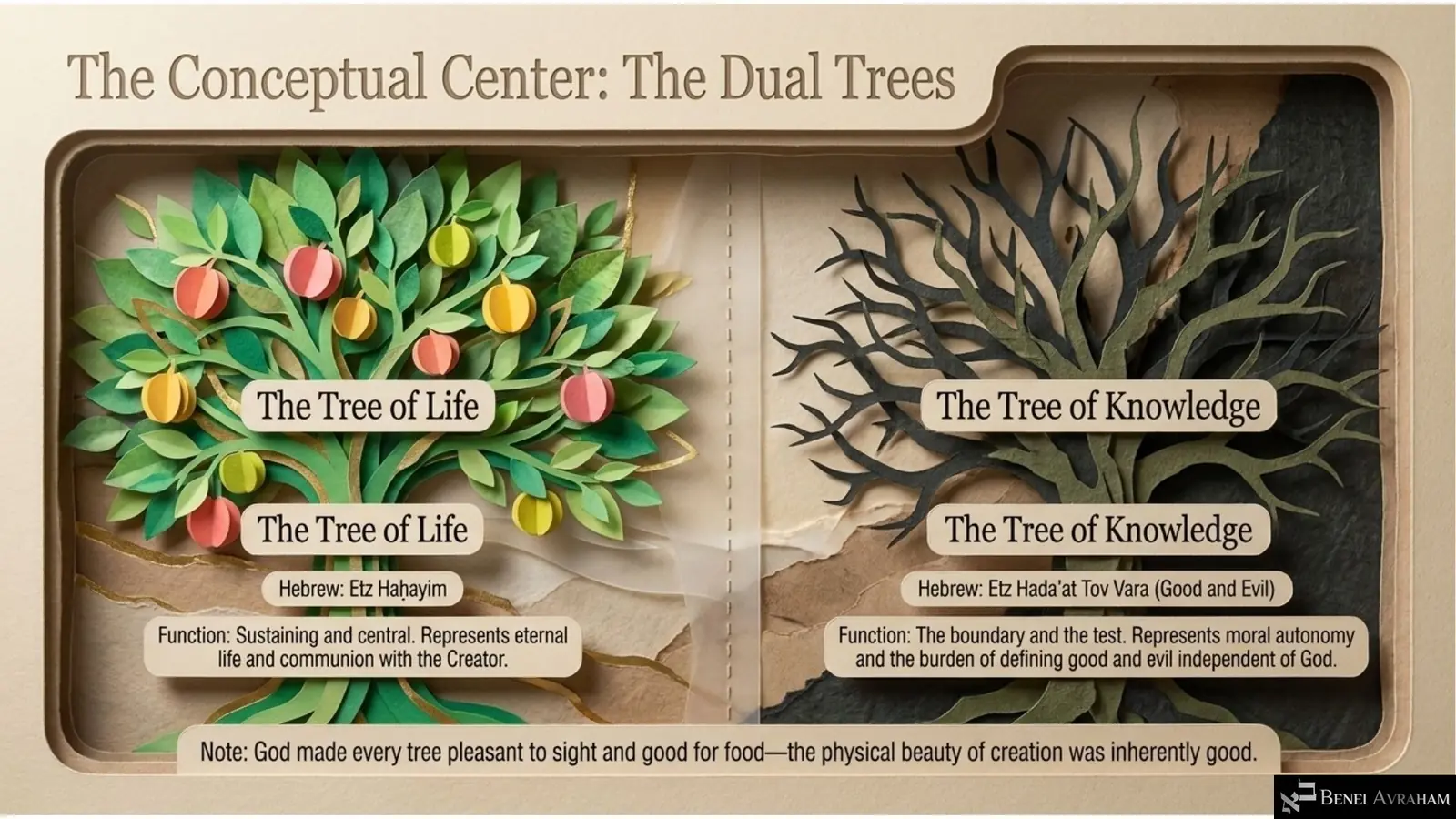
The Conceptual Center: the Tree of Life and the Tree of Knowledge (Genesis 2:9)
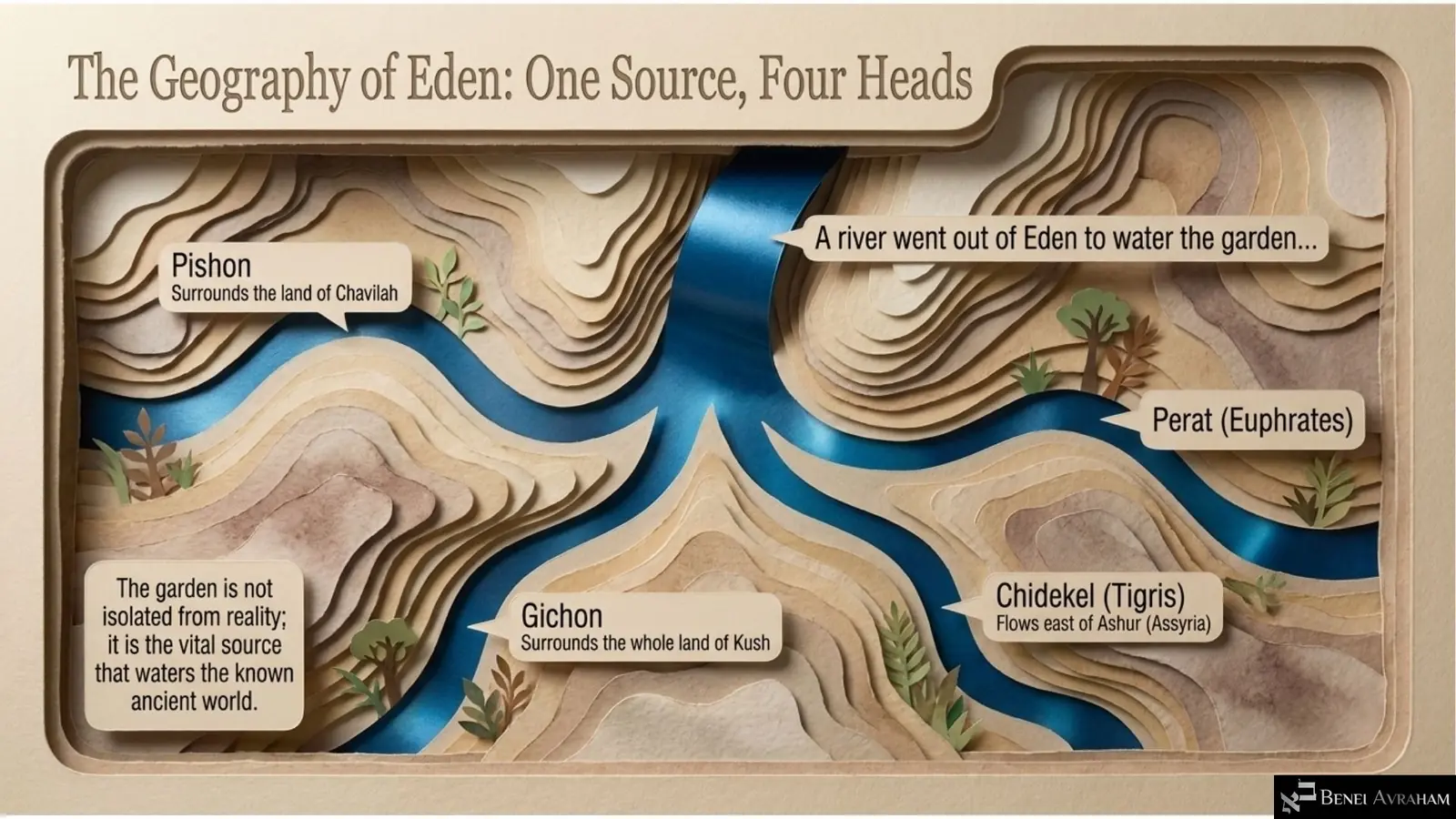
The Geography of Eden: one source, four heads (Genesis 2:10–14)
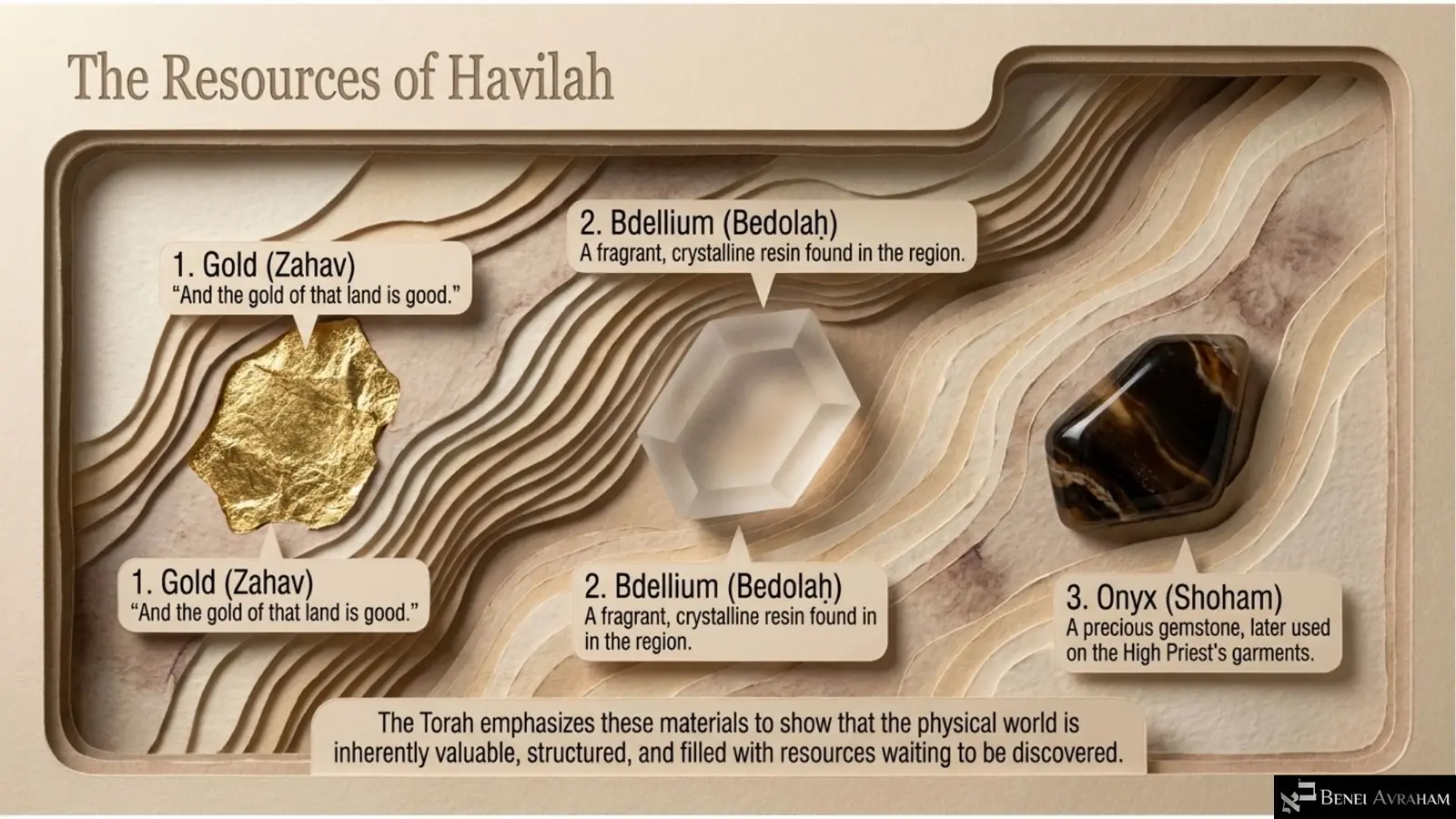
The Resources of Havilah: gold, bdellium and onyx (Genesis 2:11–12)
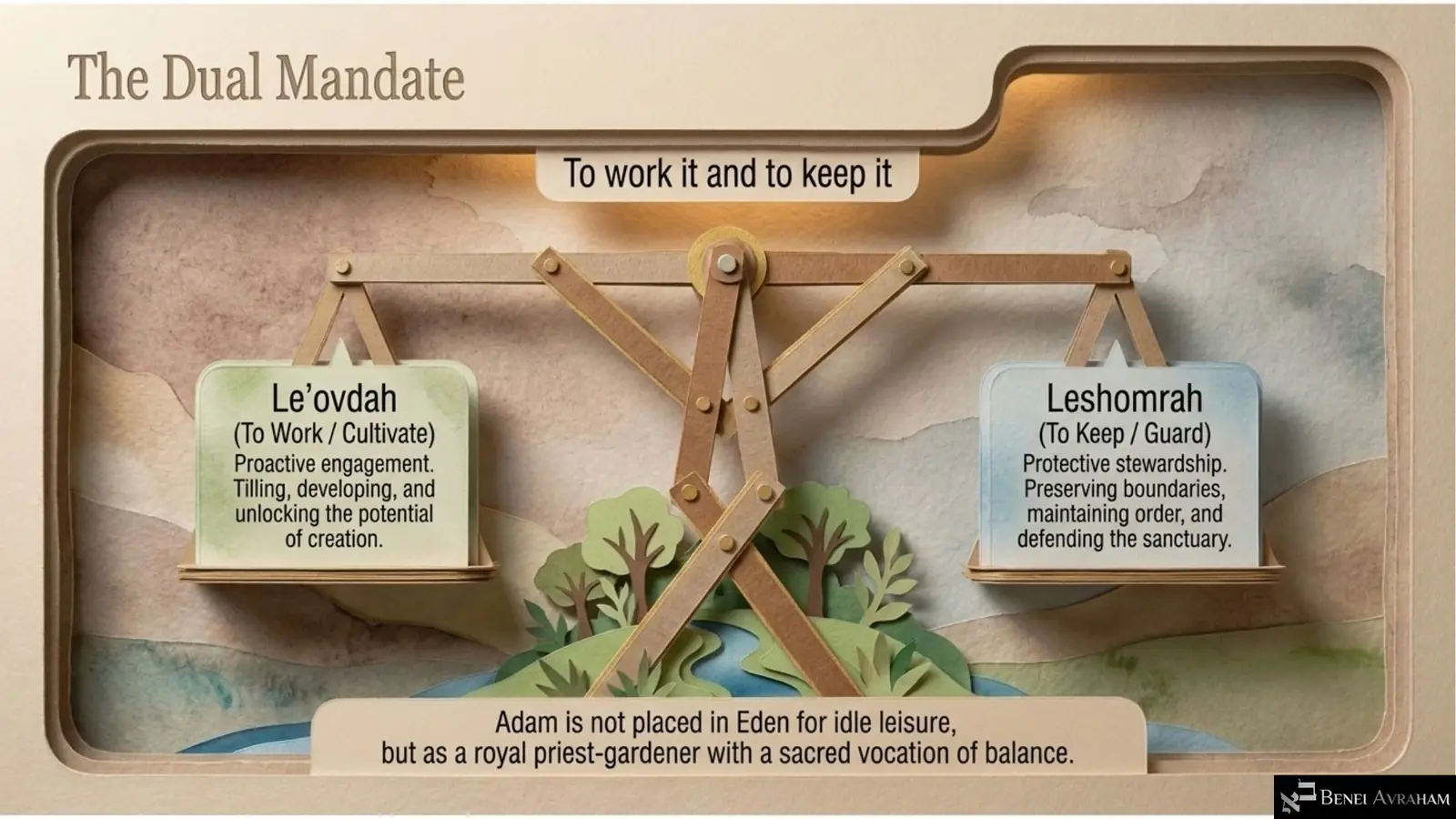
The Dual Mandate: to work it and to keep it (Genesis 2:15)
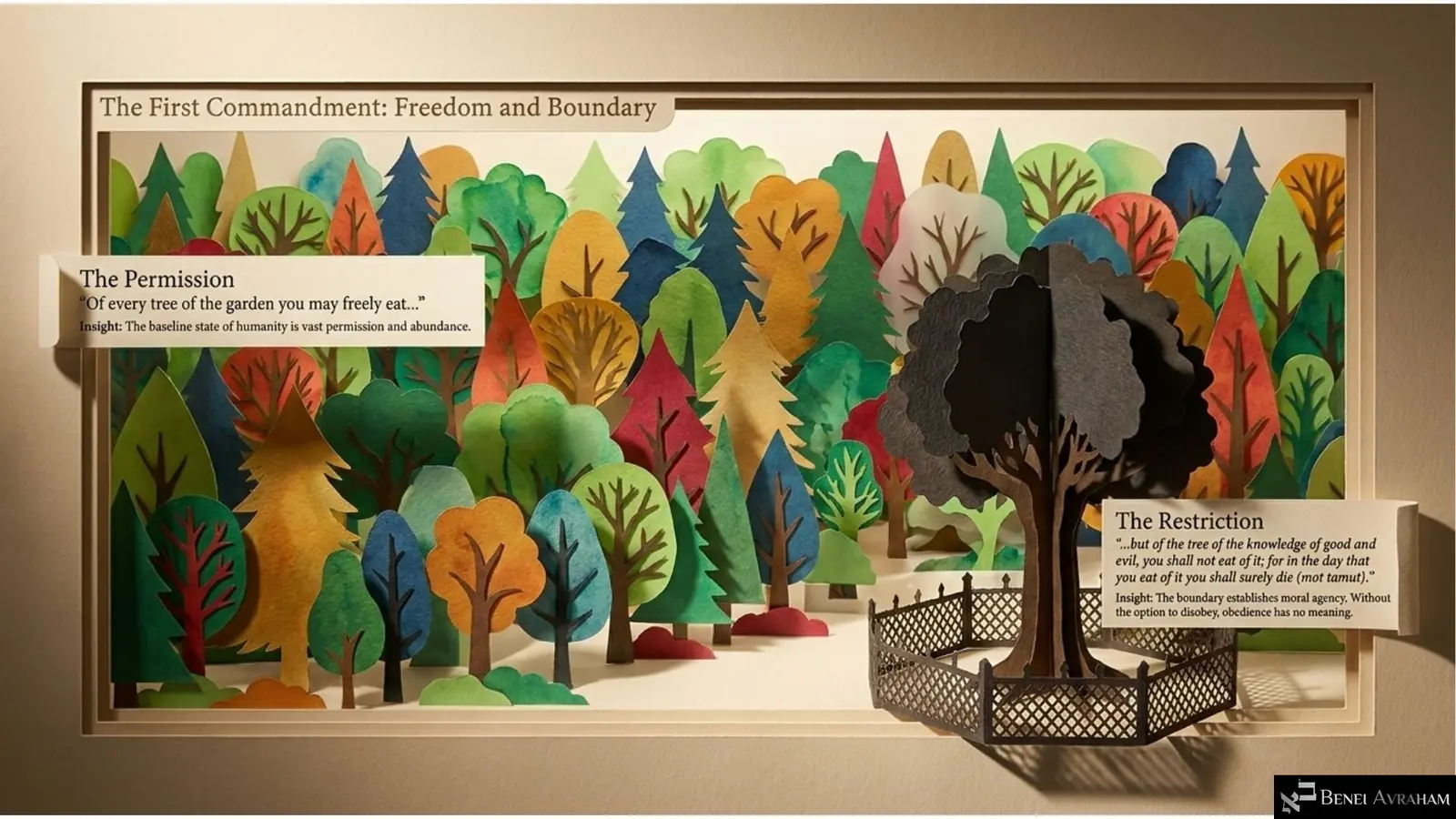
The First Commandment: freedom and boundary (Genesis 2:16–17)
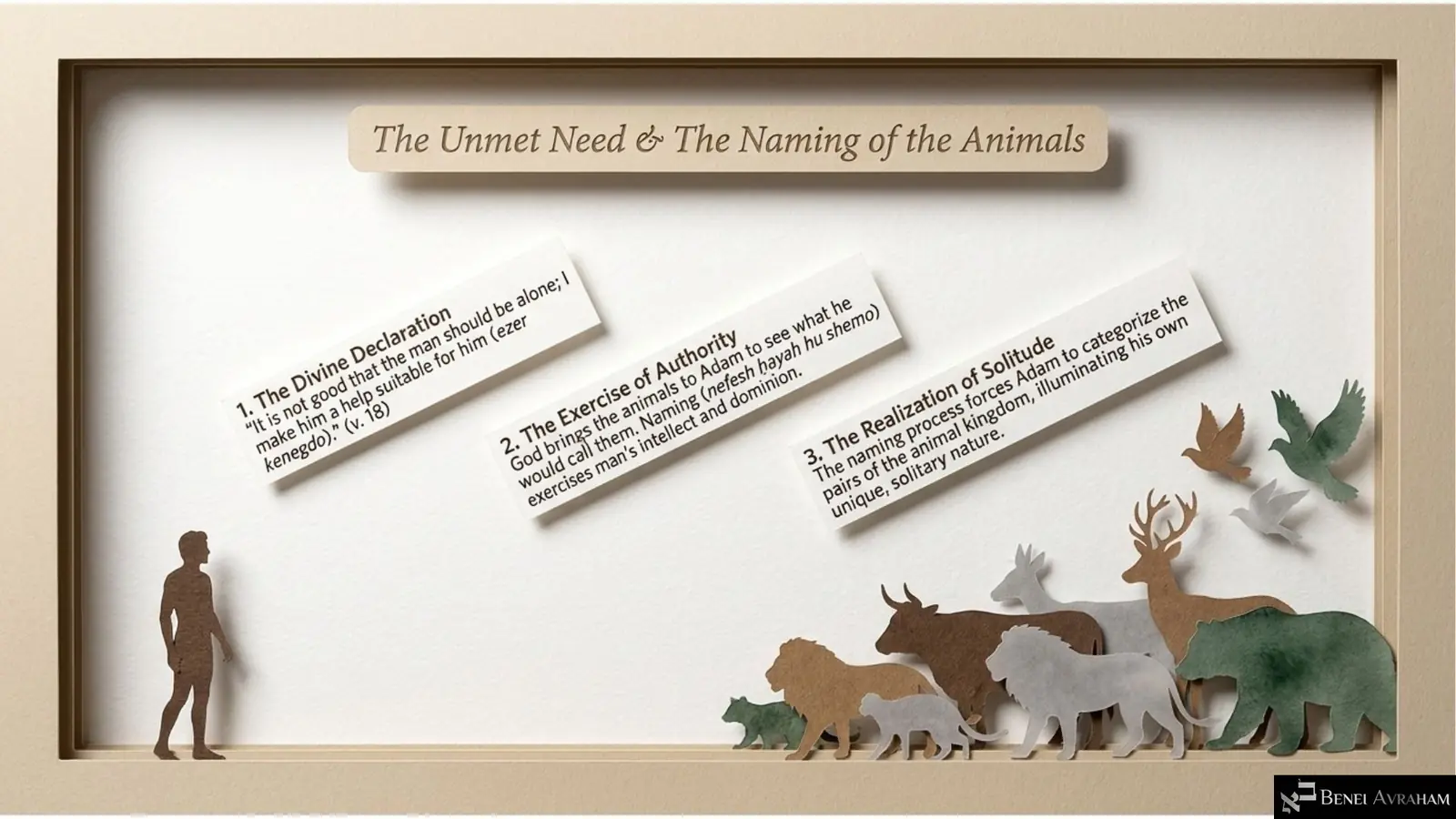
The Unmet Need and the Naming of the Animals (Genesis 2:18–19)
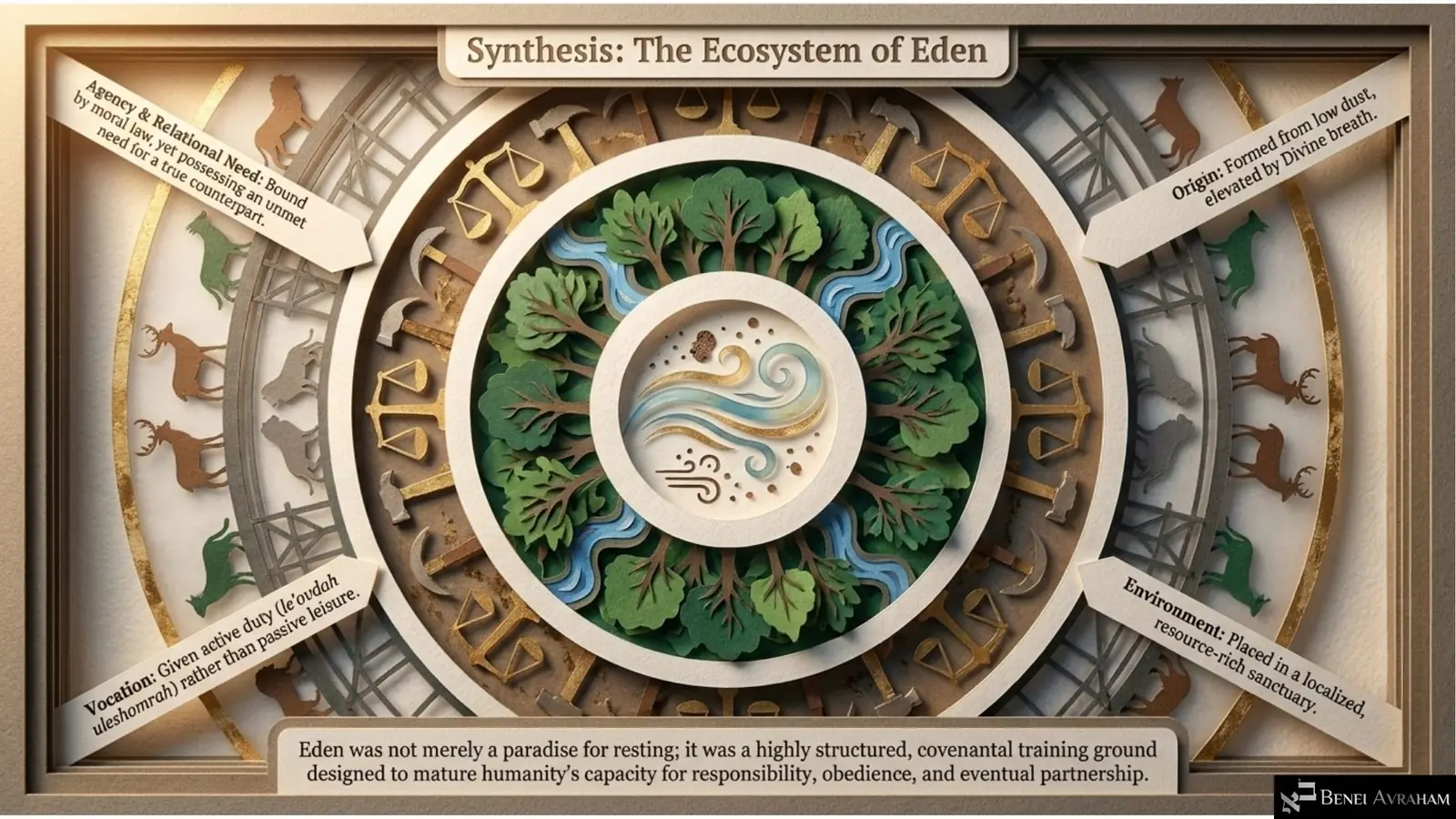
Synthesis: the Ecosystem of Eden
Shlishi · Genesis 2:20–3:21

Third Portion
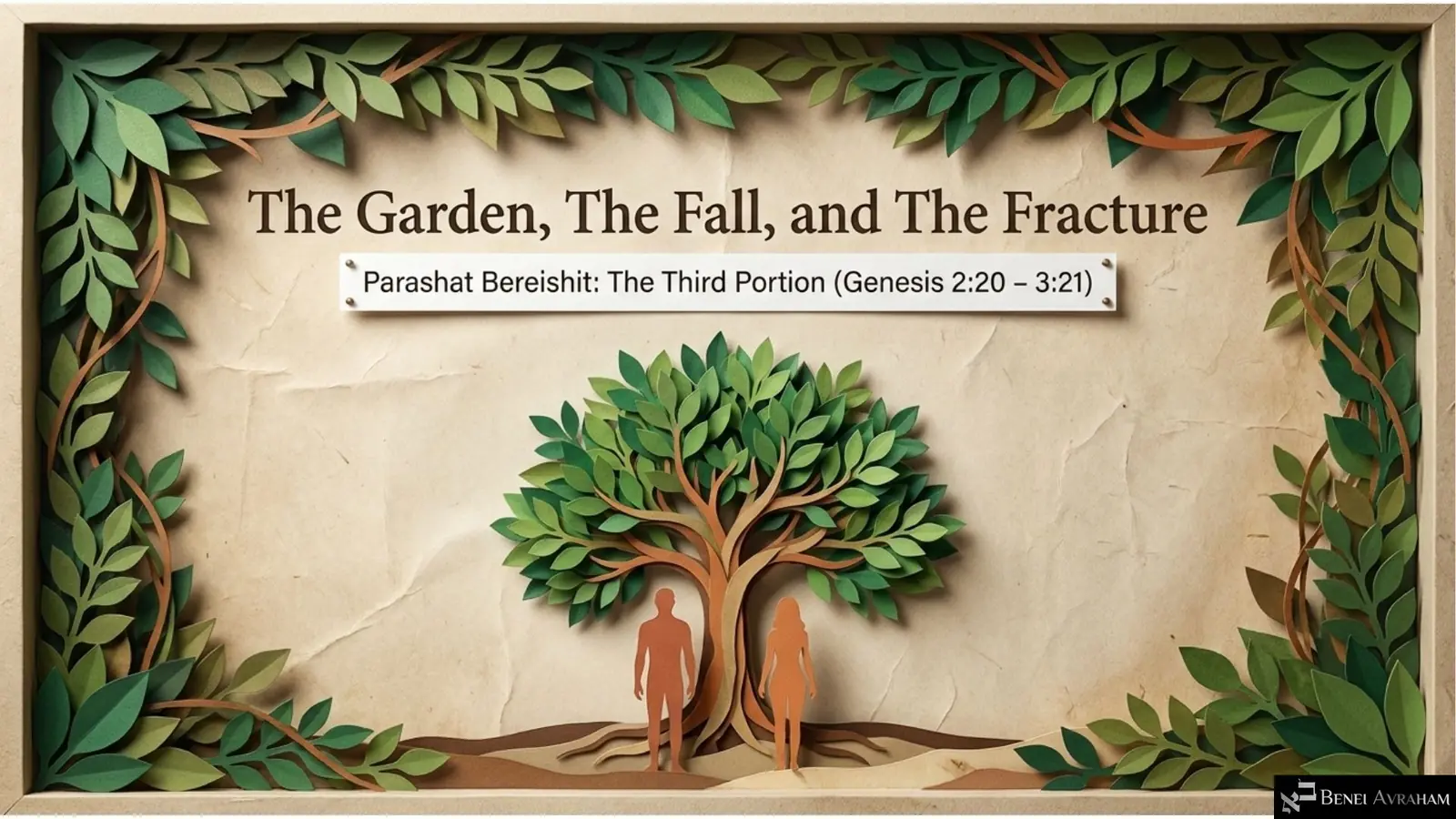
The Garden, the Fall, and the Fracture — Parashat Bereishit: the Third Portion (Genesis 2:20–3:21)
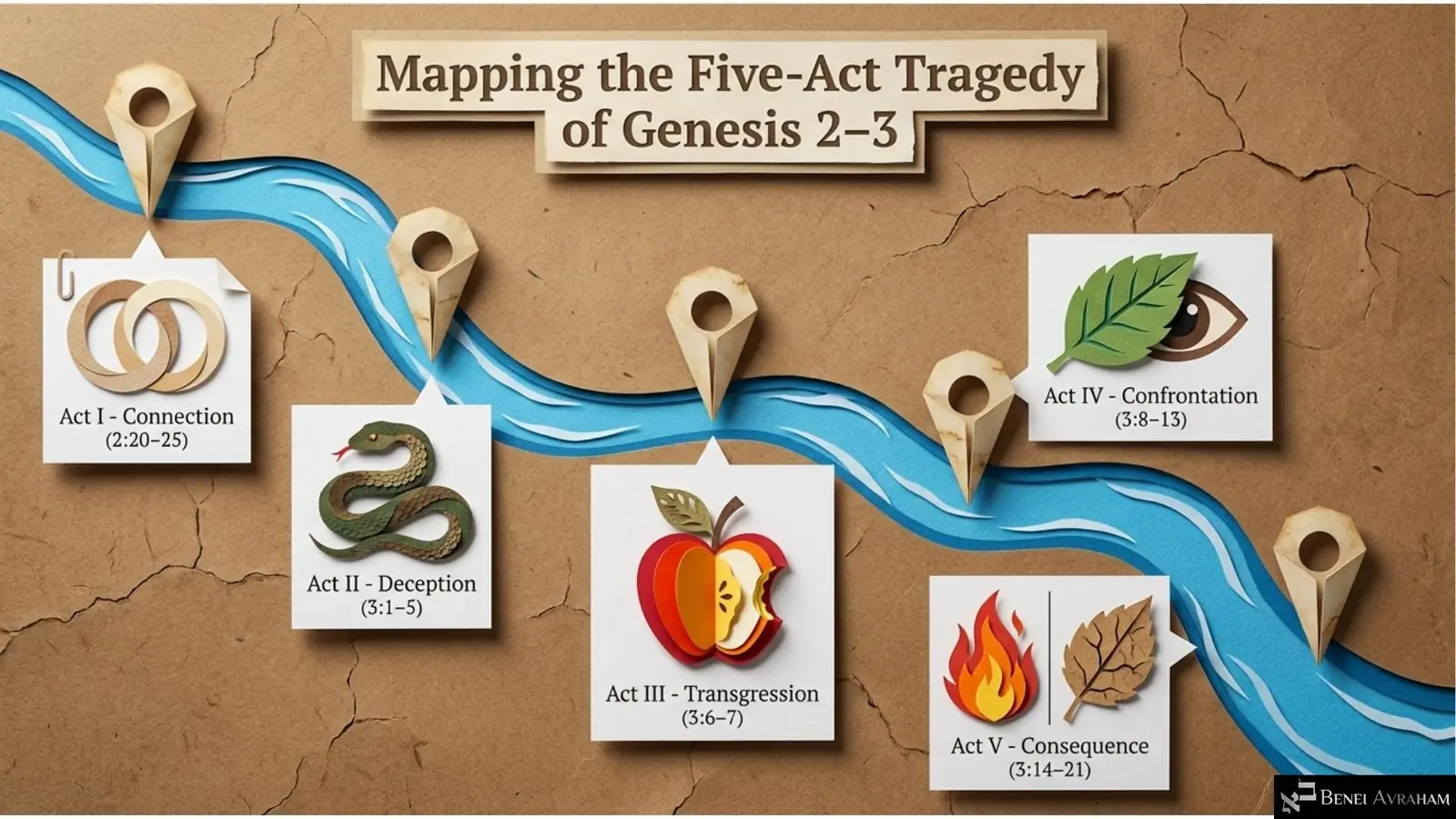
Mapping the five-act tragedy of Genesis 2–3
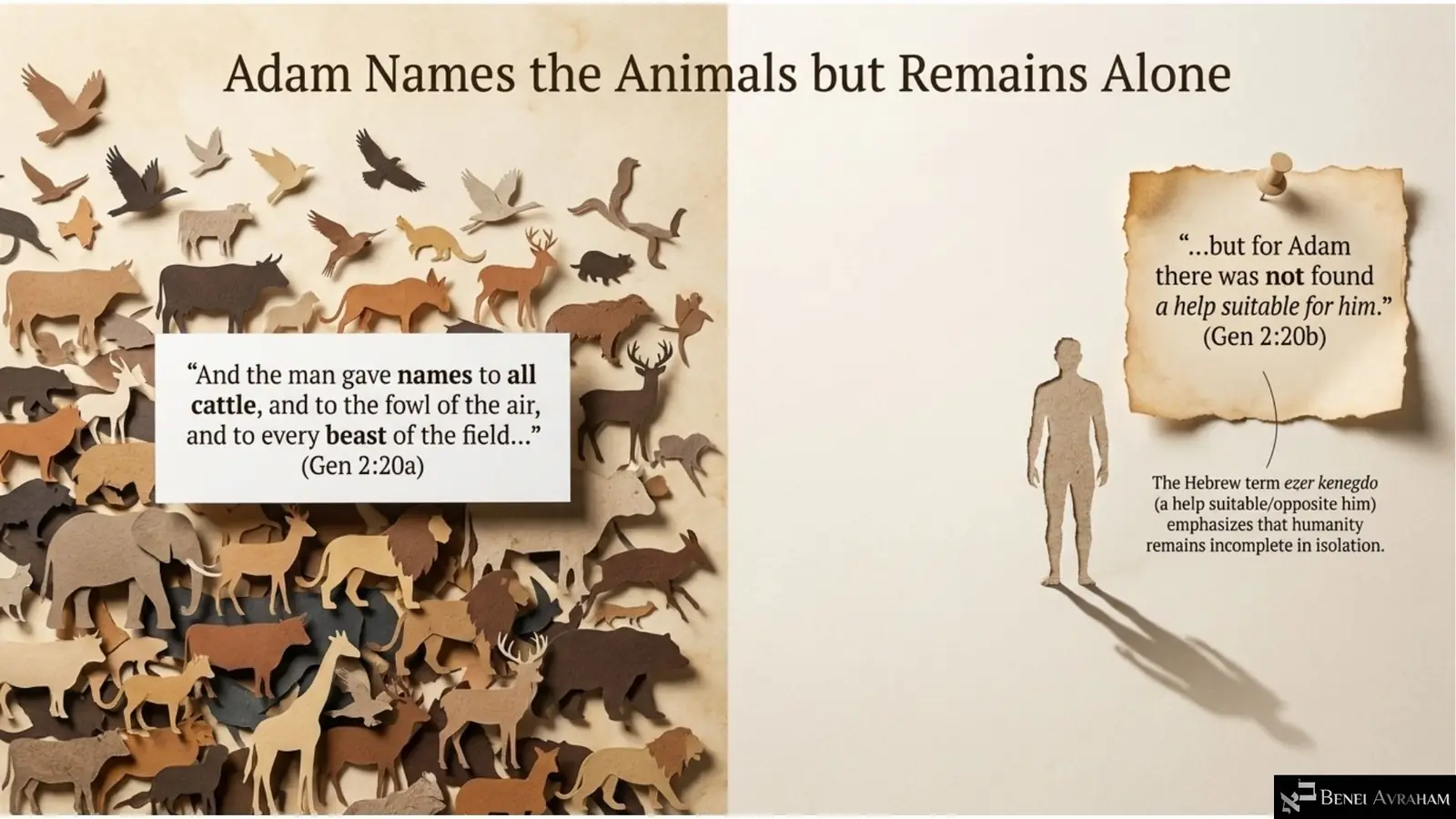
Adam names the animals but remains alone (Genesis 2:20)
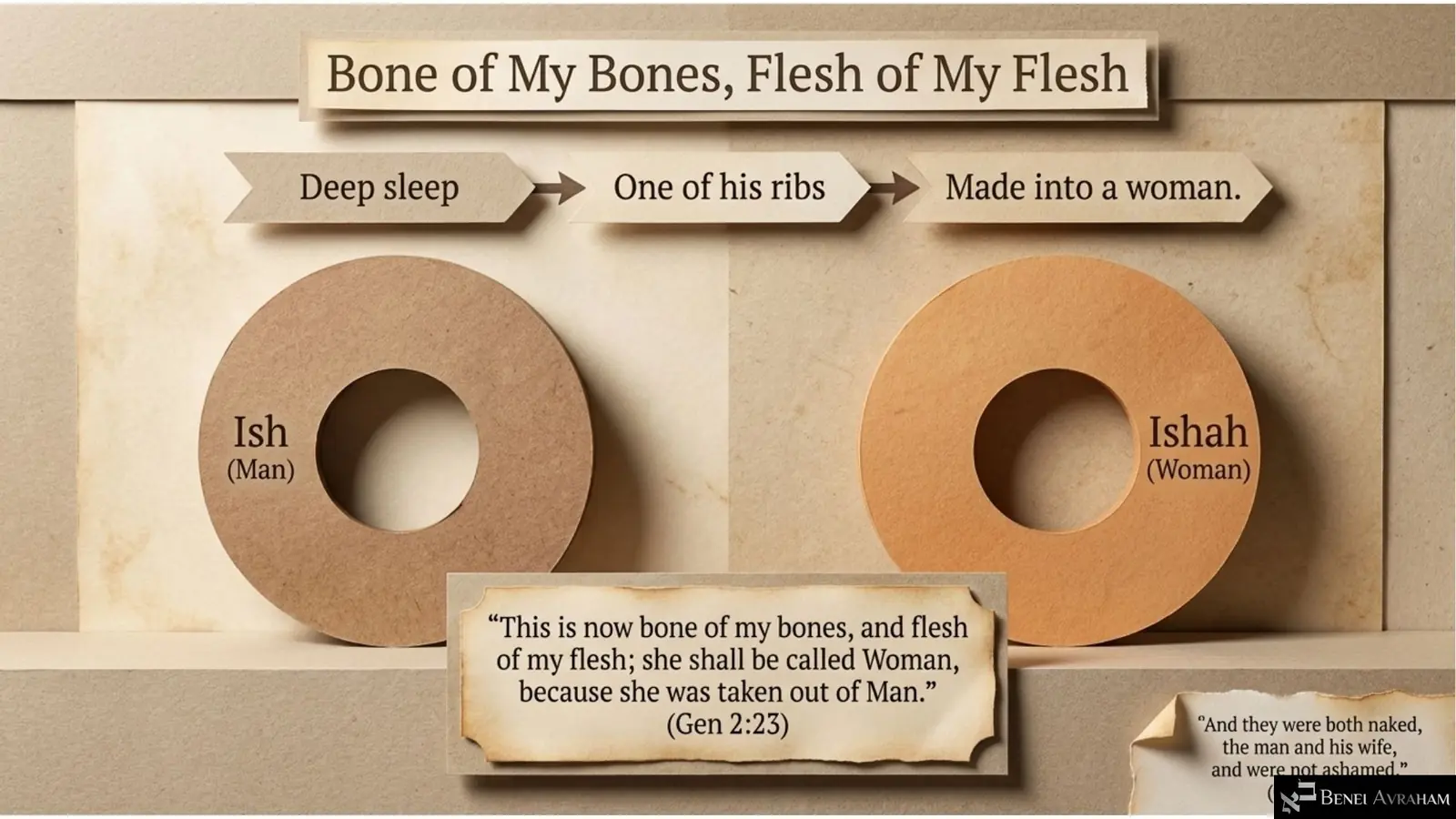
Bone of my bones, flesh of my flesh: Ish and Ishah (Genesis 2:21–25)
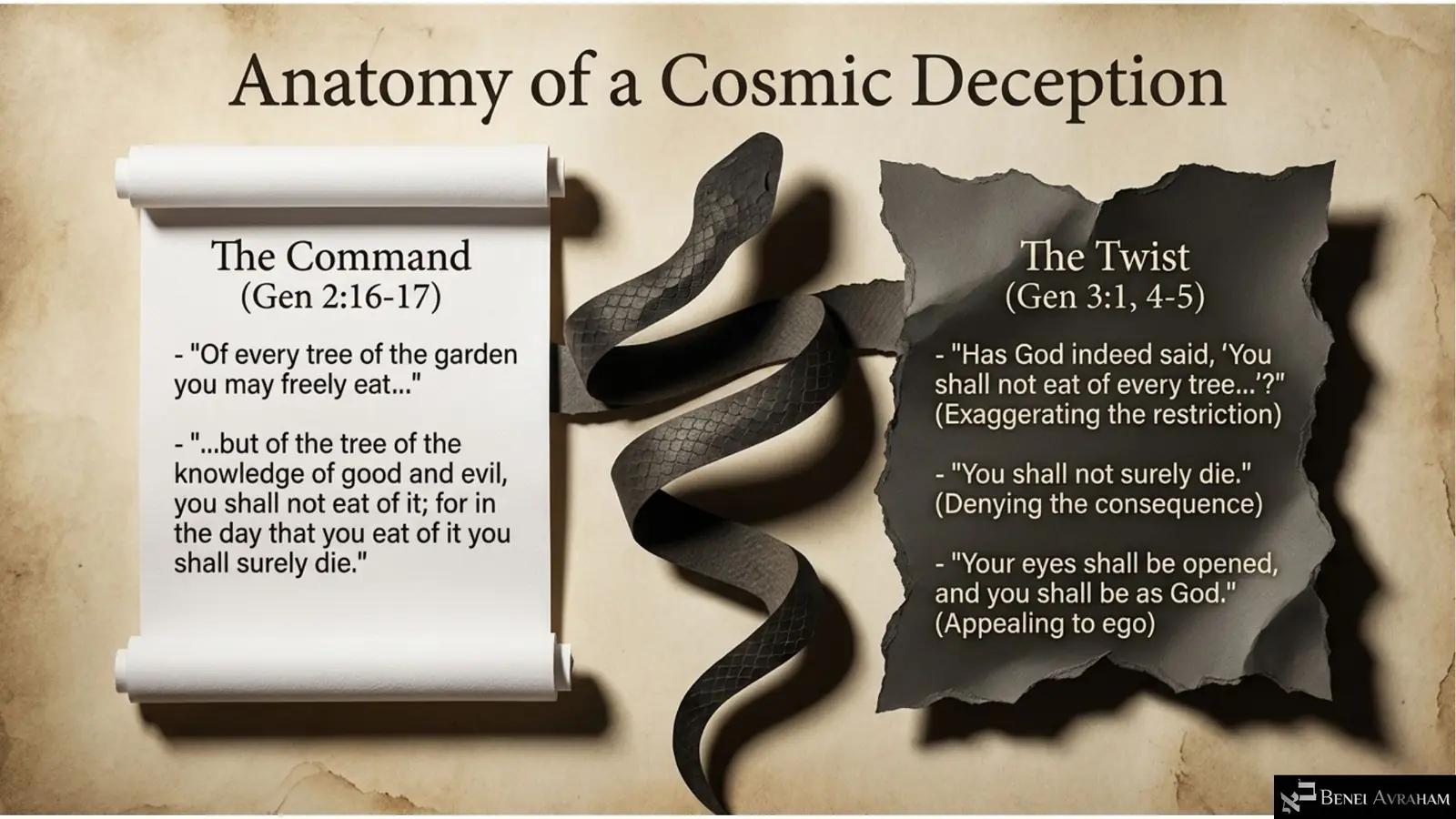
Anatomy of a cosmic deception: the command and the twist (Genesis 2:16–17; 3:1, 4–5)
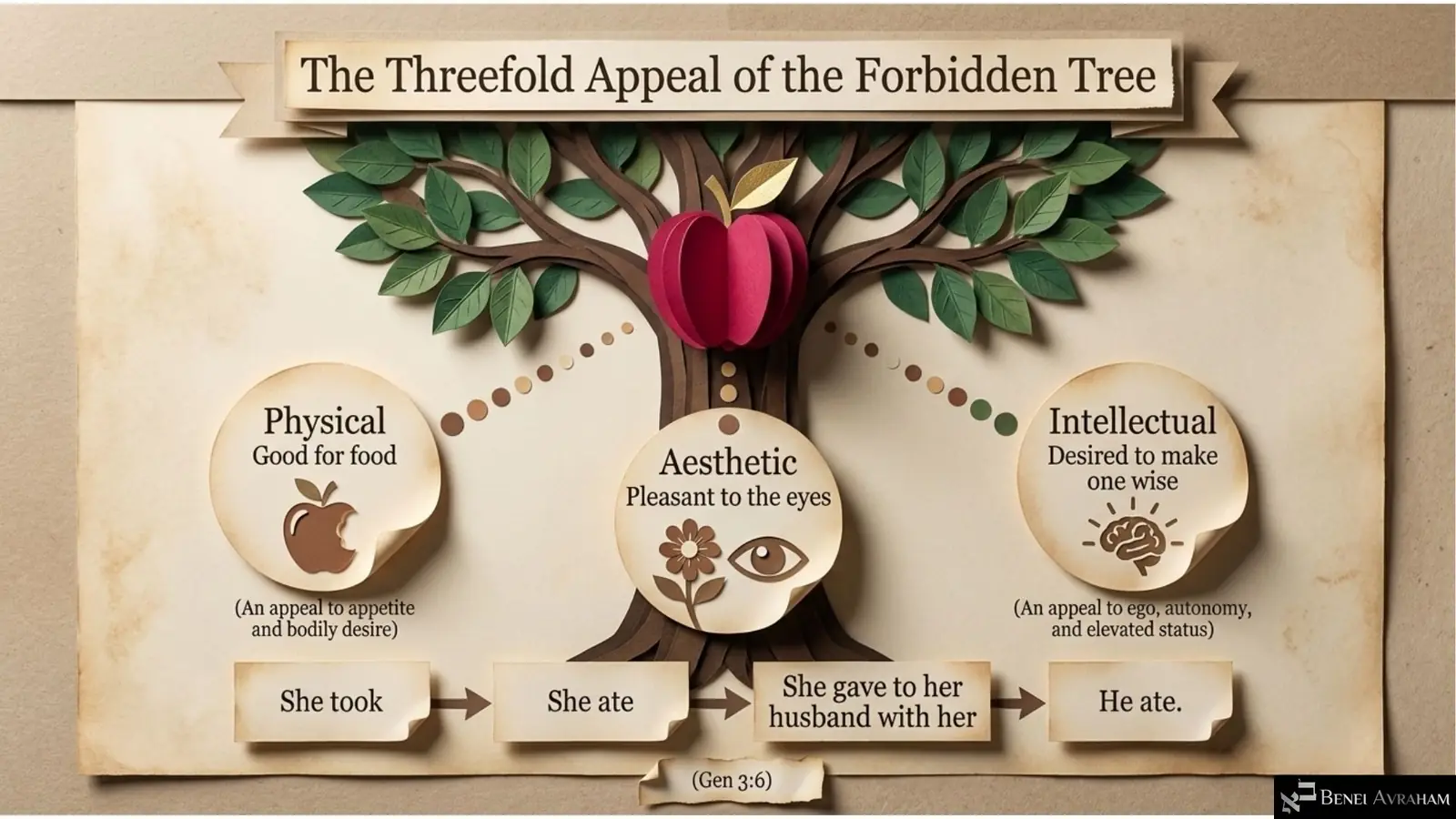
The threefold appeal of the forbidden tree (Genesis 3:6)
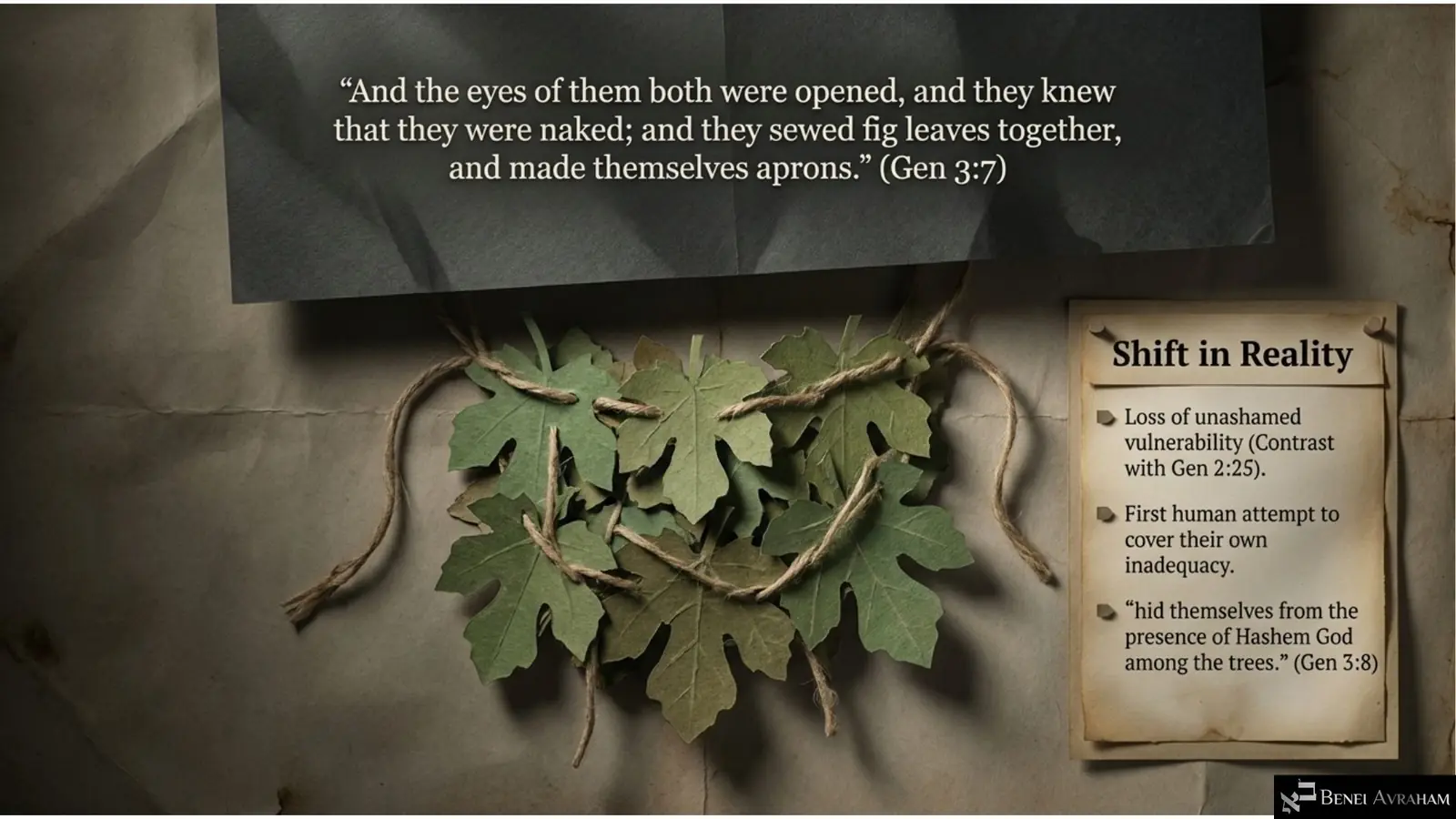
Eyes opened: the fig-leaf aprons (Genesis 3:7–8)
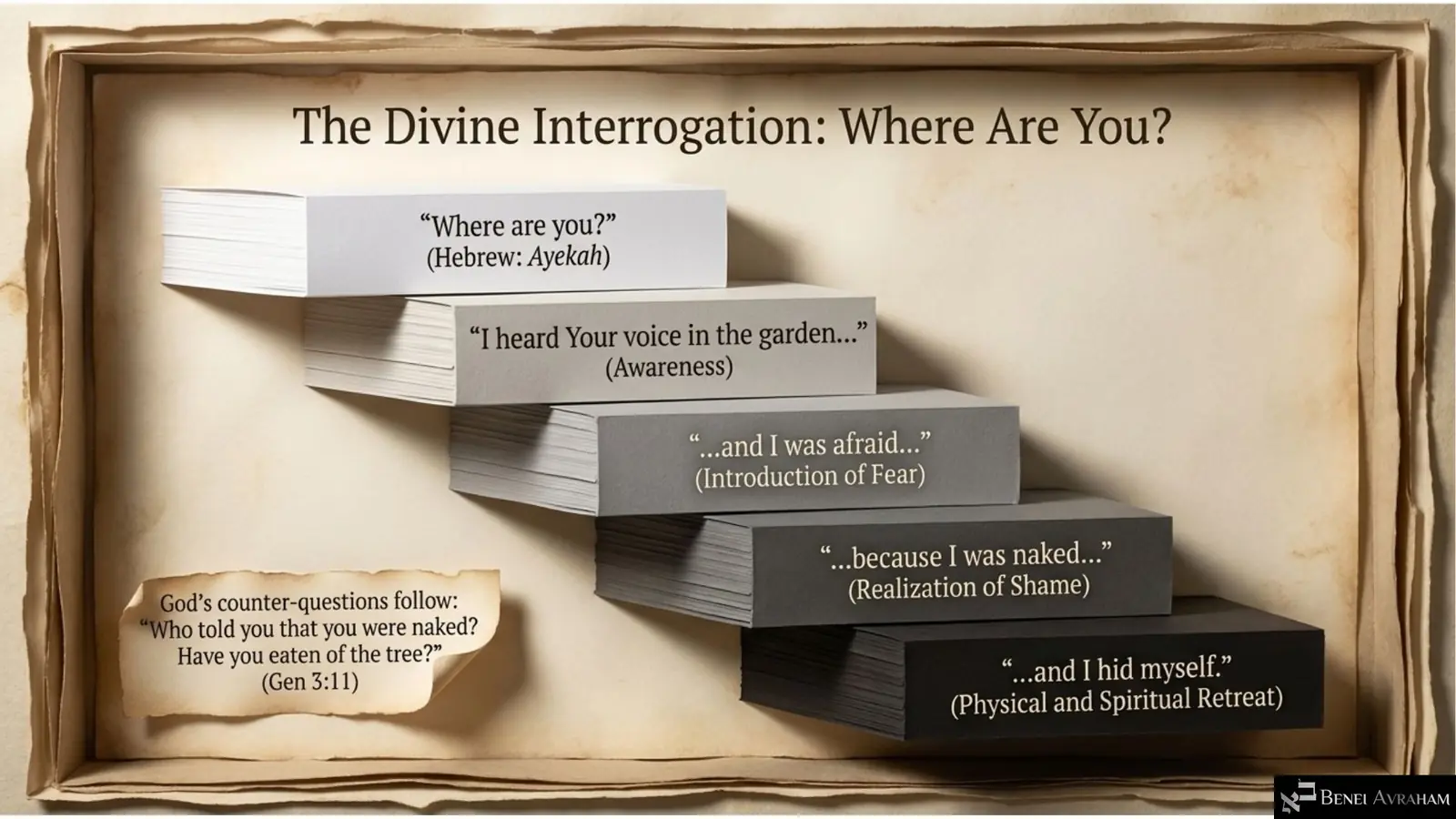
The divine interrogation: Where are you? (Genesis 3:9–11)
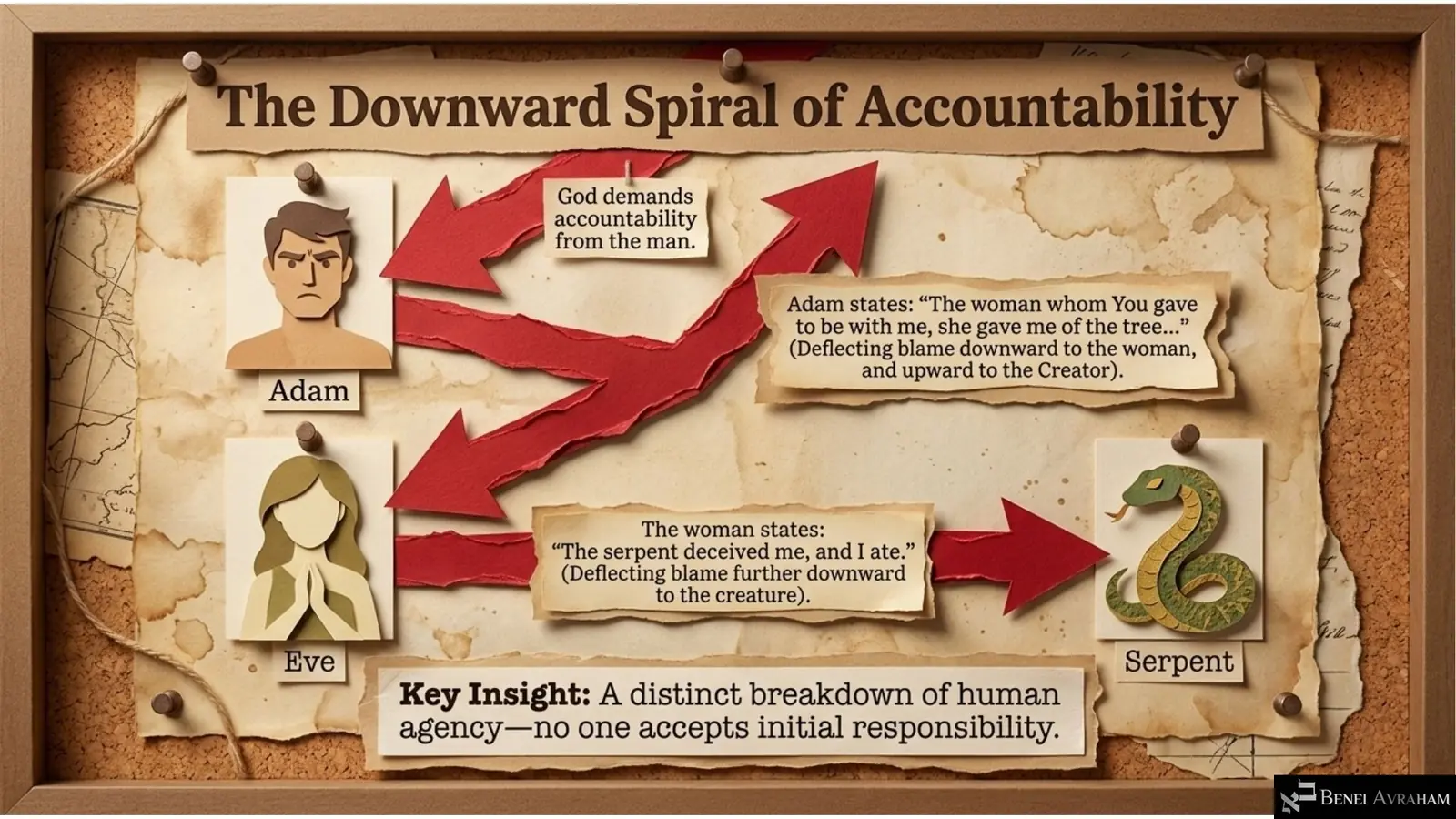
The downward spiral of accountability (Genesis 3:12–13)
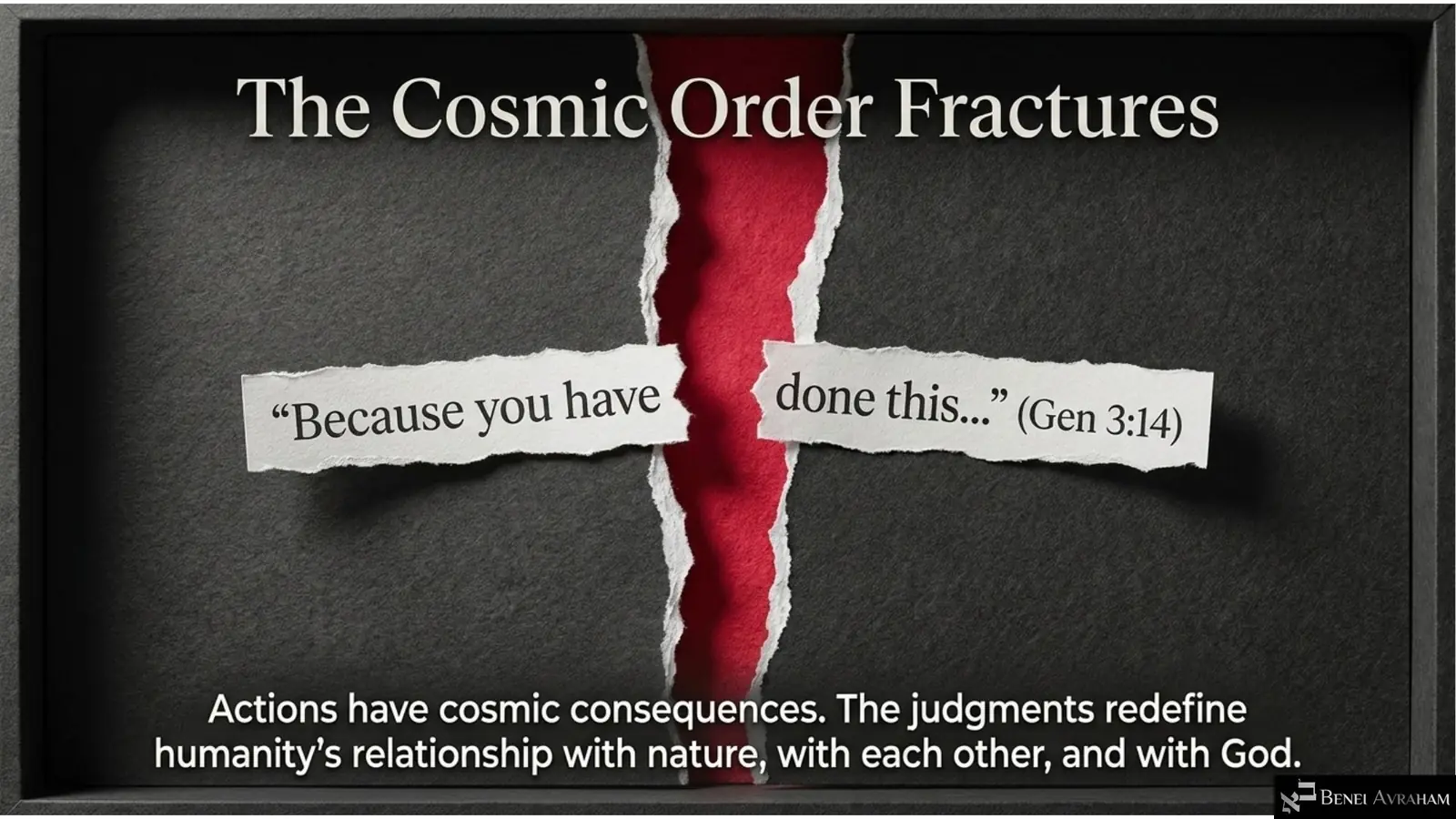
The cosmic order fractures (Genesis 3:14)
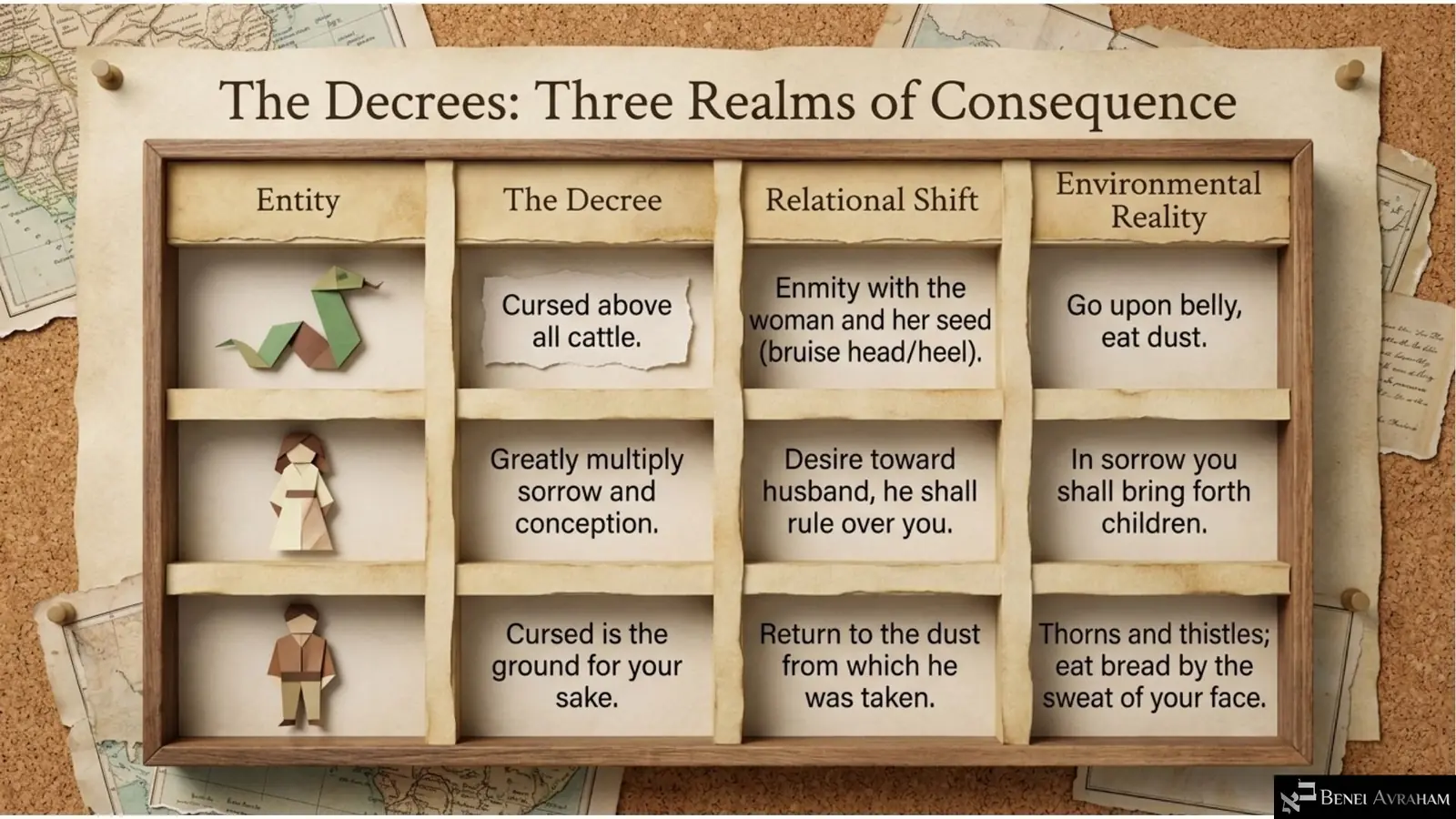
The decrees: three realms of consequence (Genesis 3:14–19)
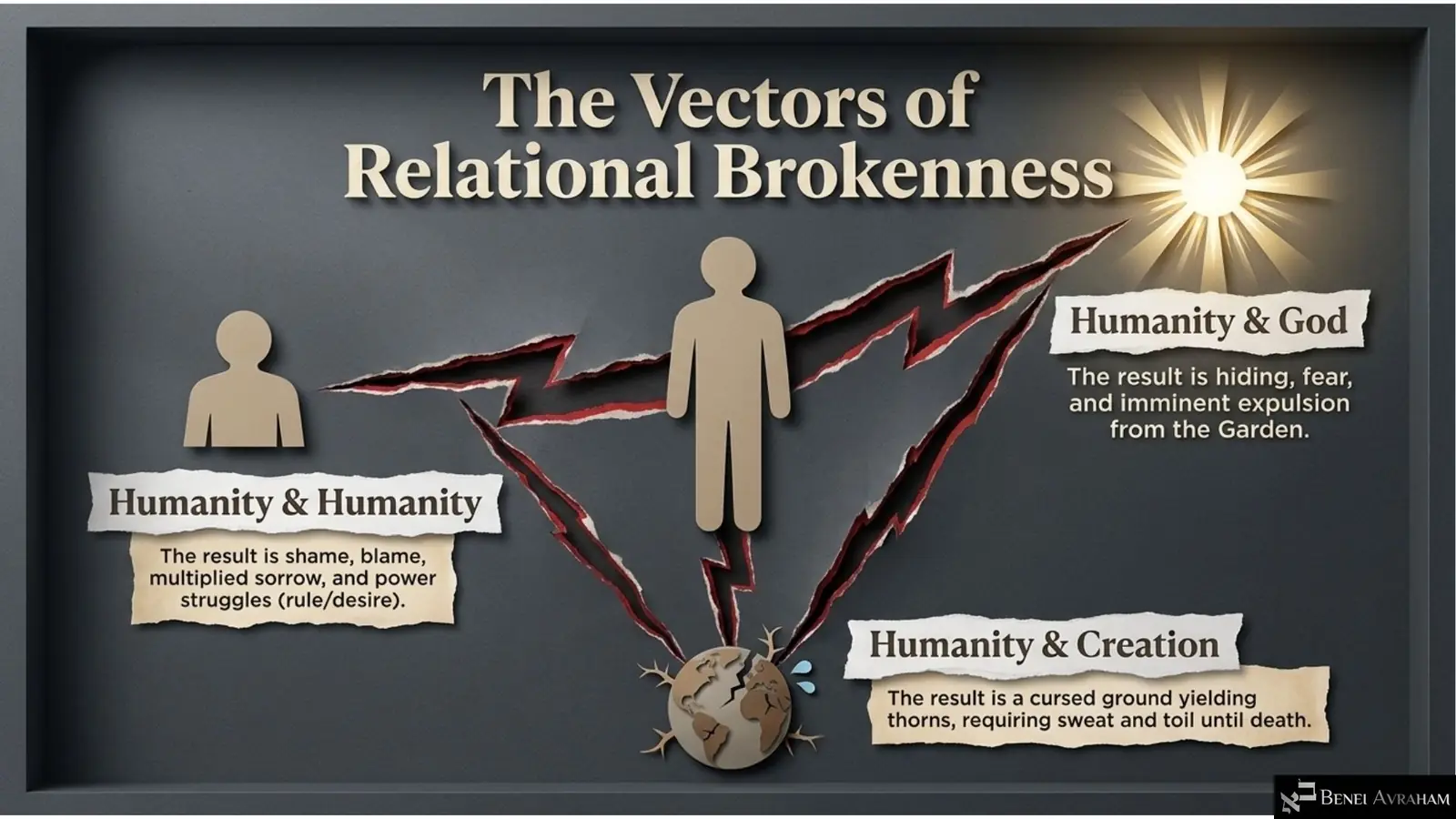
The vectors of relational brokenness
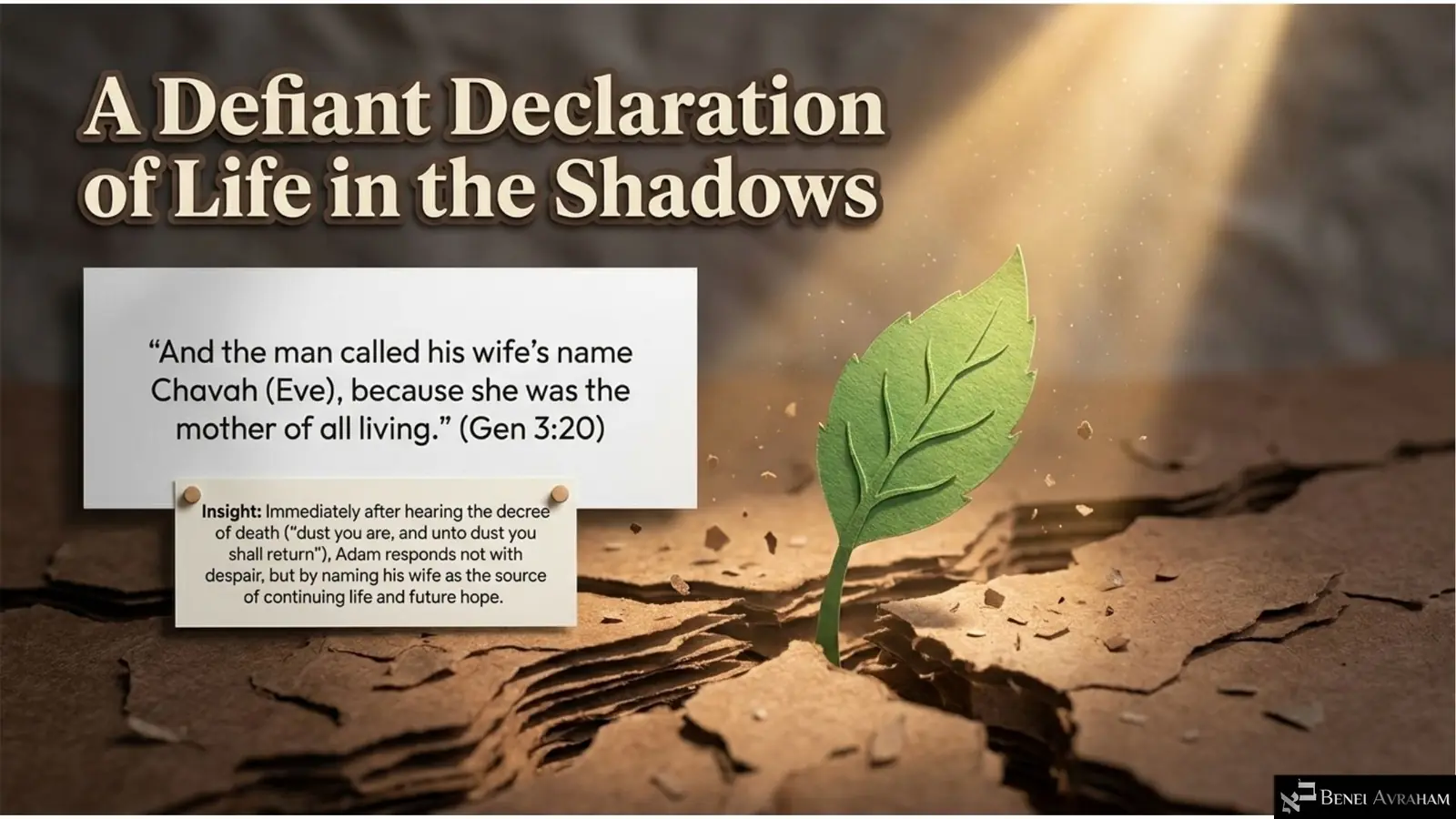
A defiant declaration of life in the shadows (Genesis 3:20)
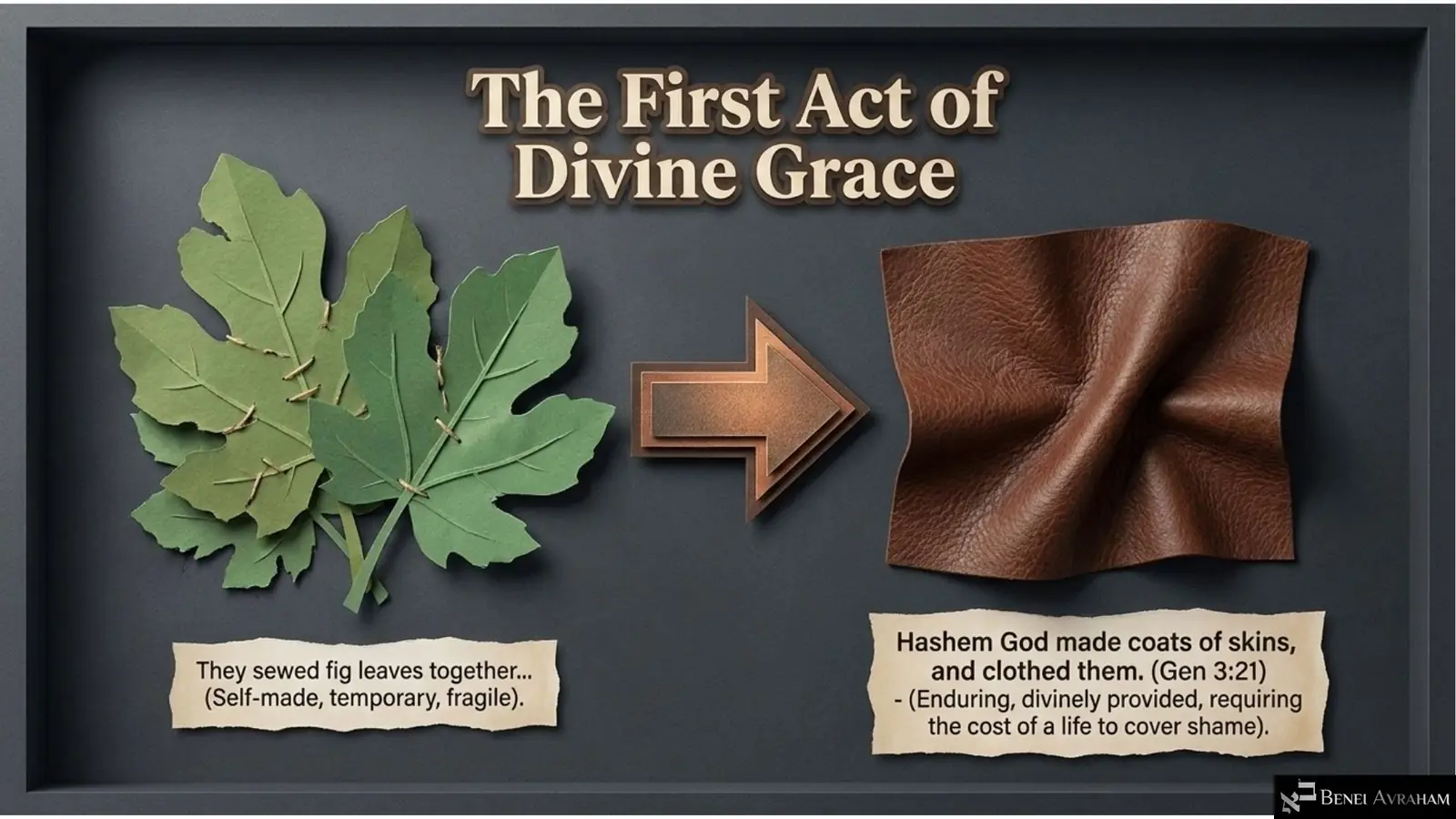
The first act of divine grace: coats of skins (Genesis 3:21)
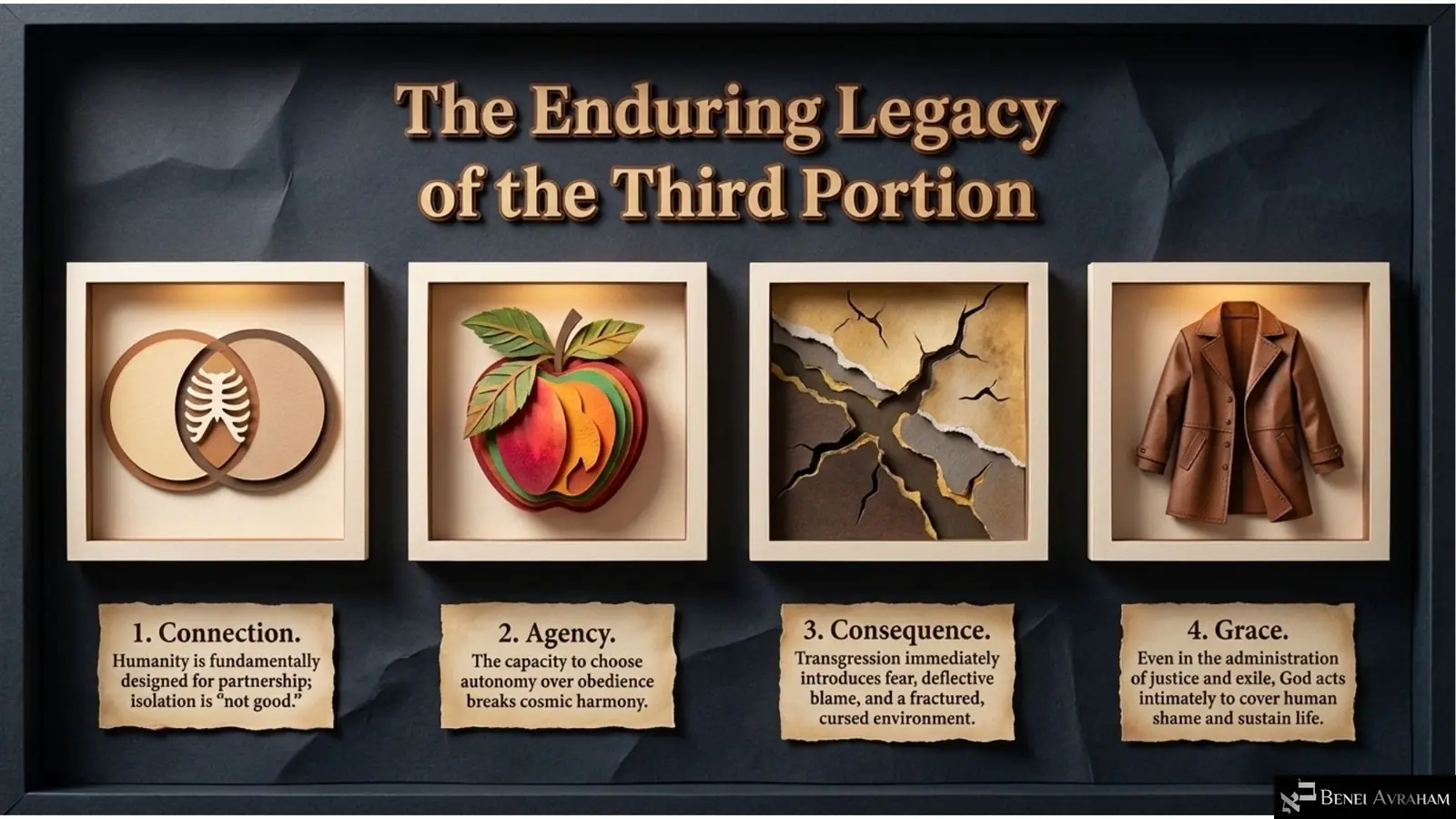
The enduring legacy of the Third Portion: connection, agency, consequence, grace
Revi'i · Genesis 3:22–4:18

Fourth Portion
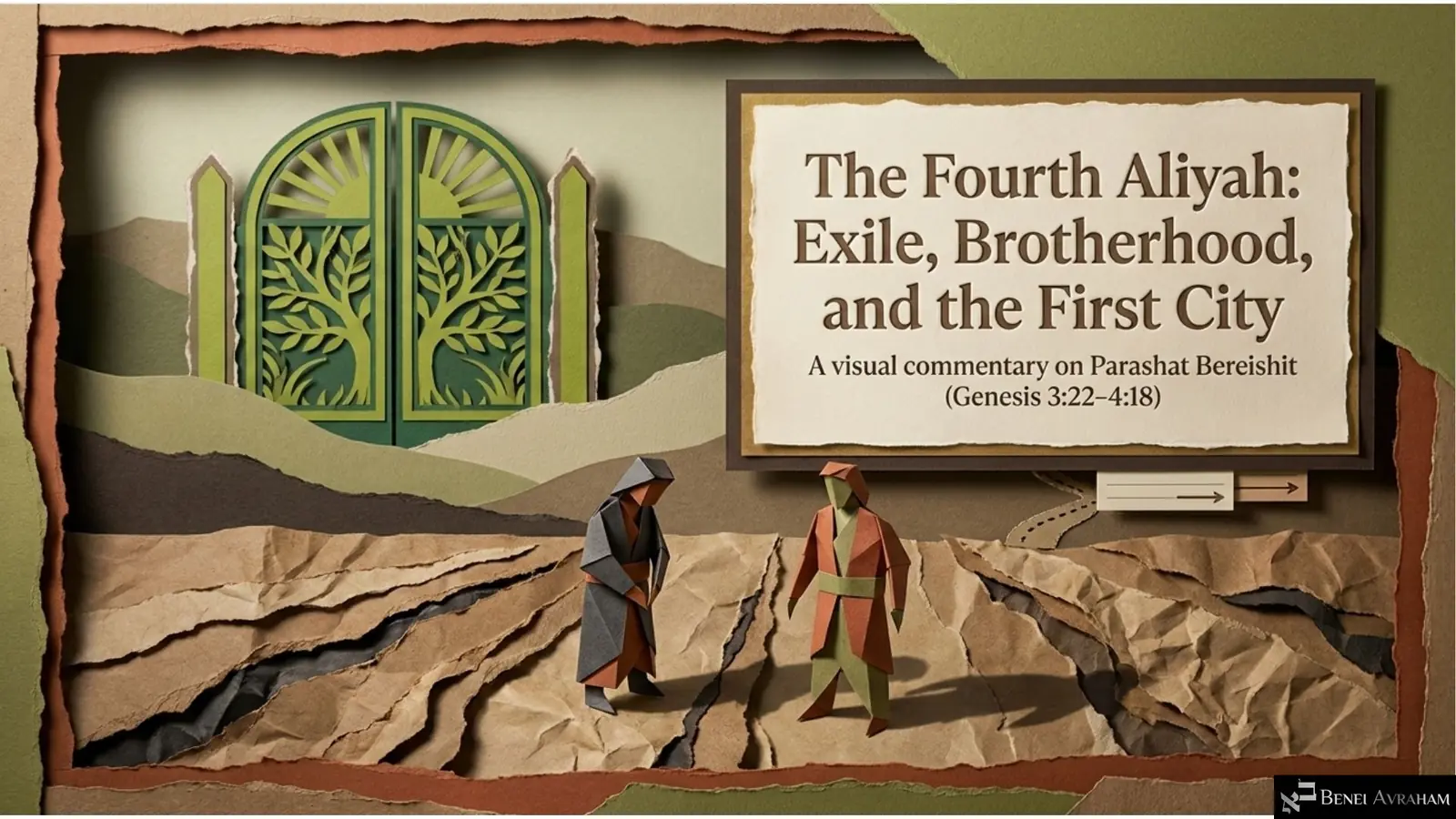
The Fourth Aliyah: Exile, Brotherhood, and the First City (Genesis 3:22–4:18)
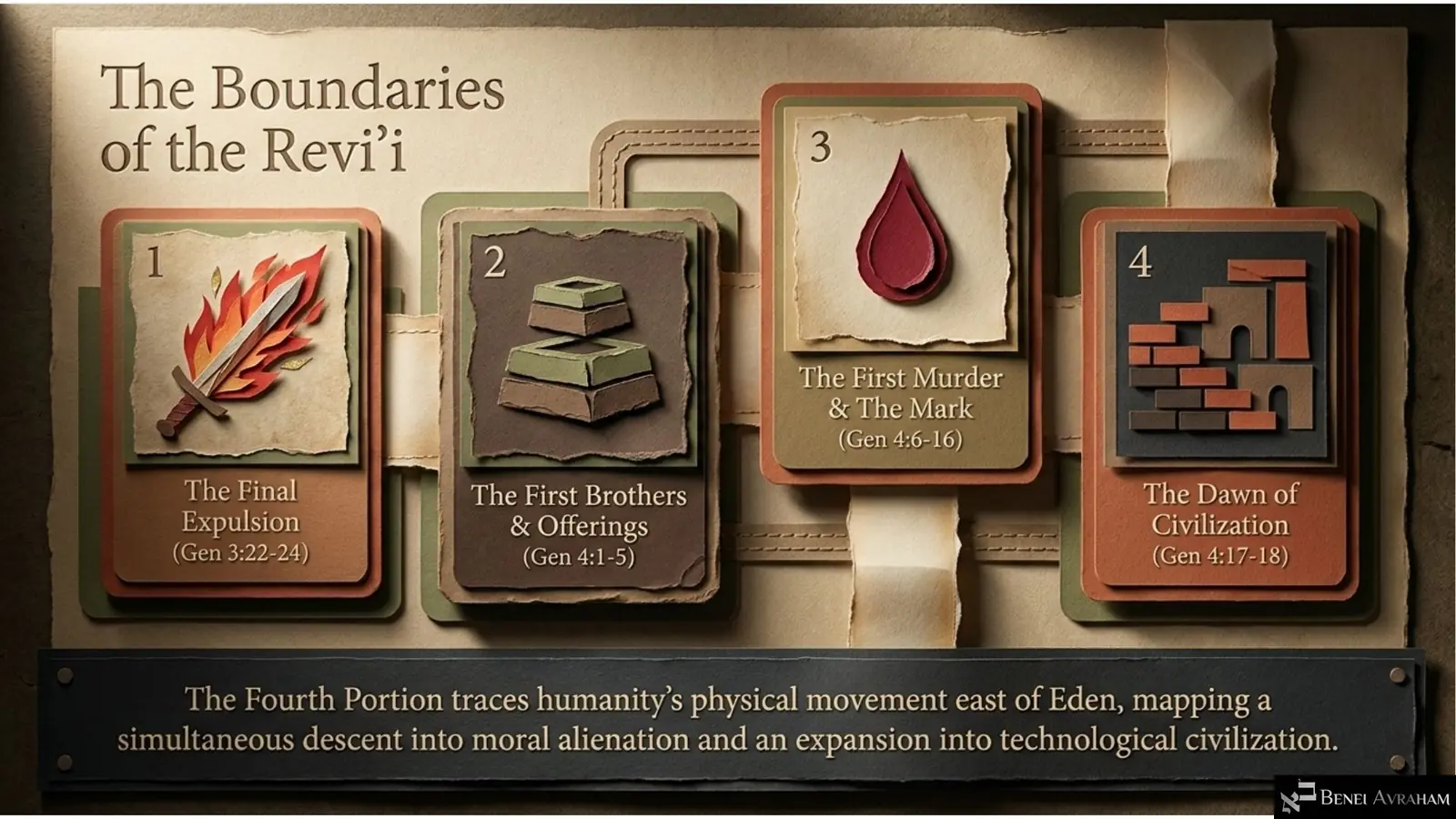
The boundaries of the Revi’i: expulsion, the first brothers, the first murder, the dawn of civilization
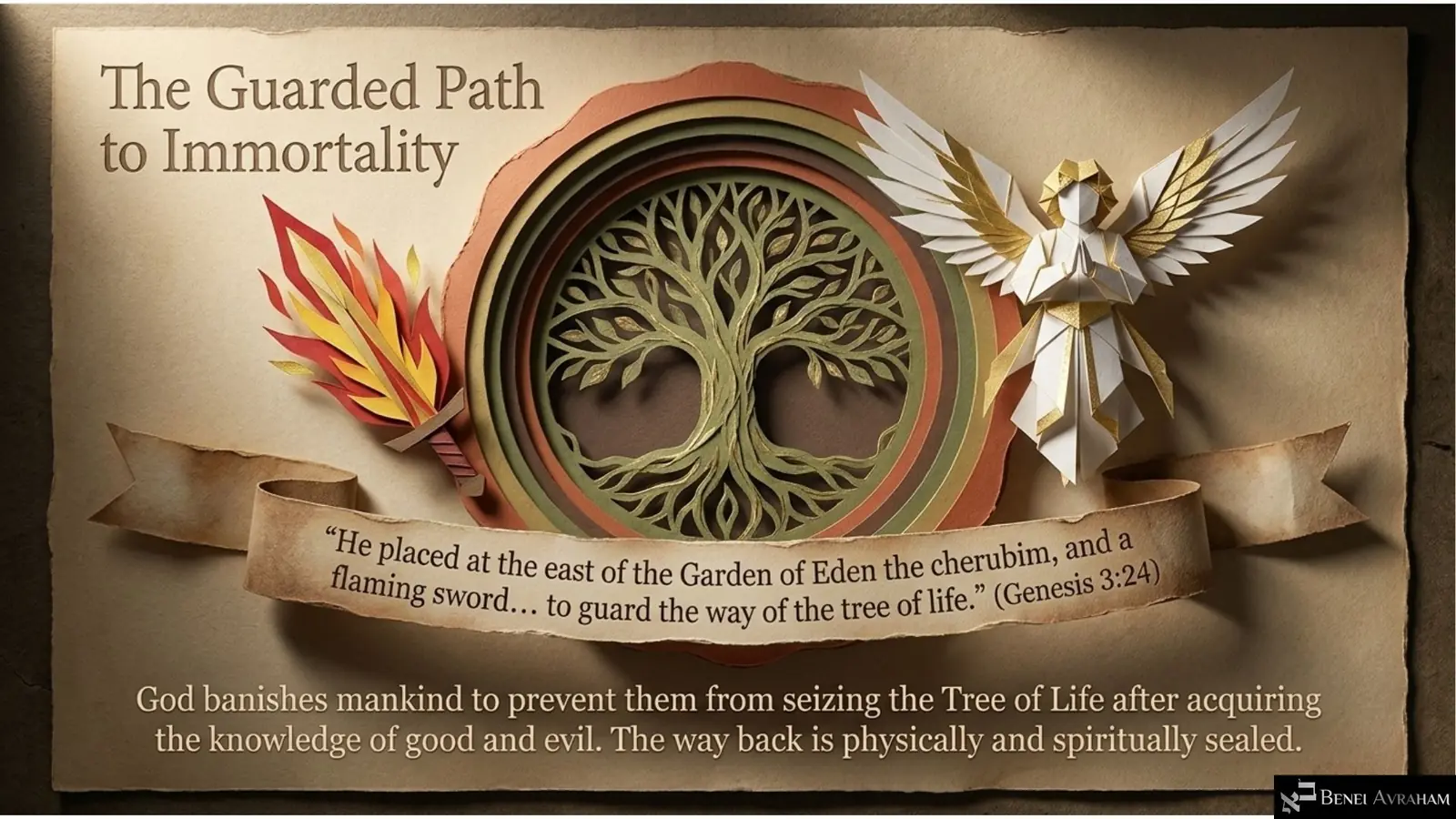
The guarded path to immortality: the cherubim and the flaming sword (Genesis 3:24)
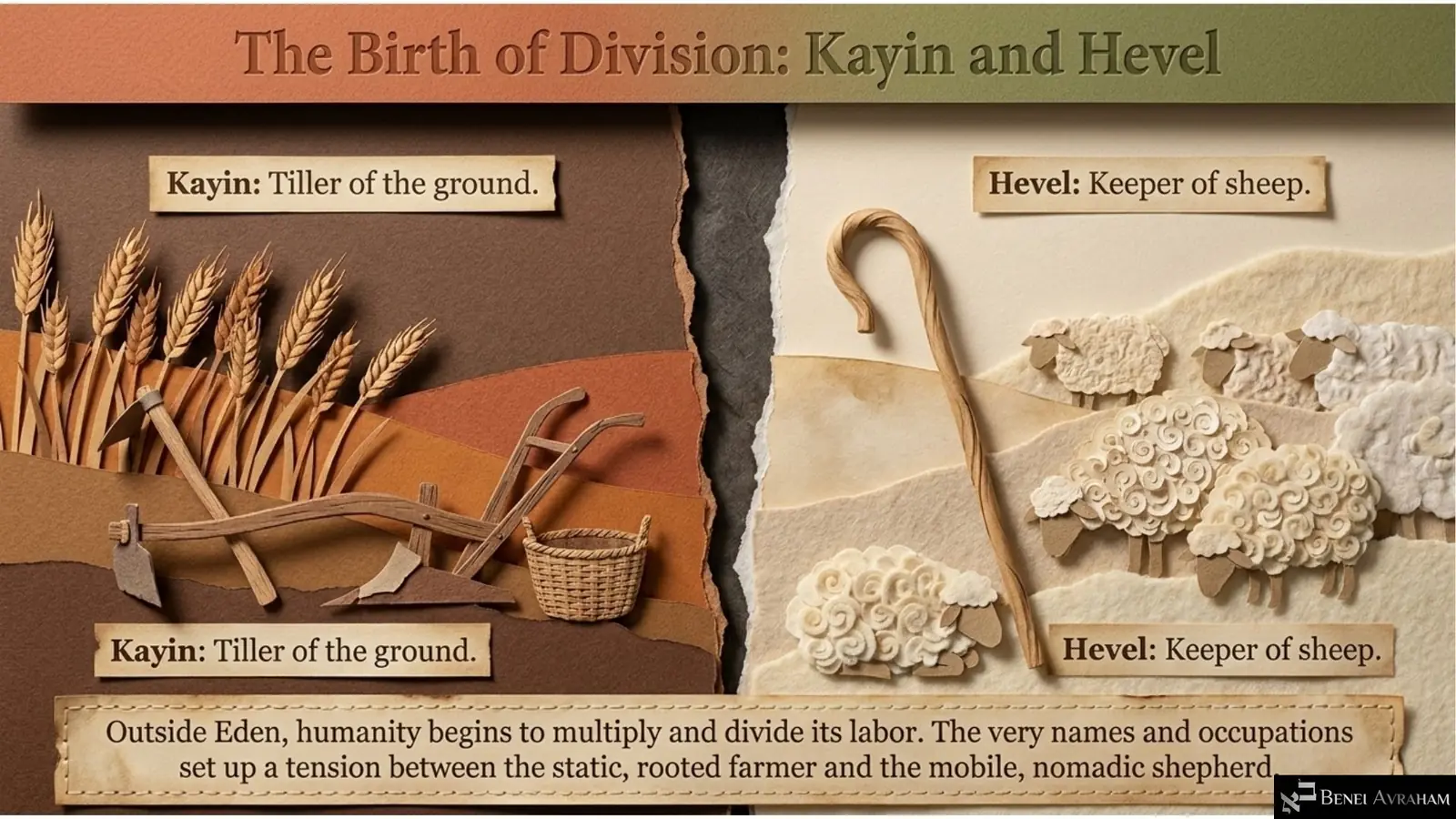
The birth of division: Kayin, tiller of the ground, and Hevel, keeper of sheep (Genesis 4:1–2)
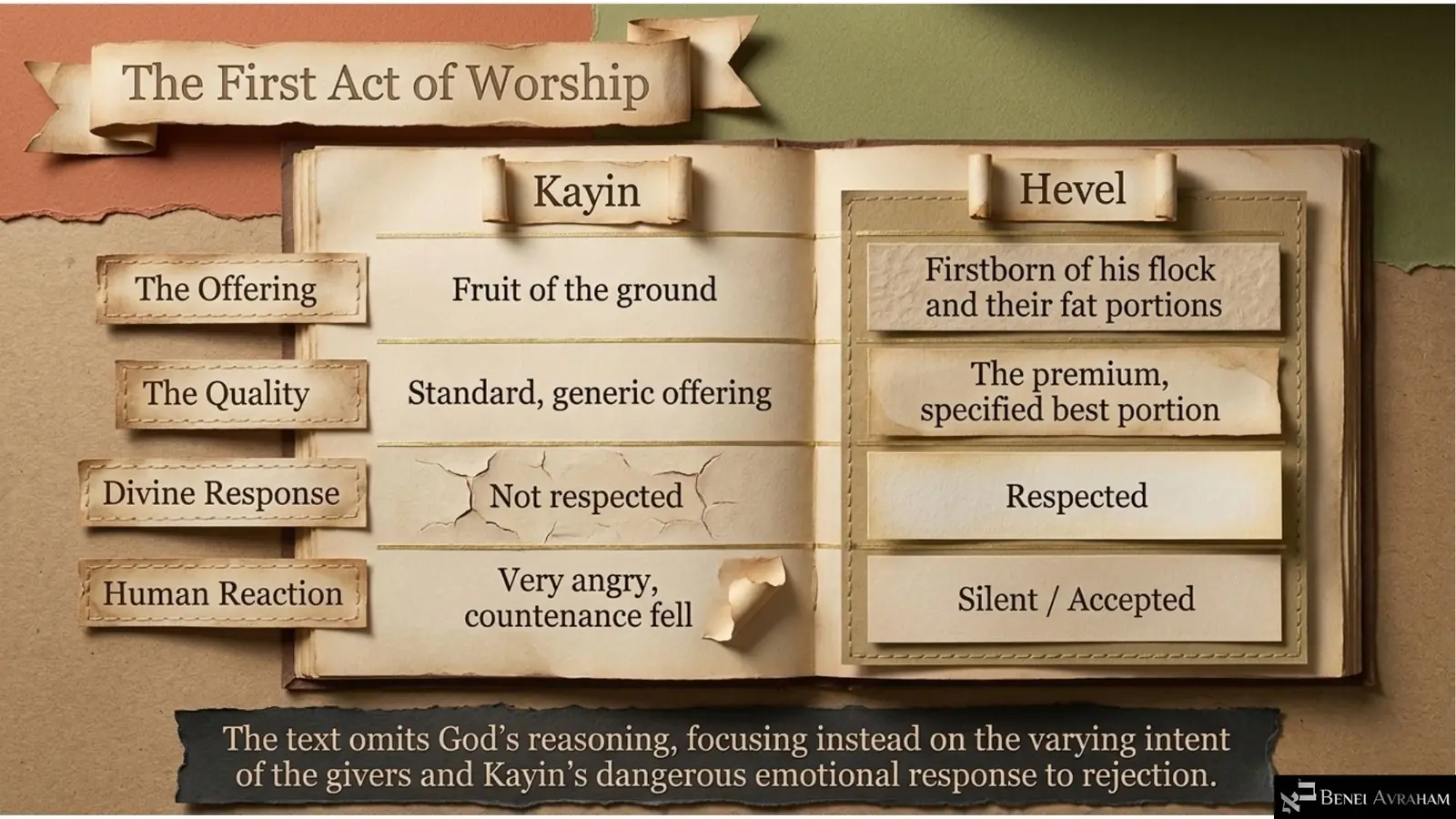
The first act of worship: the offerings of Kayin and Hevel (Genesis 4:3–5)
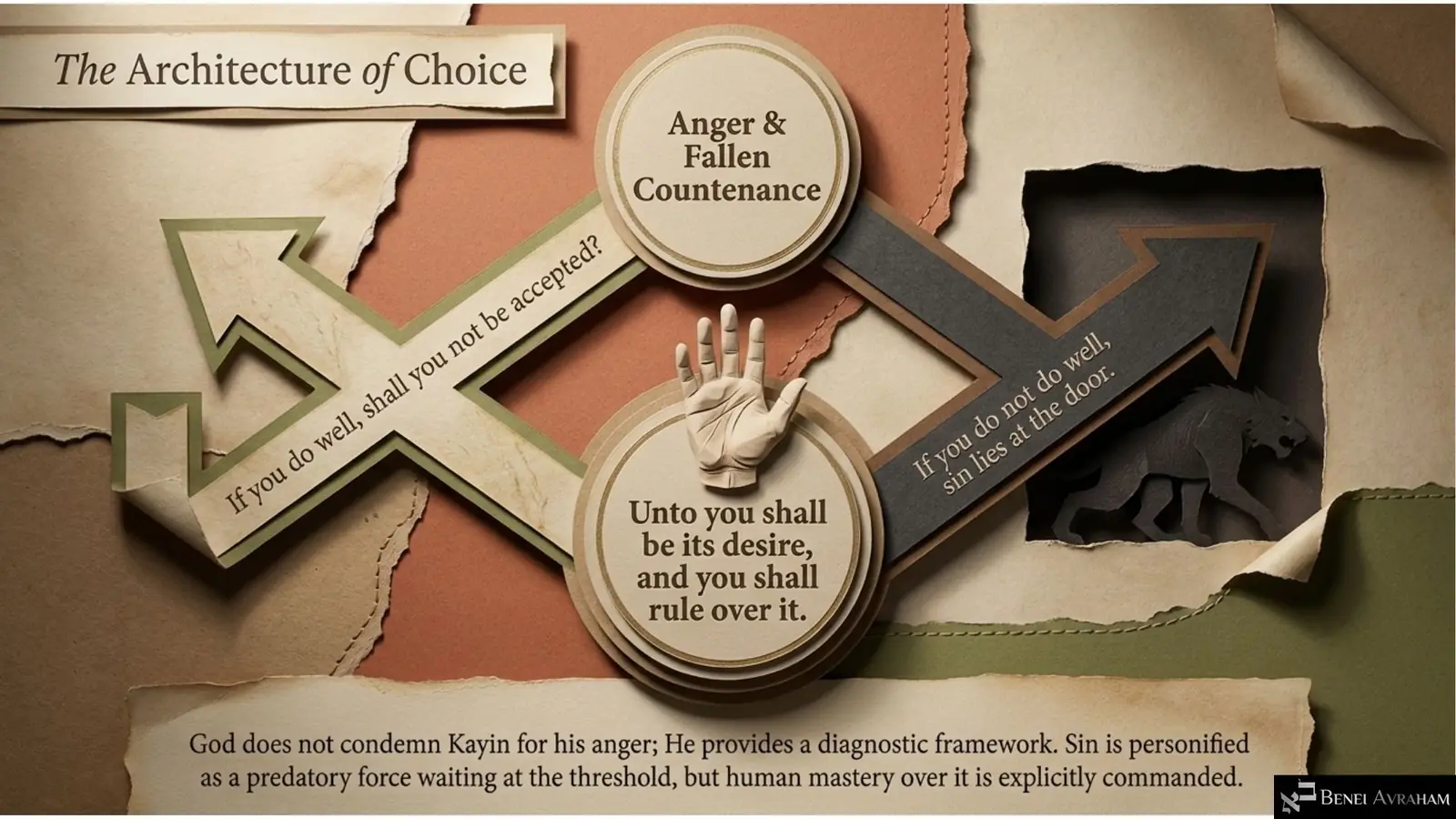
The architecture of choice: sin crouching at the door (Genesis 4:6–7)
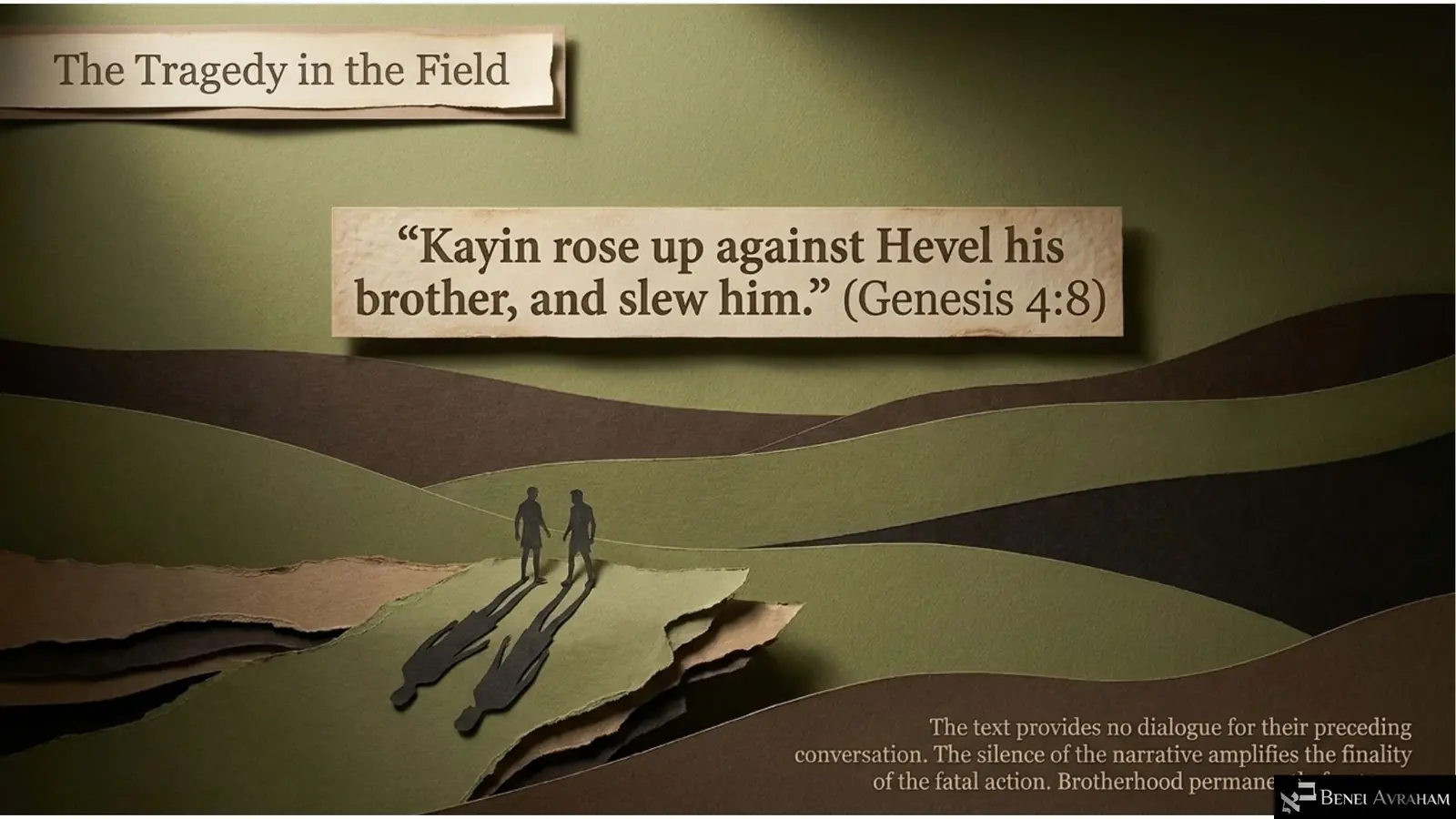
The tragedy in the field (Genesis 4:8)
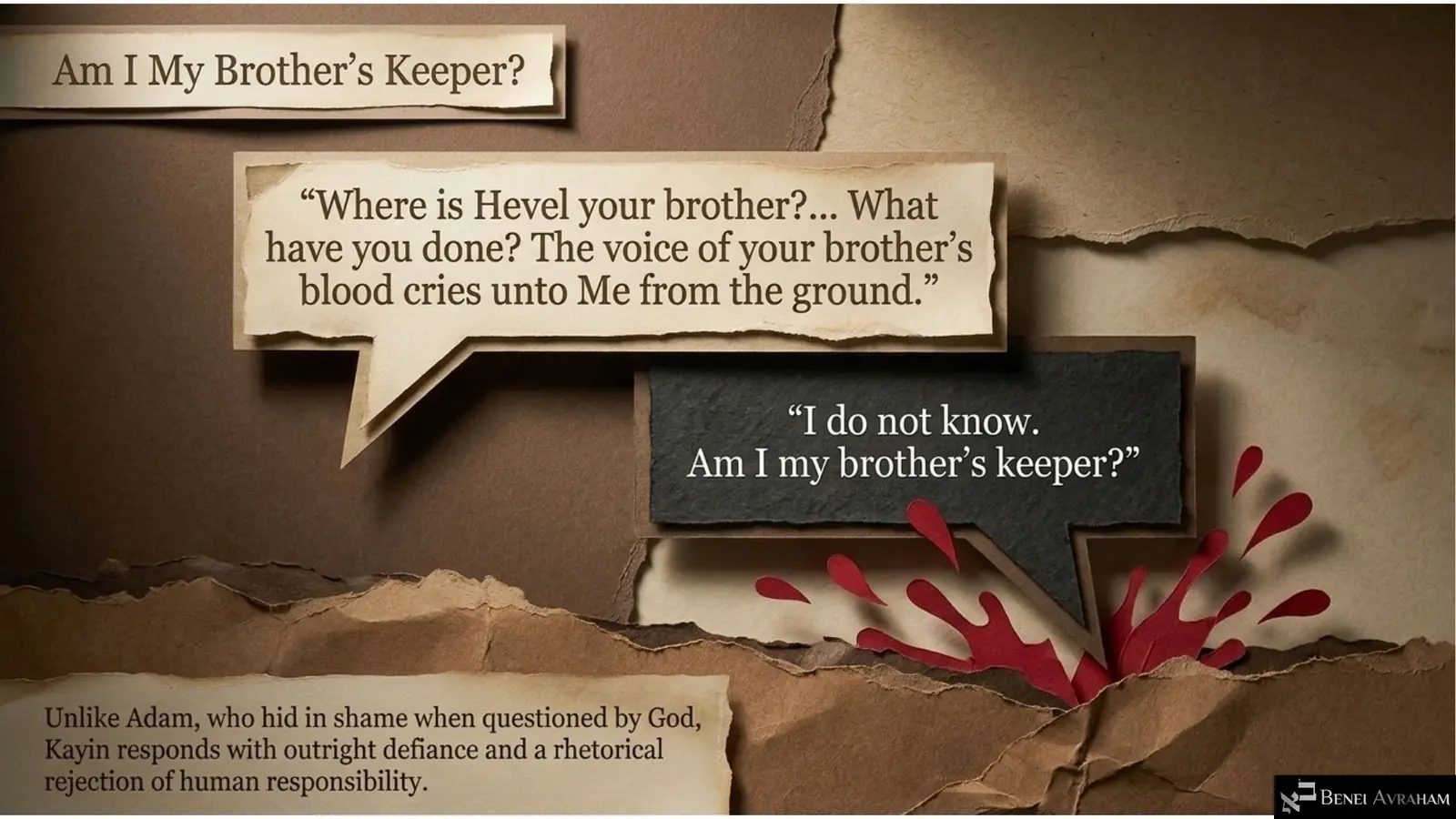
Am I my brother’s keeper? (Genesis 4:9–10)
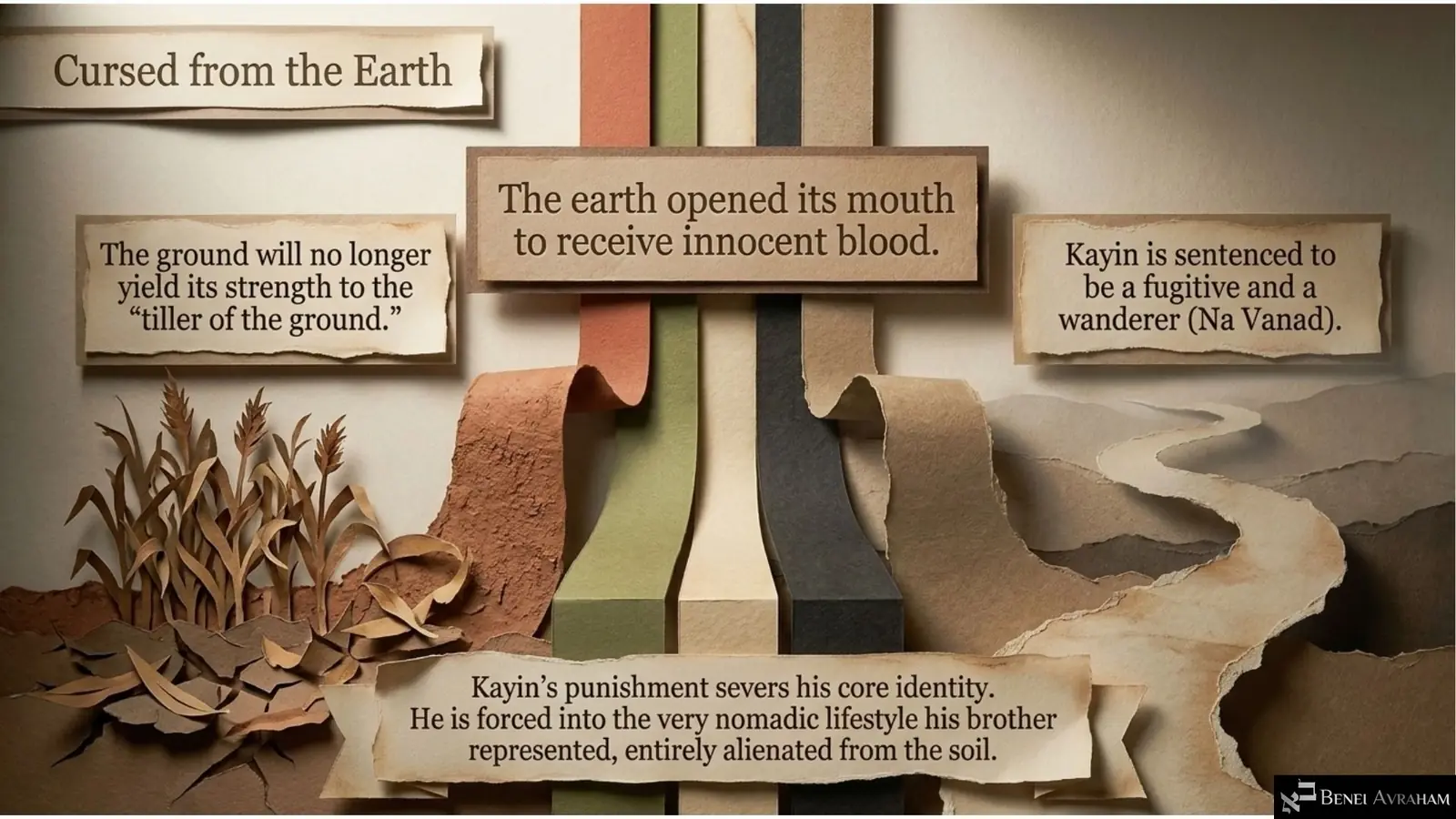
Cursed from the earth: a fugitive and a wanderer (Genesis 4:11–12)
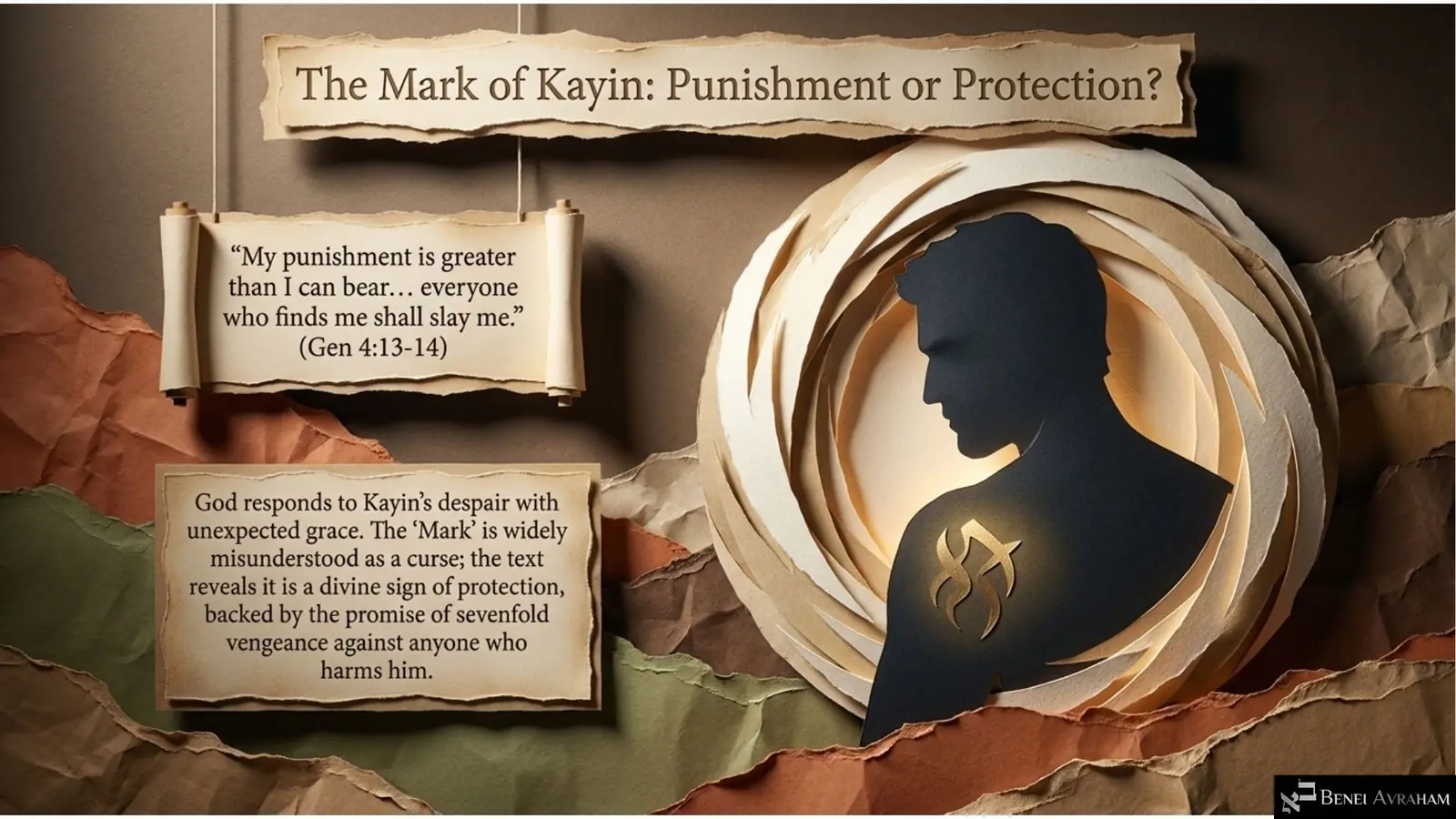
The mark of Kayin: punishment or protection? (Genesis 4:13–15)
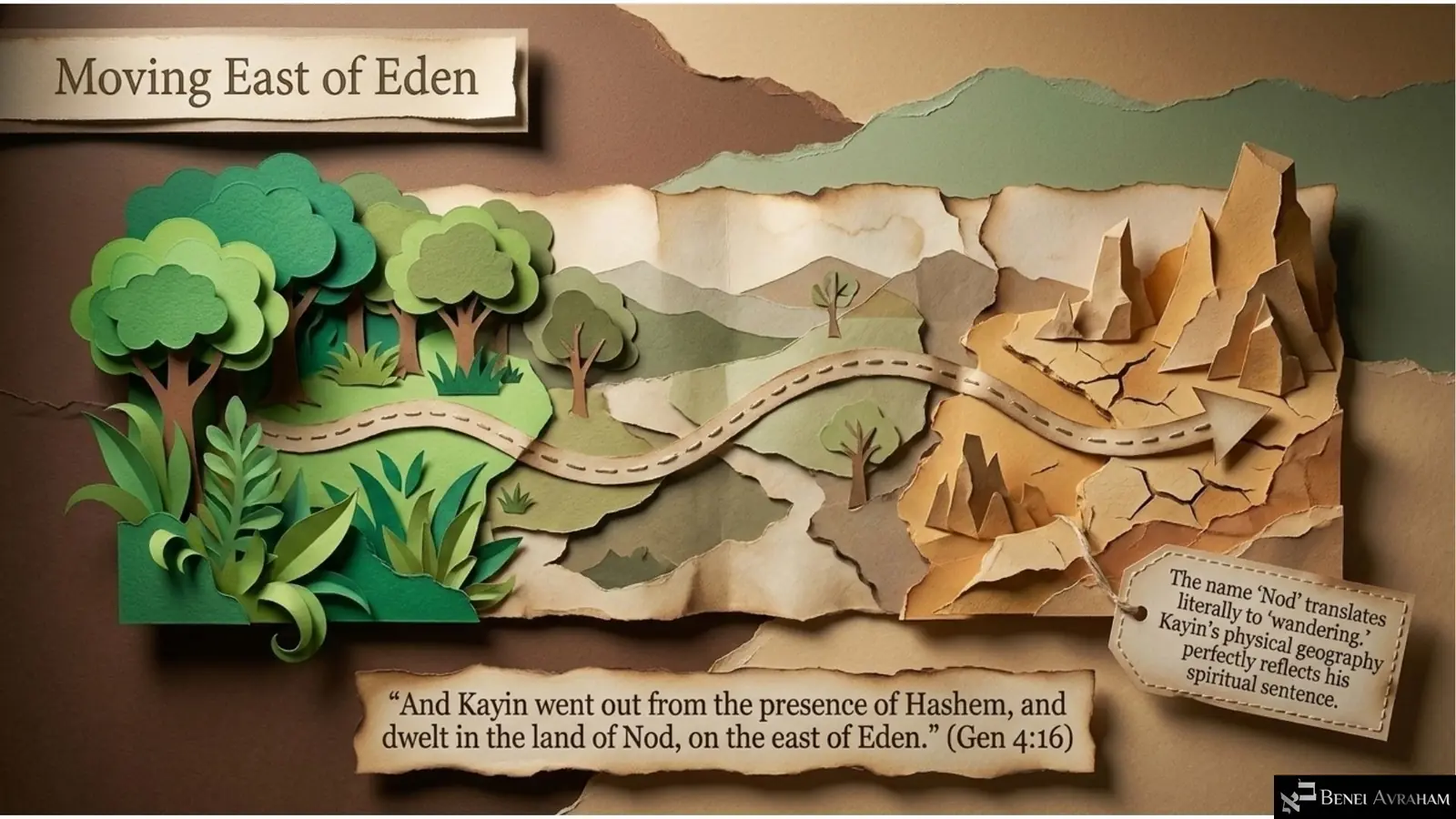
Moving east of Eden: the land of Nod (Genesis 4:16)
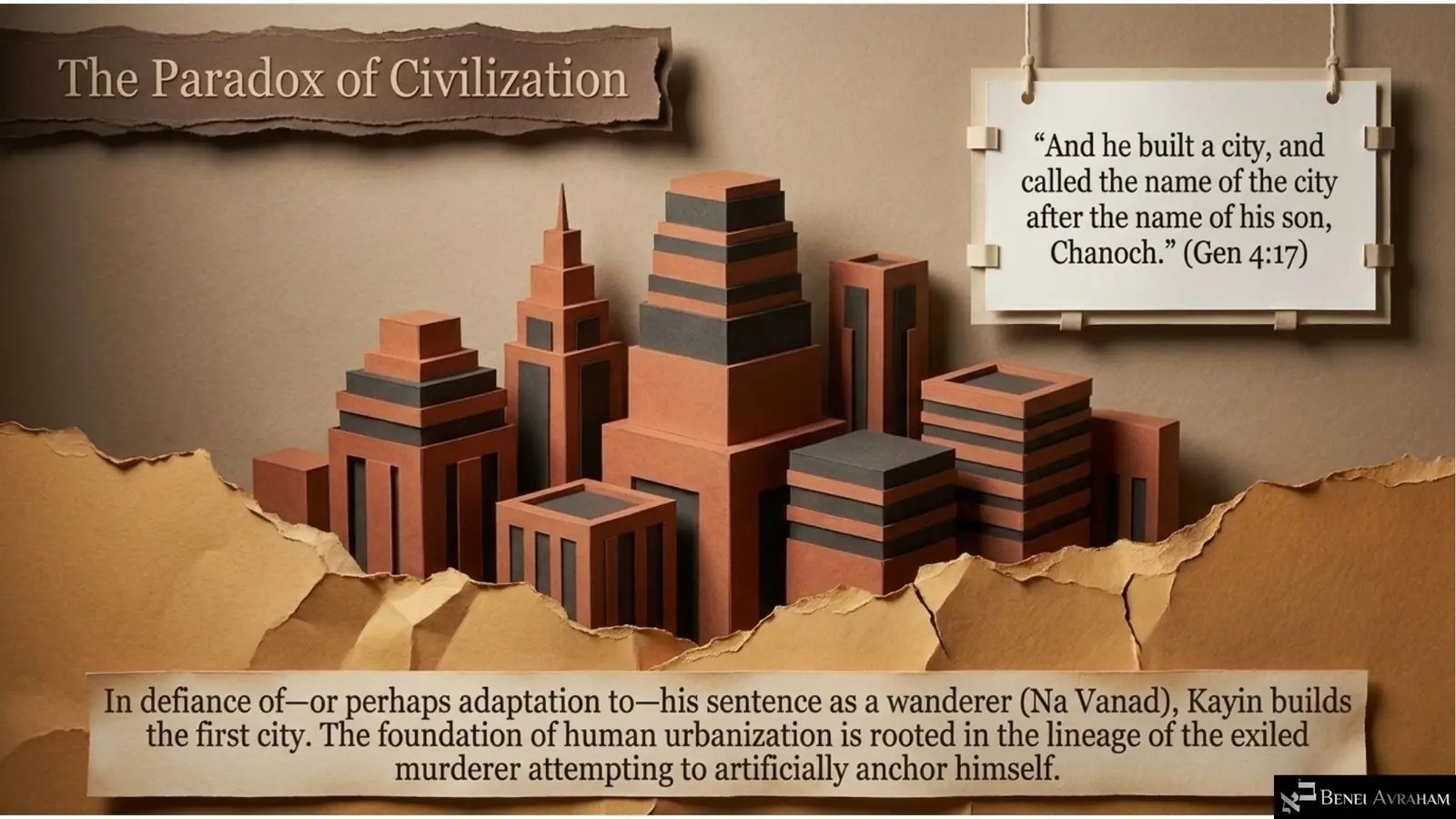
The paradox of civilization: the first city (Genesis 4:17)
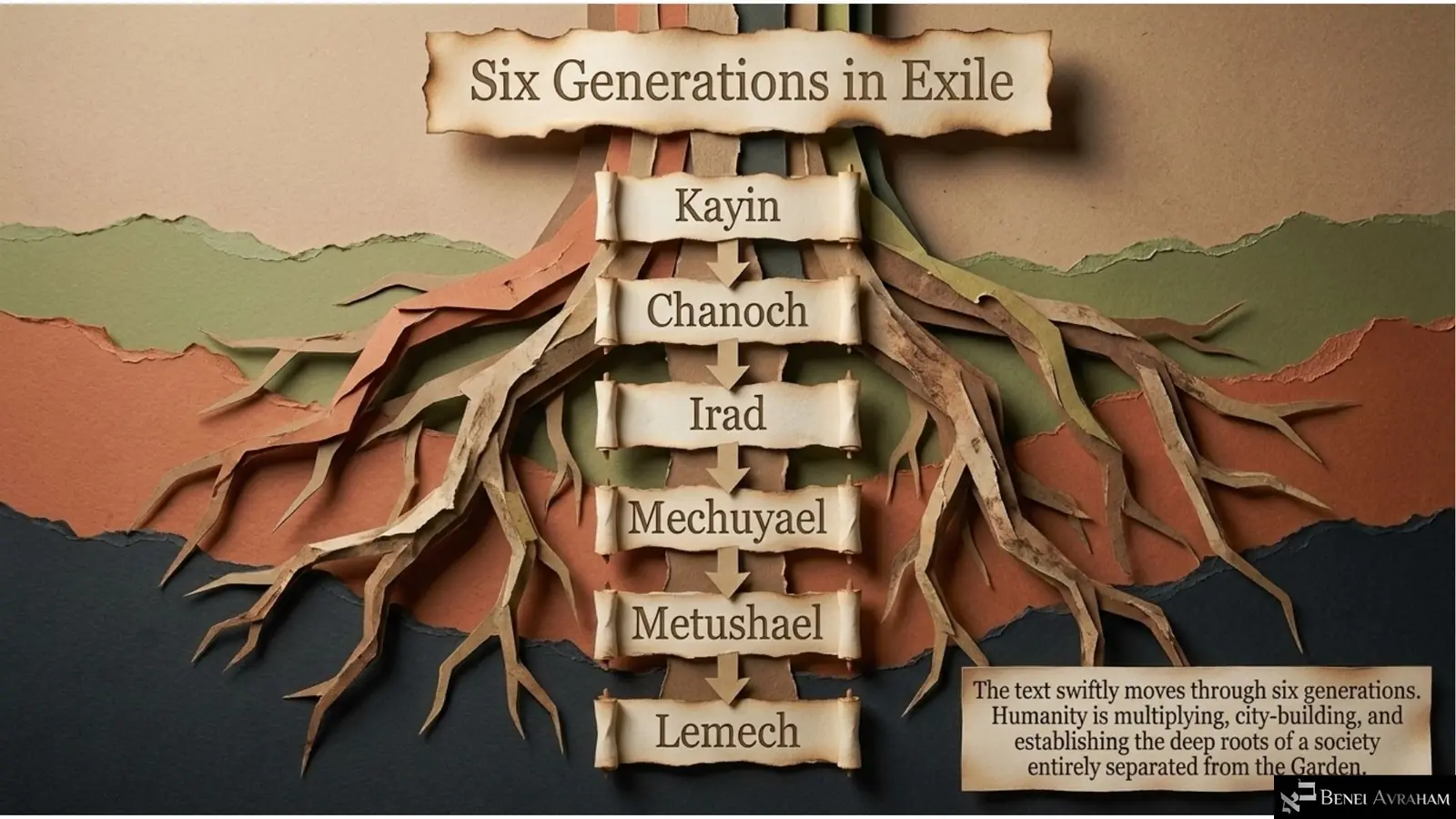
Six generations in exile: Kayin to Lemech (Genesis 4:17–18)
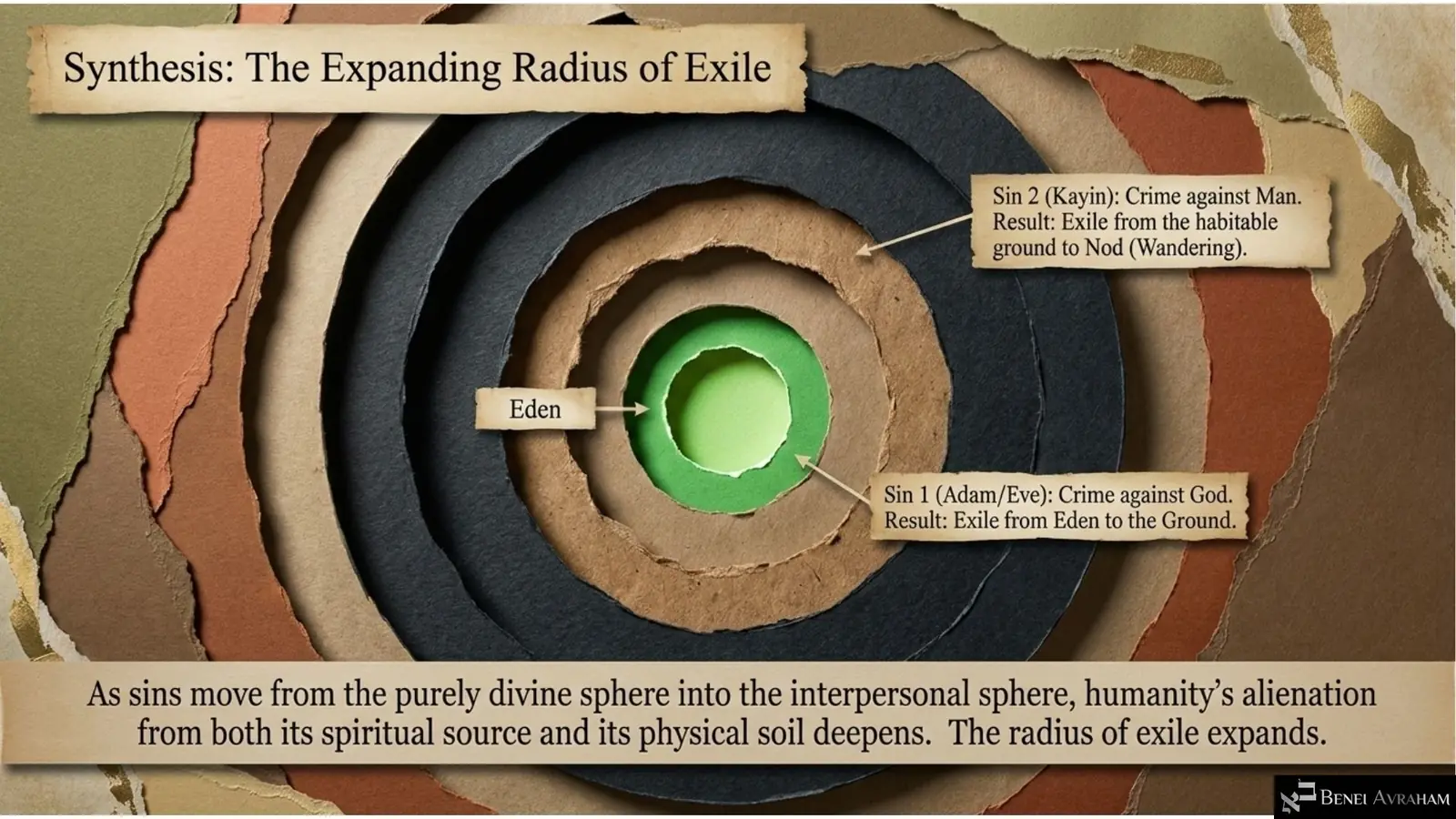
Synthesis: the expanding radius of exile
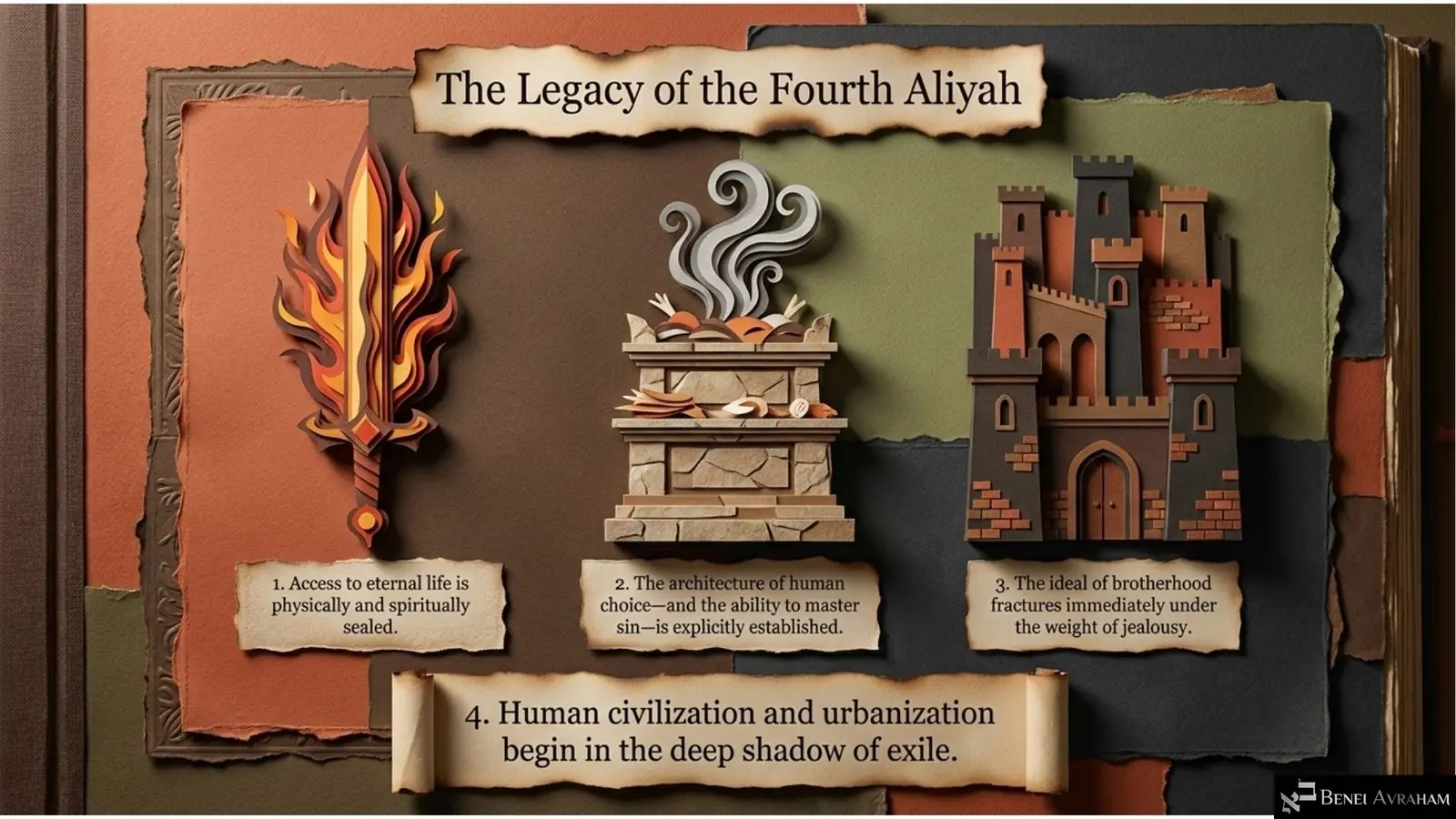
The legacy of the Fourth Aliyah
Chamishi · Genesis 4:19–22

Fifth Portion
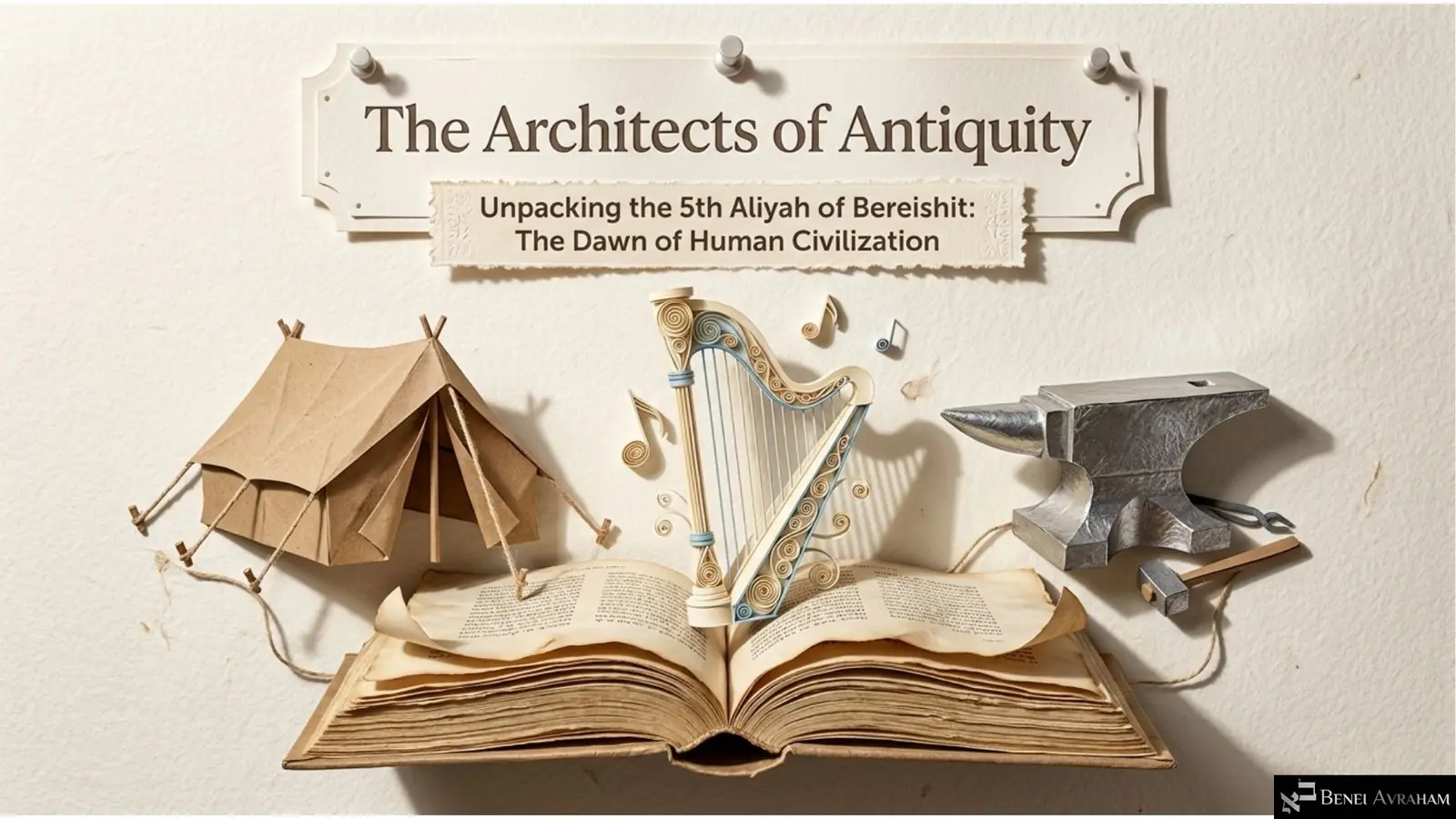
The Architects of Antiquity: unpacking the Fifth Aliyah of Bereishit, the dawn of human civilization (Genesis 4:19–22)
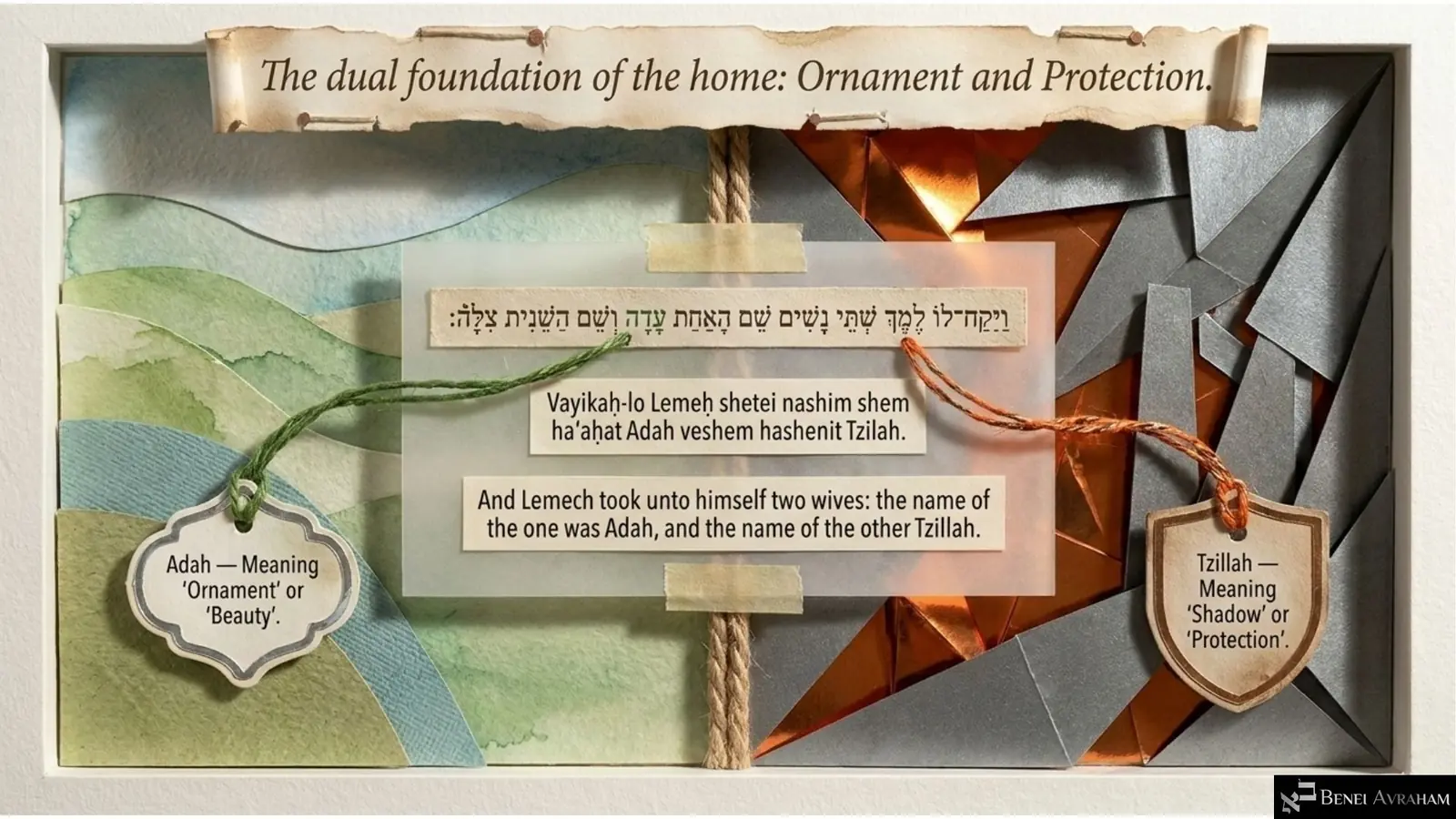
The dual foundation of the home: Adah (ornament) and Tzillah (protection) (Genesis 4:19)
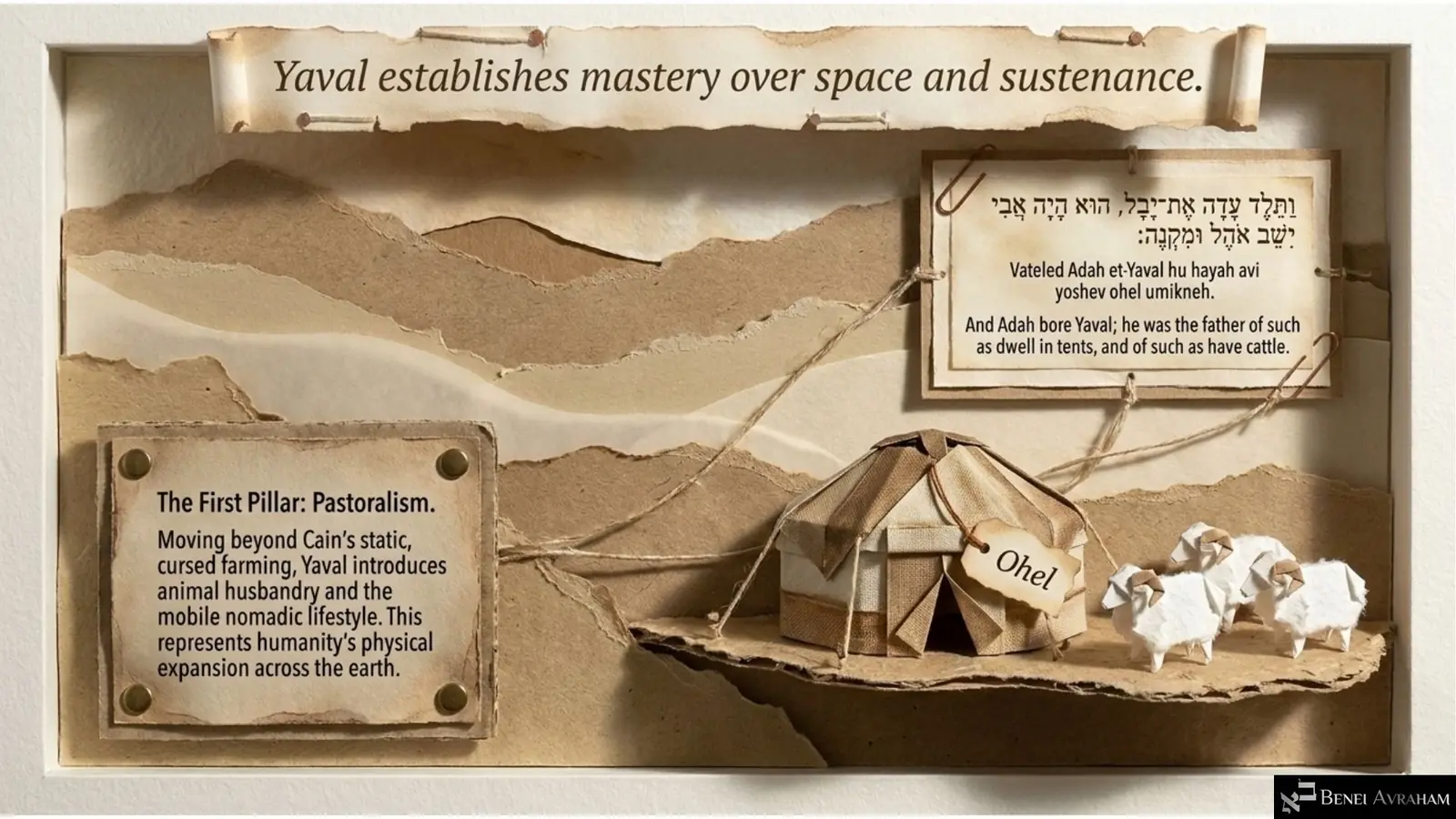
Yaval establishes mastery over space and sustenance: tents and cattle (Genesis 4:20)
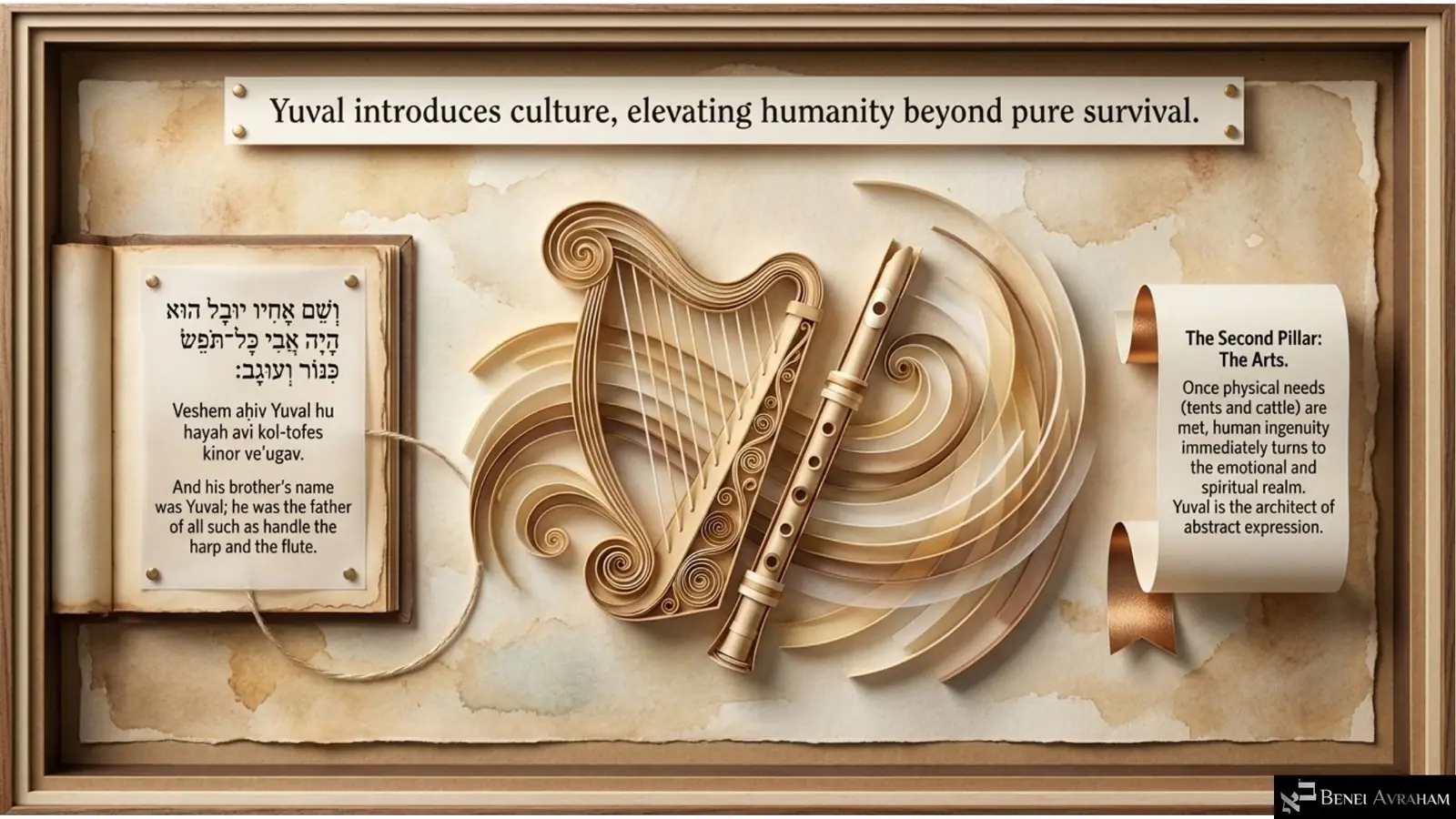
Yuval introduces culture: the harp and the flute (Genesis 4:21)
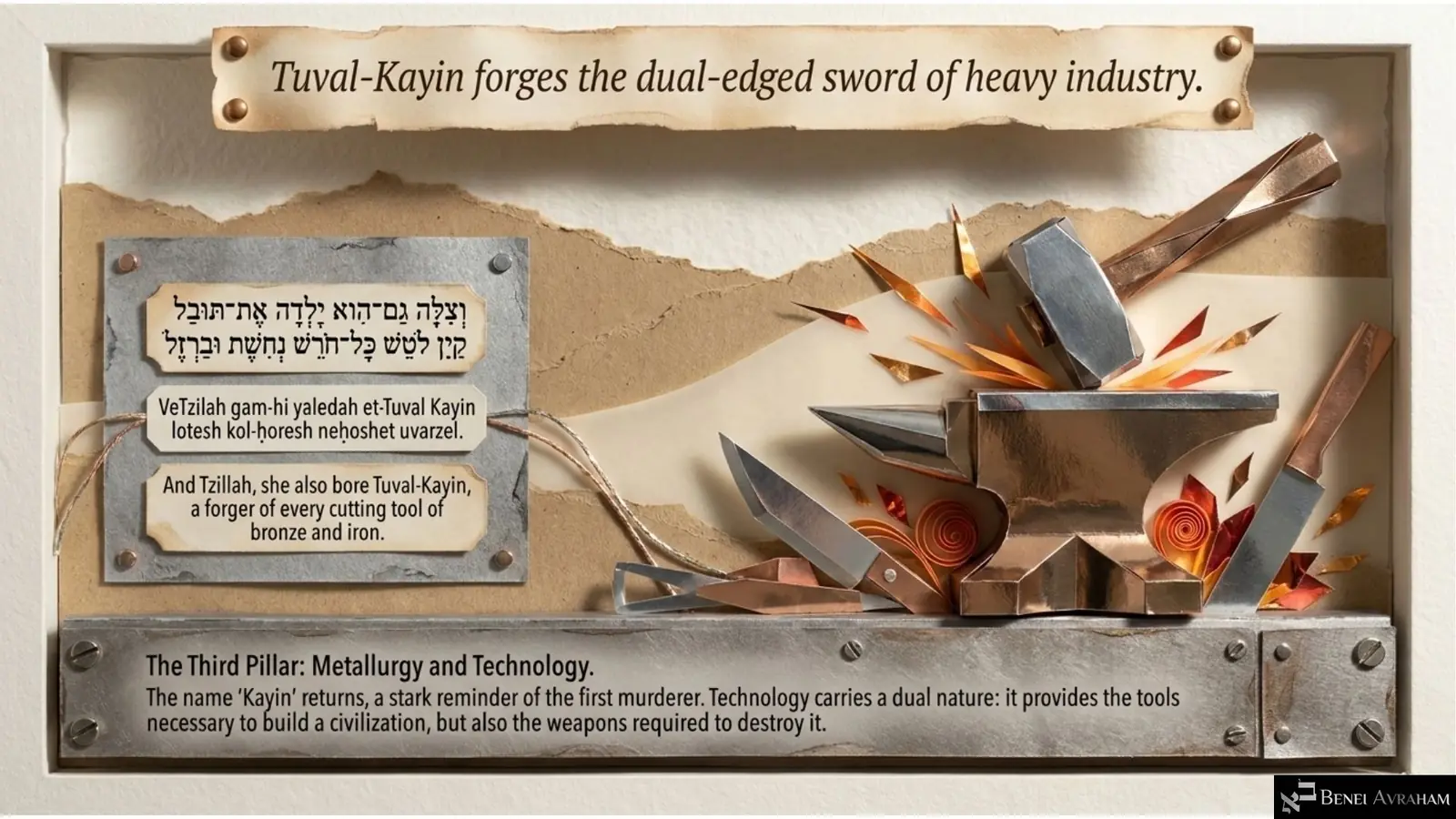
Tuval-Kayin forges the dual-edged sword of heavy industry: bronze and iron (Genesis 4:22)
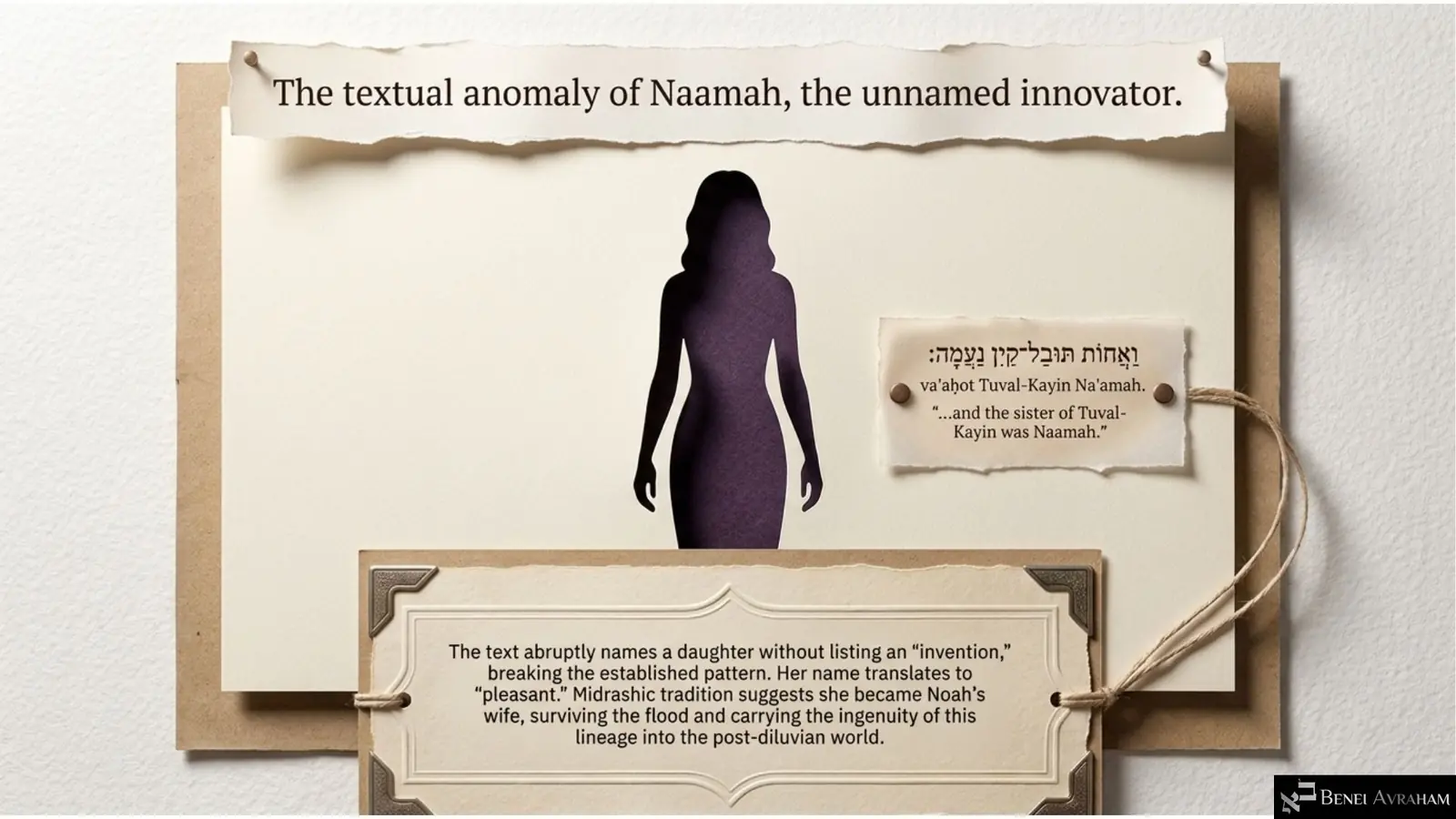
The textual anomaly of Naamah (Genesis 4:22)
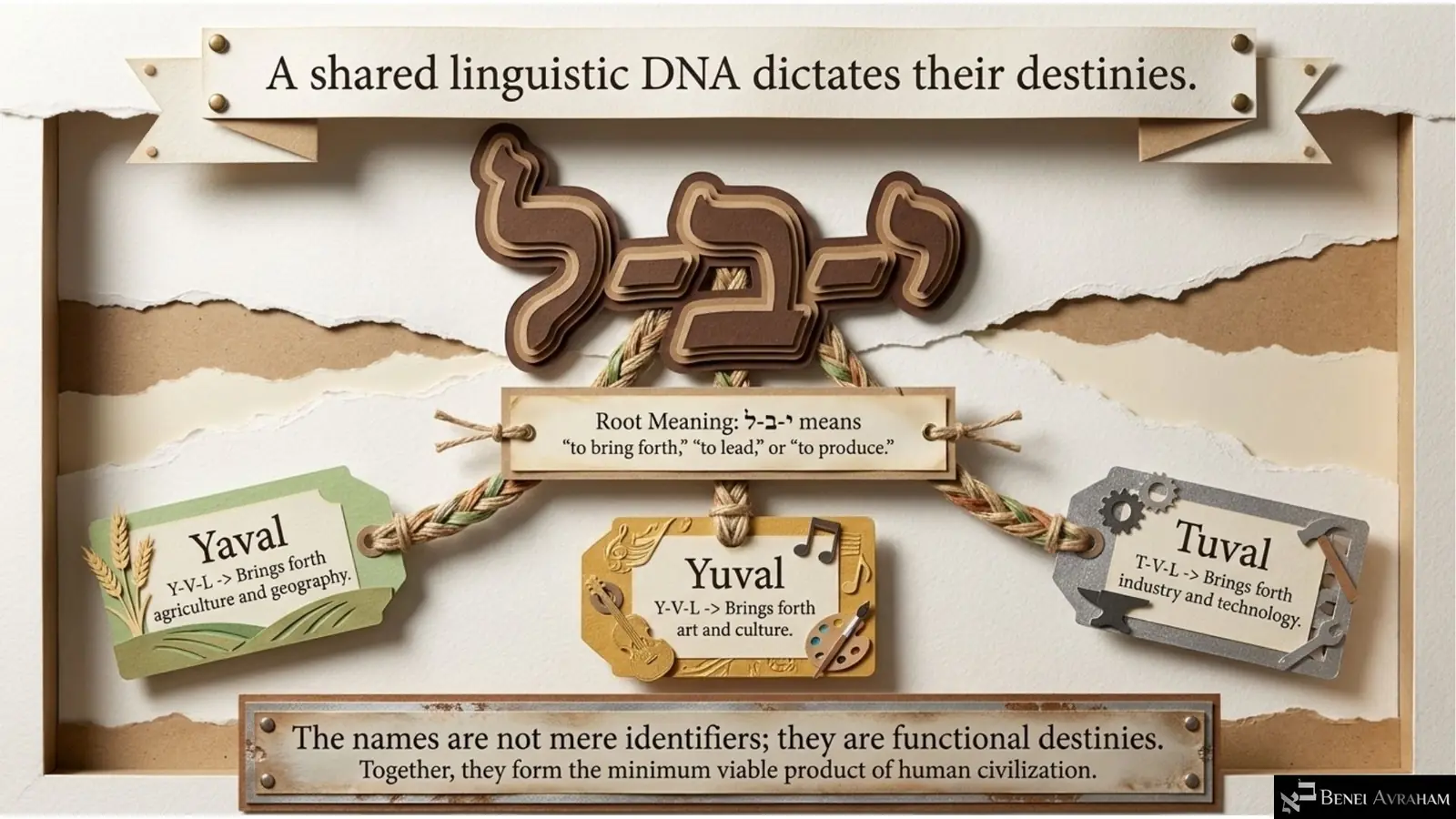
A shared linguistic DNA: Yaval, Yuval and Tuval from the root Y-V-L
Shishi · Genesis 4:23–5:24

Sixth Portion
The Book of Generations: a visual deconstruction of the Sixth Aliyah (Genesis 4:23–5:24)
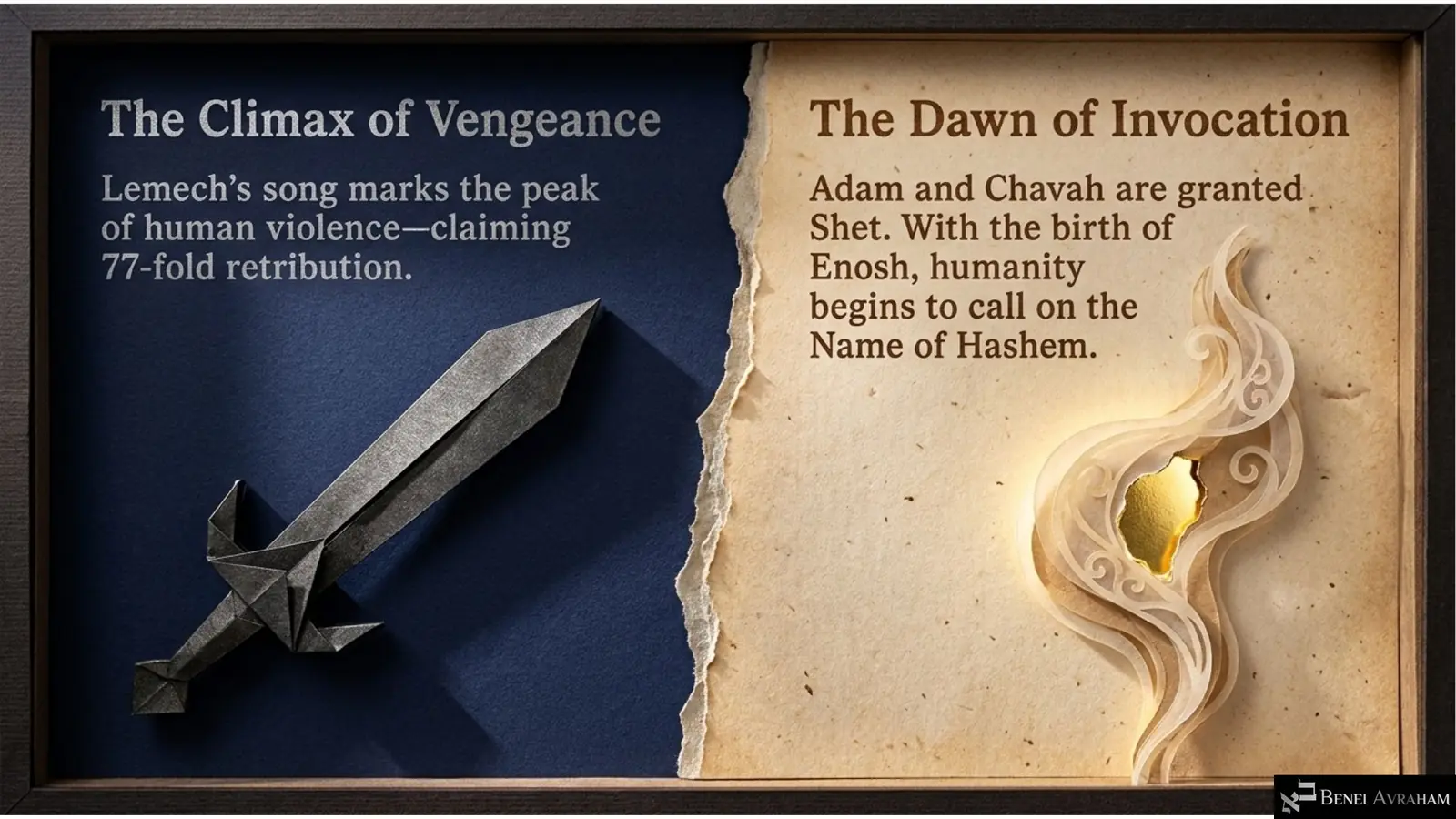
The climax of vengeance and the dawn of invocation: Lemech’s song and the birth of Enosh (Genesis 4:23–26)
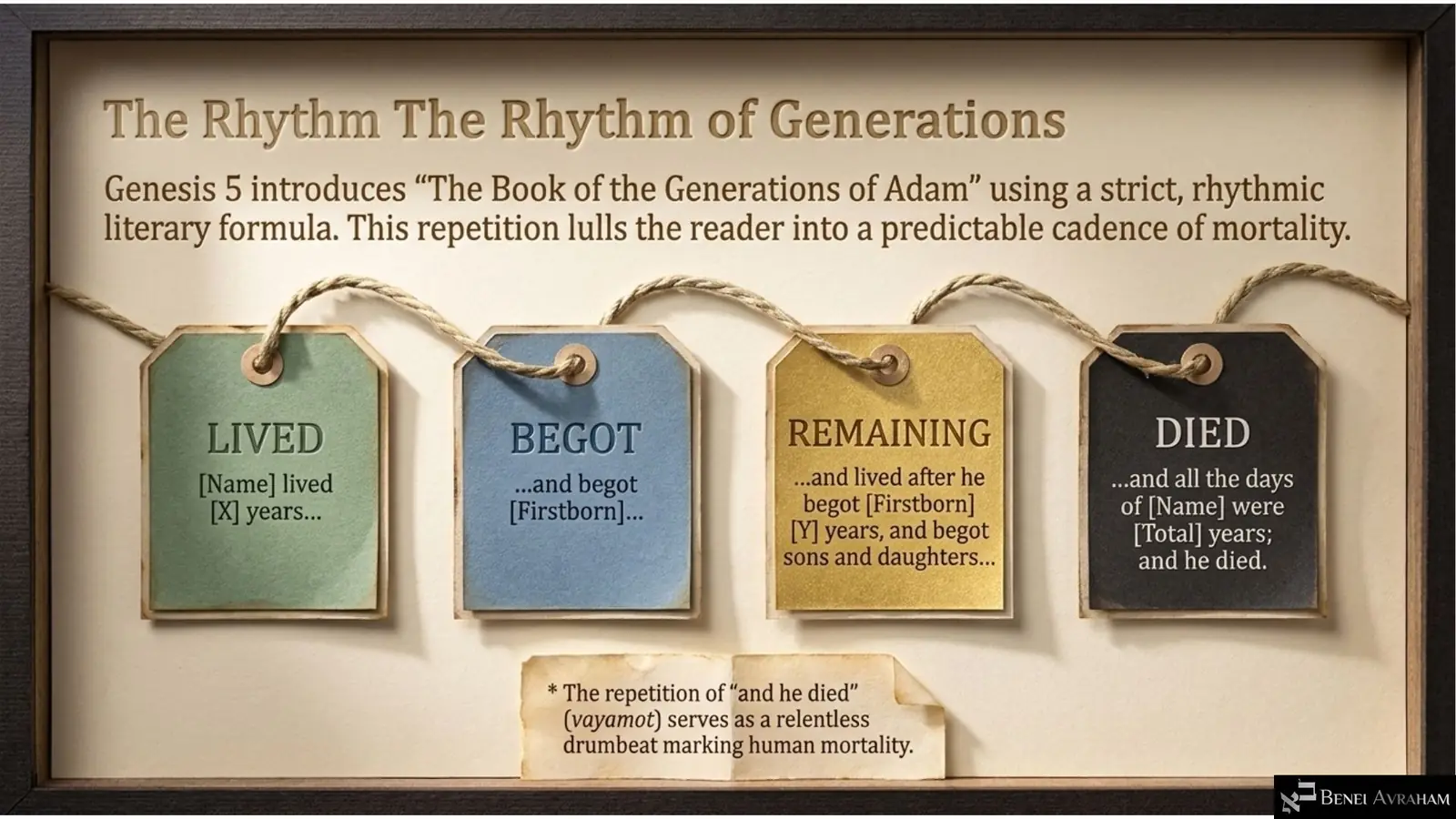
The rhythm of generations: lived, begot, remaining, died (Genesis 5)
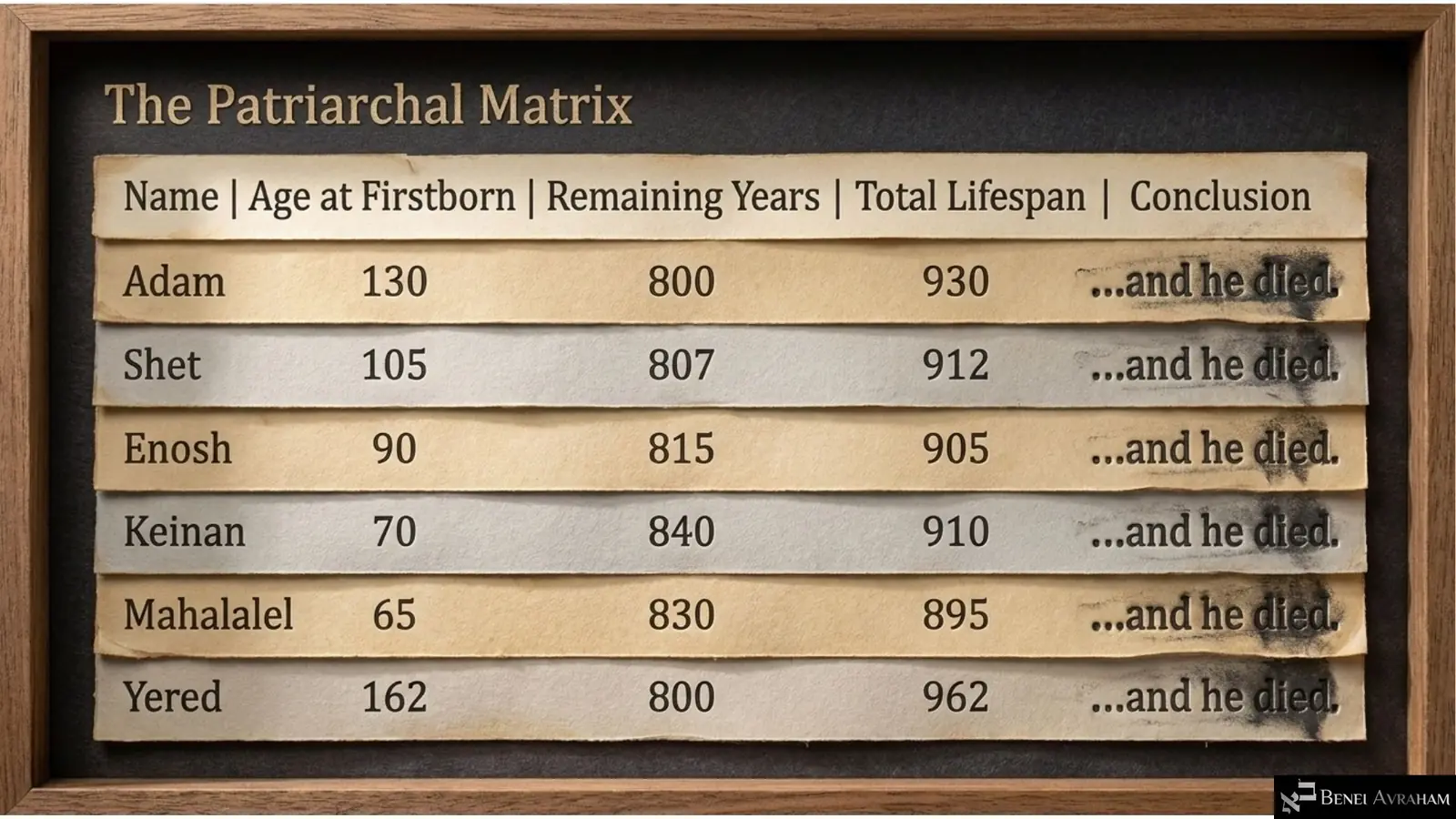
The patriarchal matrix: Adam to Yered, ages and lifespans
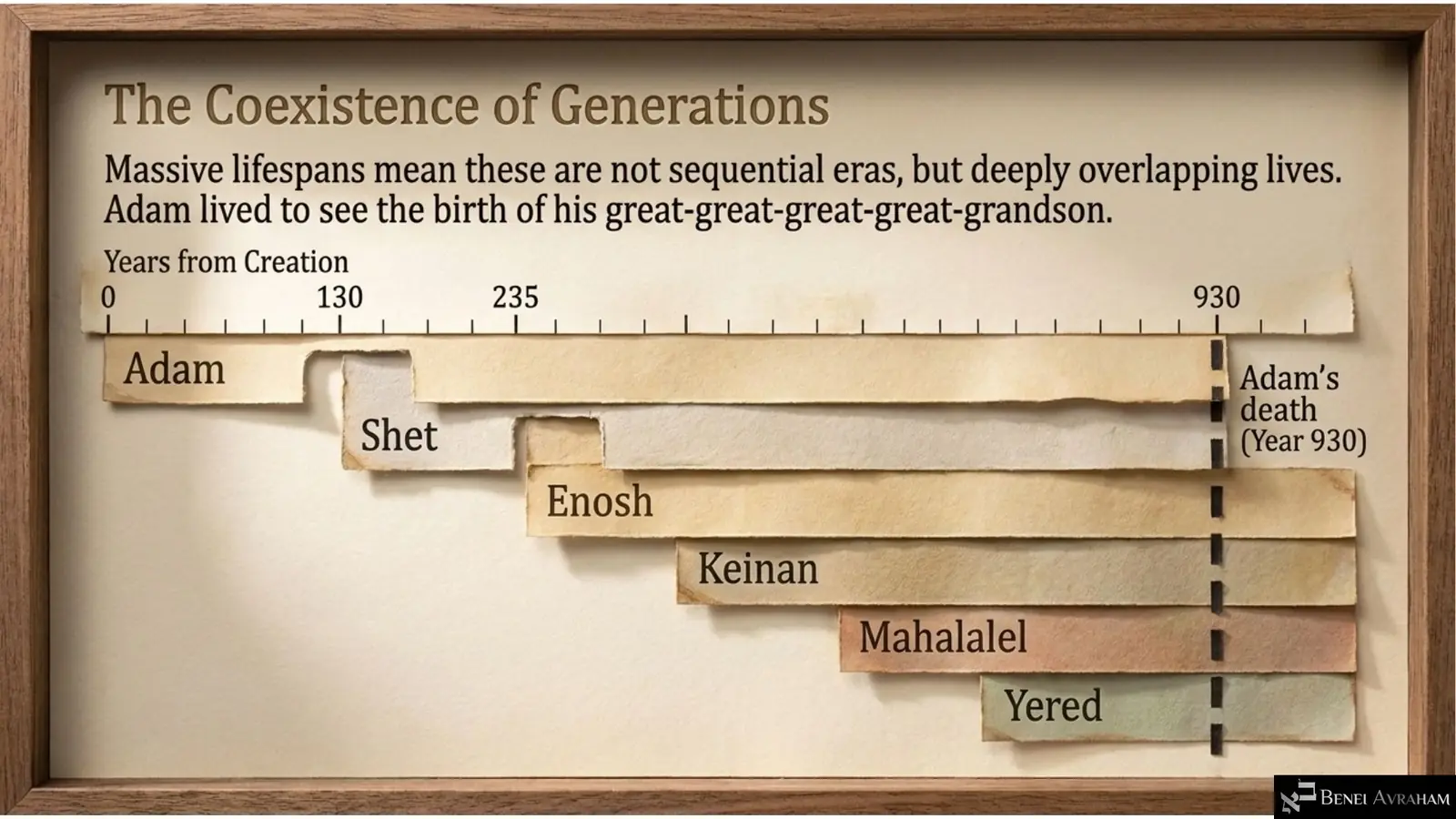
The coexistence of generations: overlapping lifespans from Adam to Yered
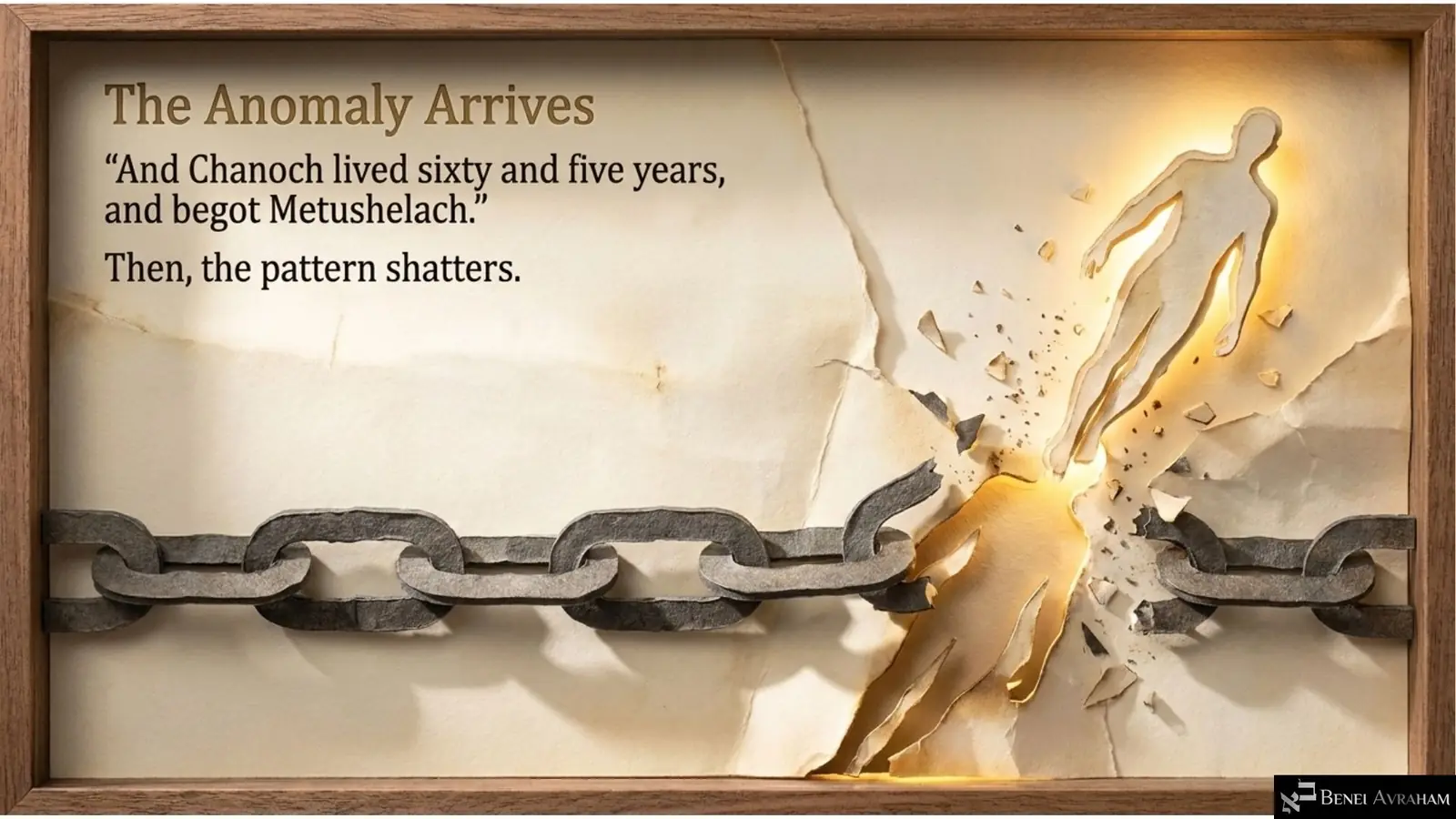
The anomaly arrives: Chanoch breaks the pattern (Genesis 5:21)
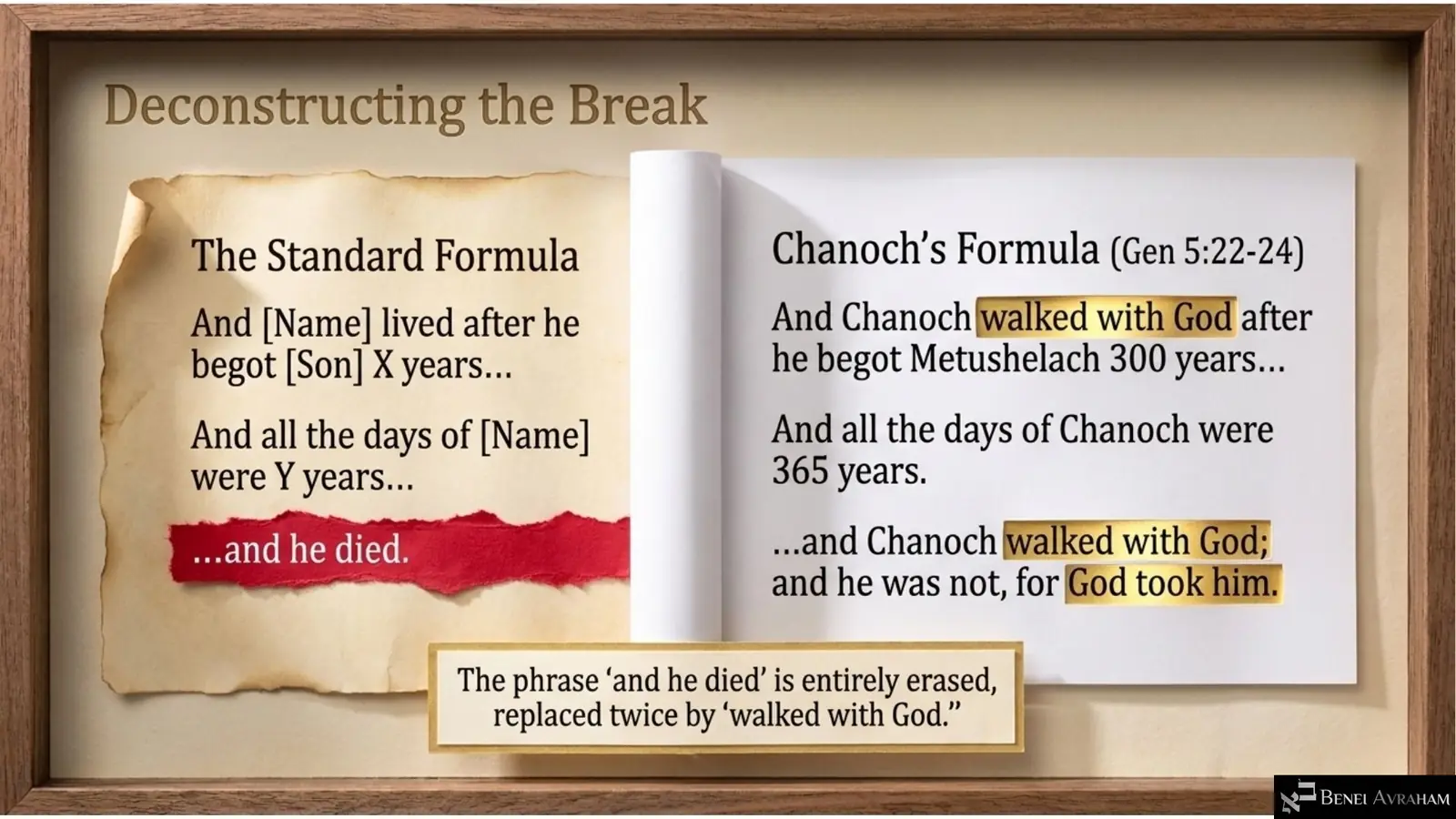
Deconstructing the break: the standard formula and Chanoch’s formula (Genesis 5:22–24)
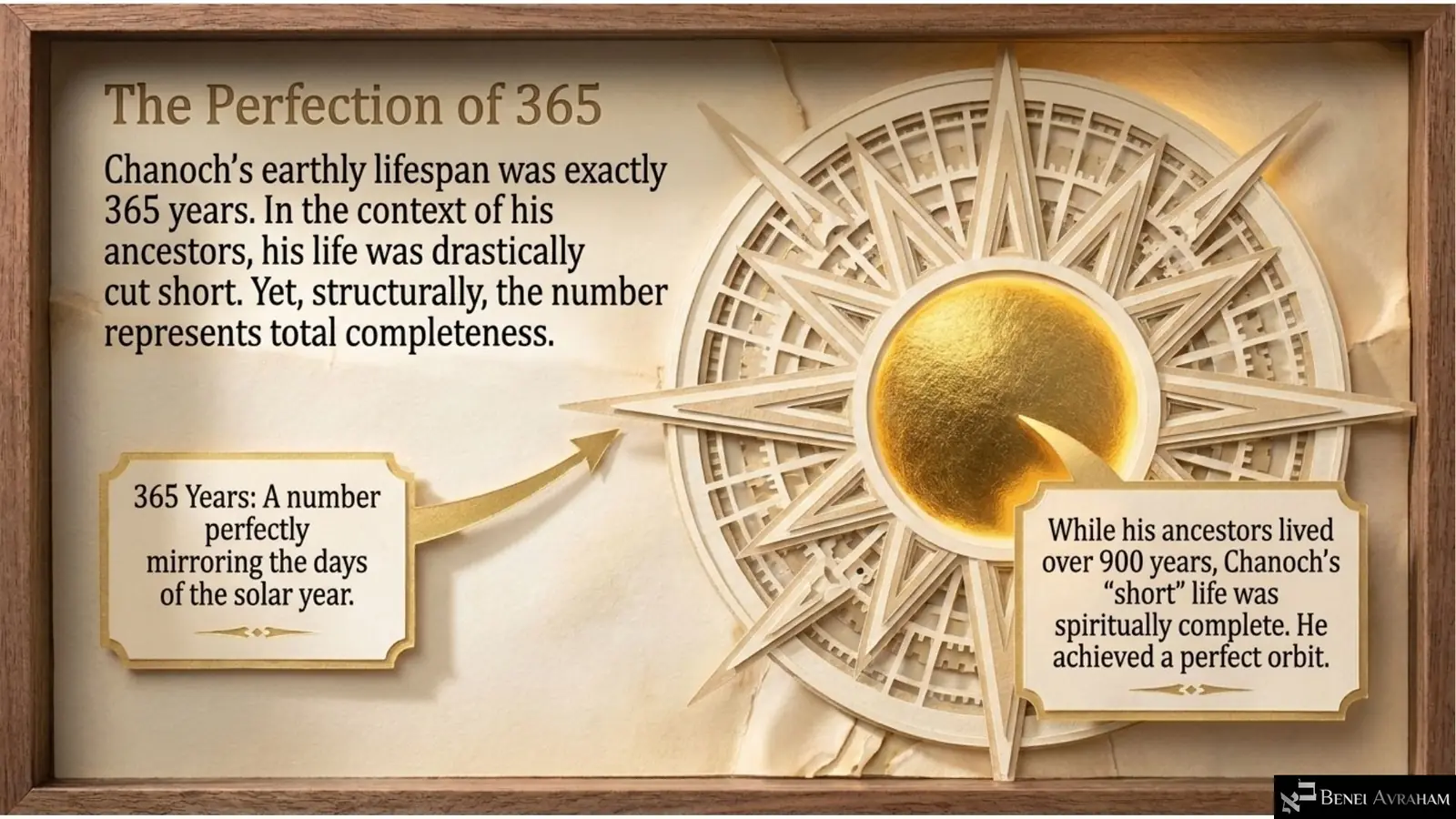
The perfection of 365: Chanoch’s lifespan (Genesis 5:23)
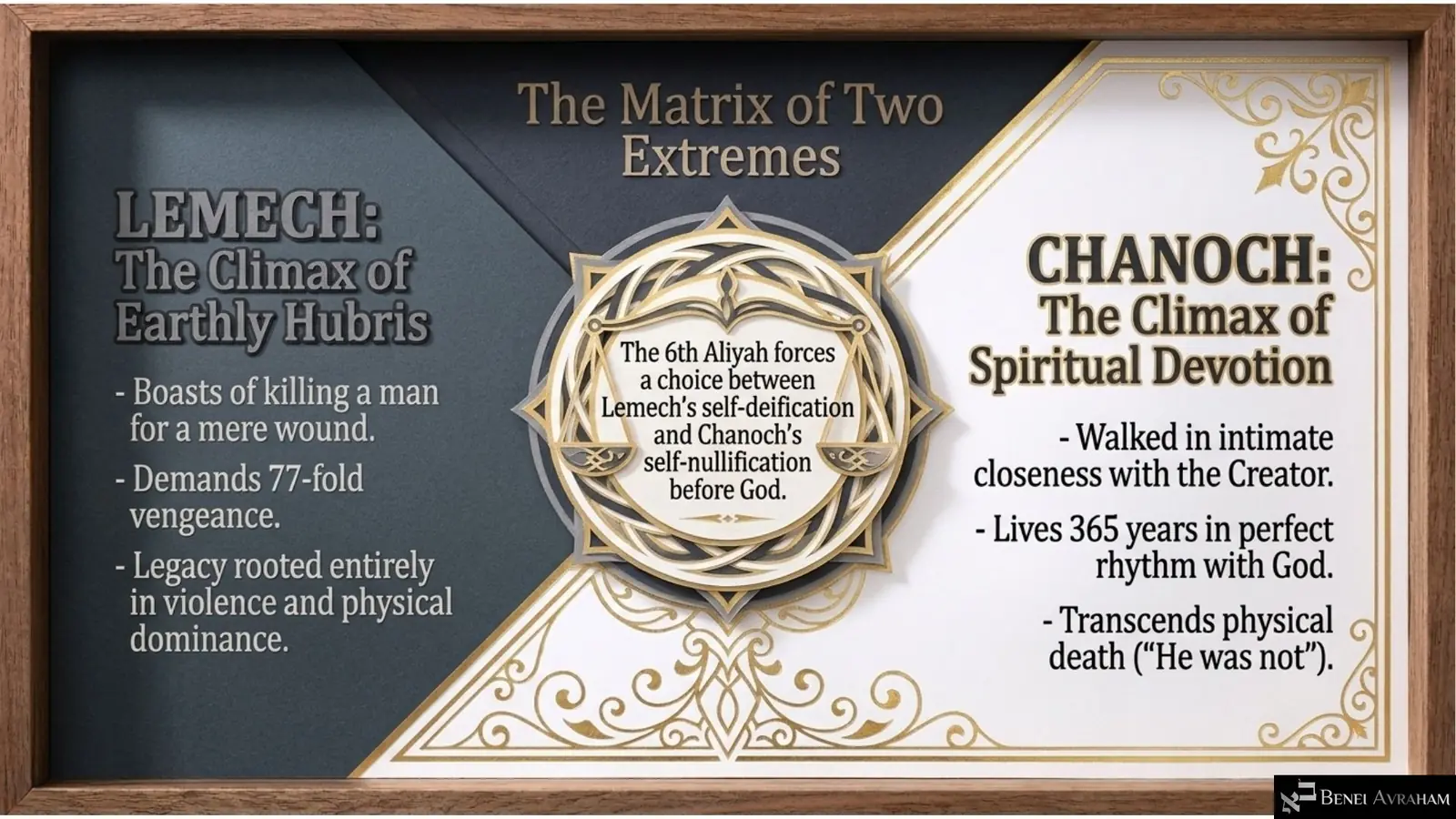
The matrix of two extremes: Lemech and Chanoch
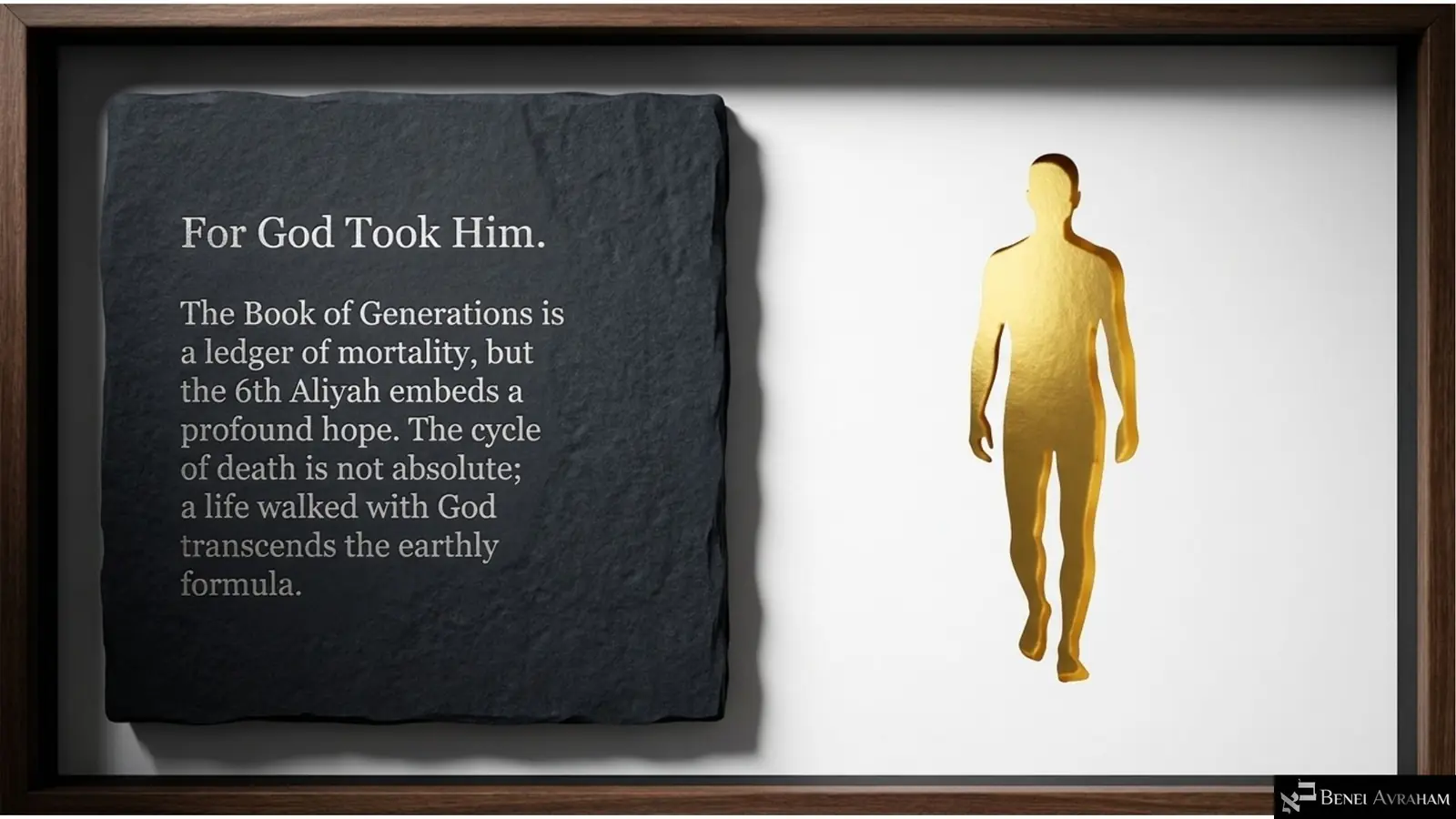
For God took him (Genesis 5:24)
Shevi'i · Genesis 5:25–6:8

Seventh Portion
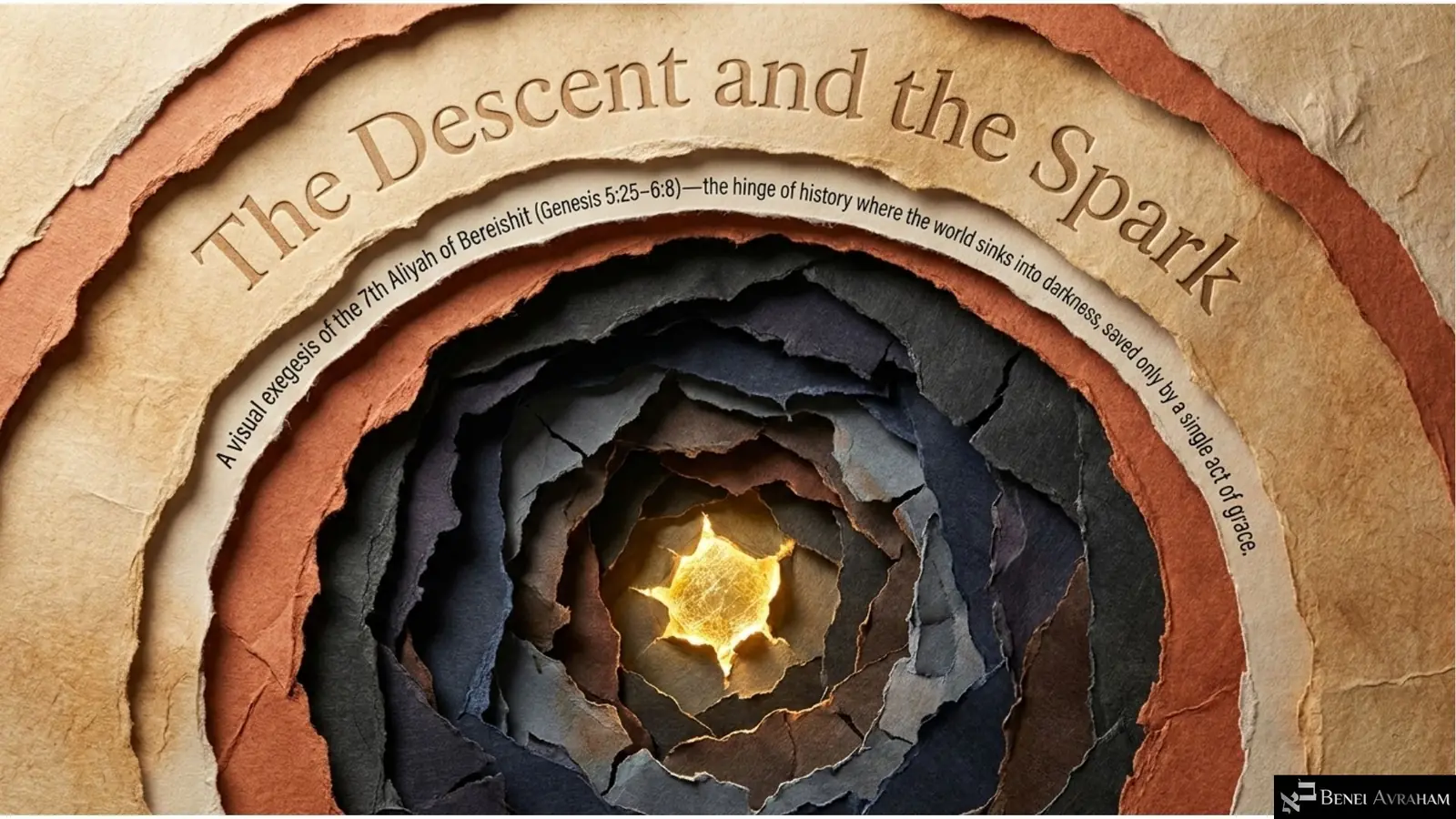
The Descent and the Spark: a visual exegesis of the Seventh Aliyah of Bereishit (Genesis 5:25–6:8)
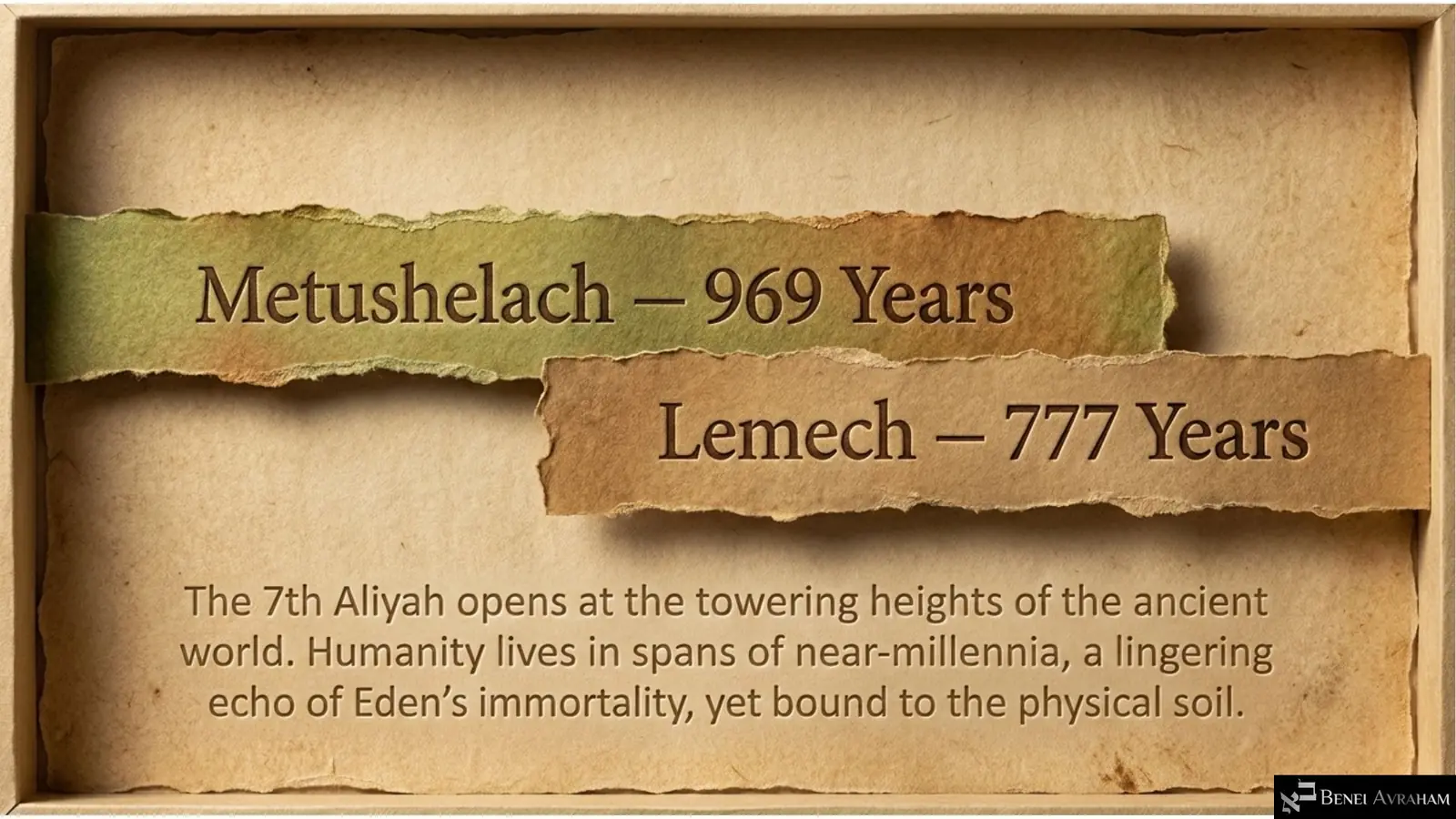
Metushelach, 969 years; Lemech, 777 years (Genesis 5:25–31)
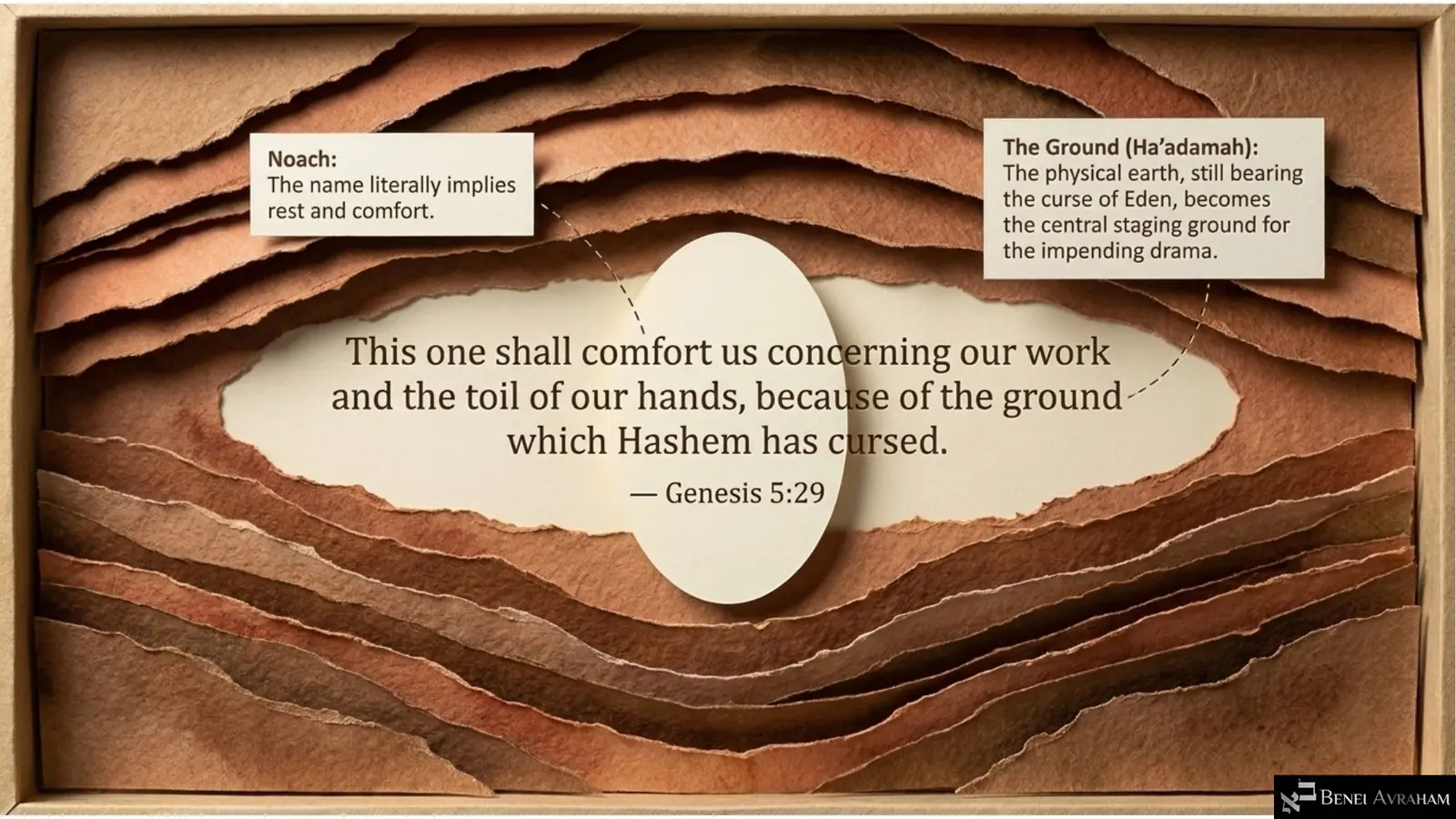
This one shall comfort us: the naming of Noach (Genesis 5:29)
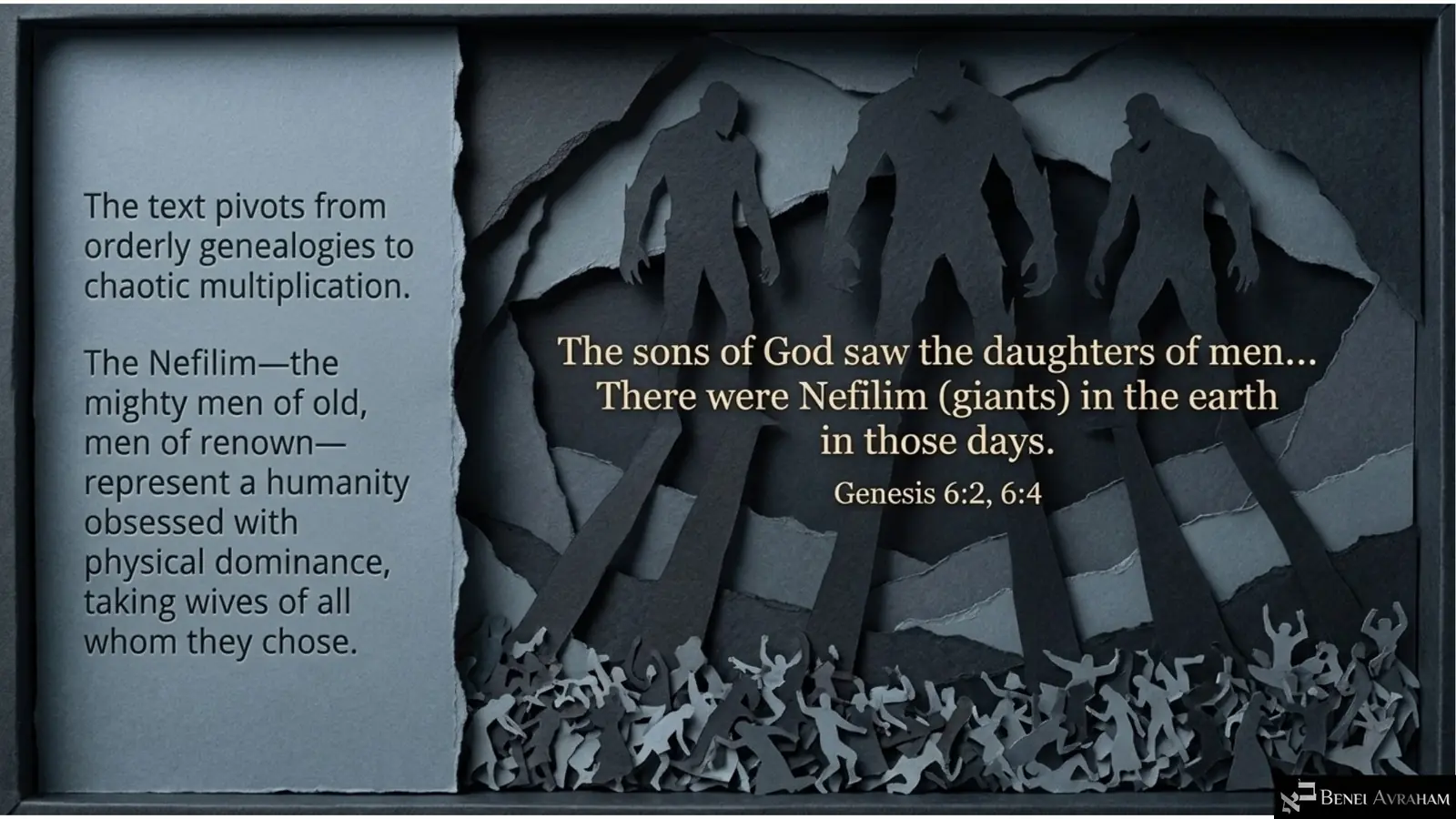
The sons of God and the Nefilim (Genesis 6:1–4)
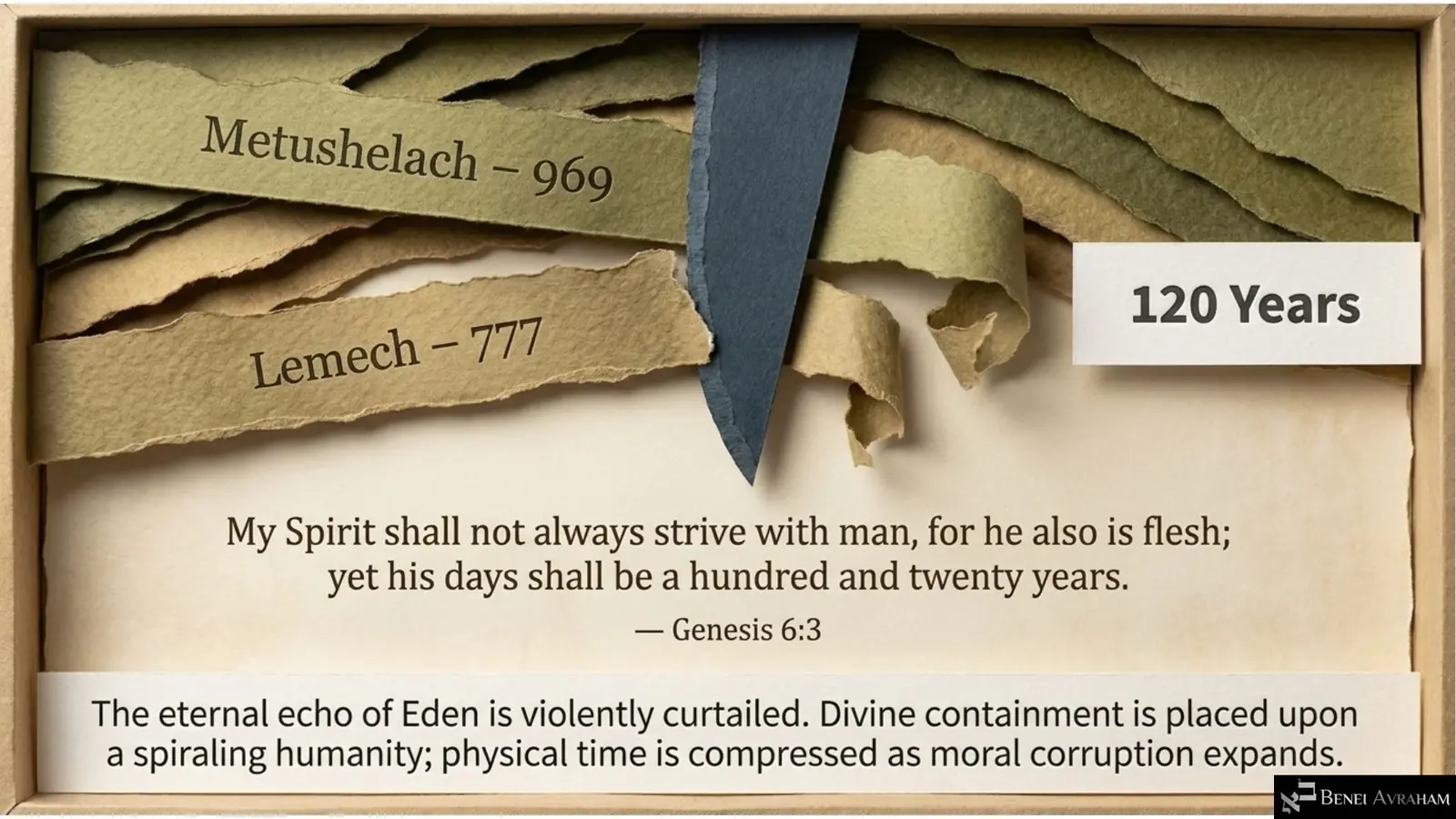
My Spirit shall not always strive with man: 120 years (Genesis 6:3)
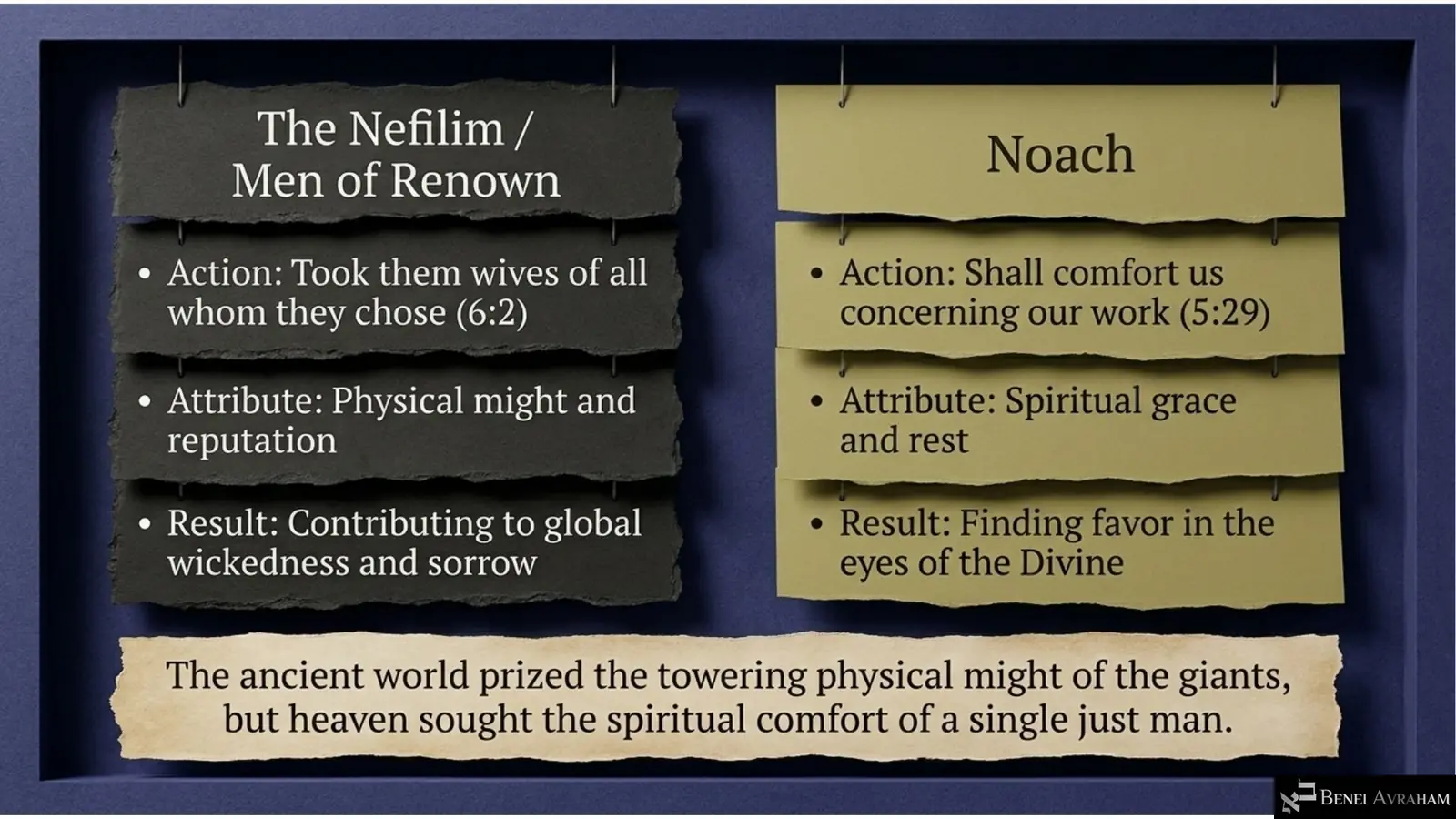
The Nefilim, men of renown, and Noach compared
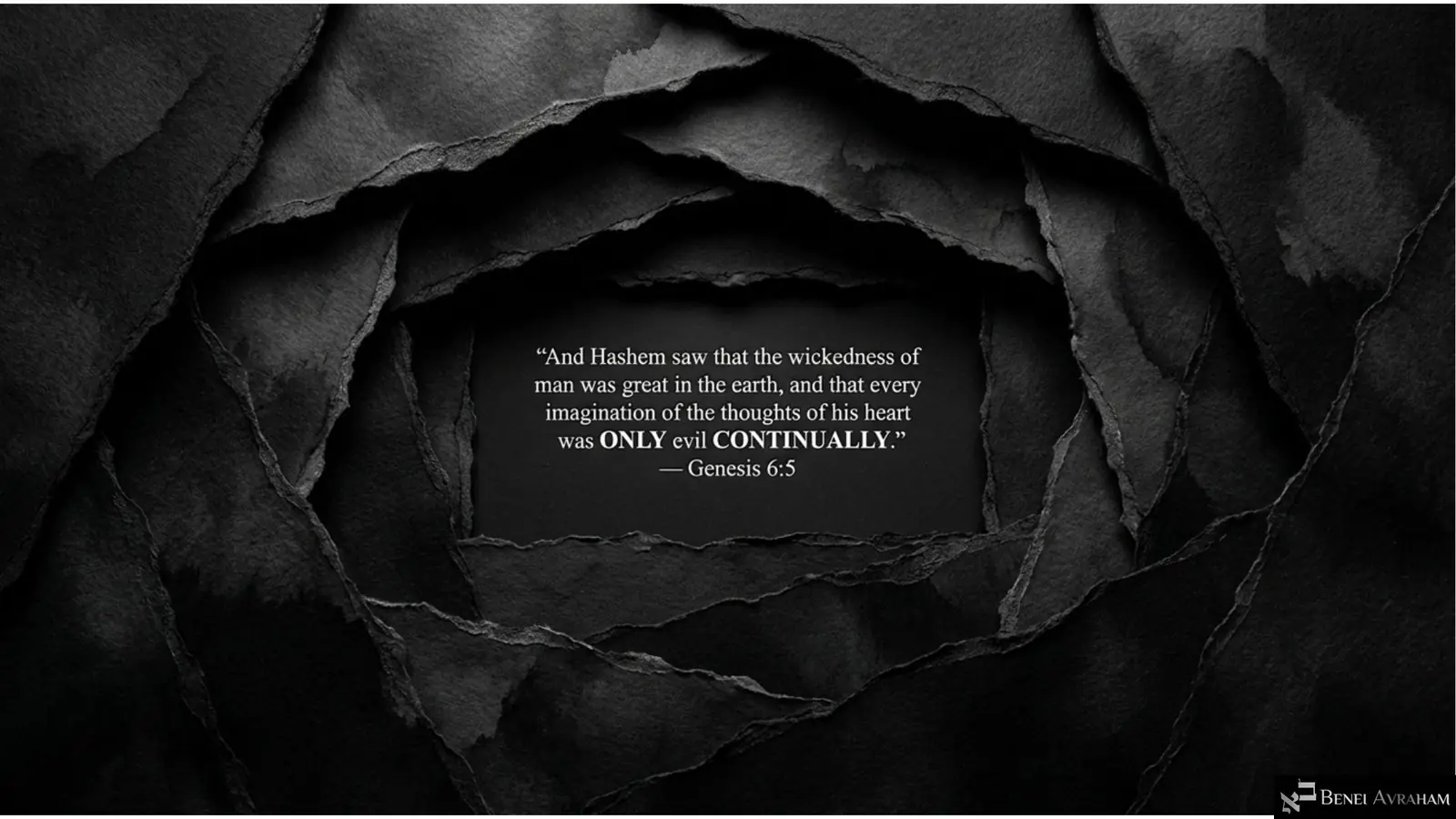
The wickedness of man was great in the earth (Genesis 6:5)
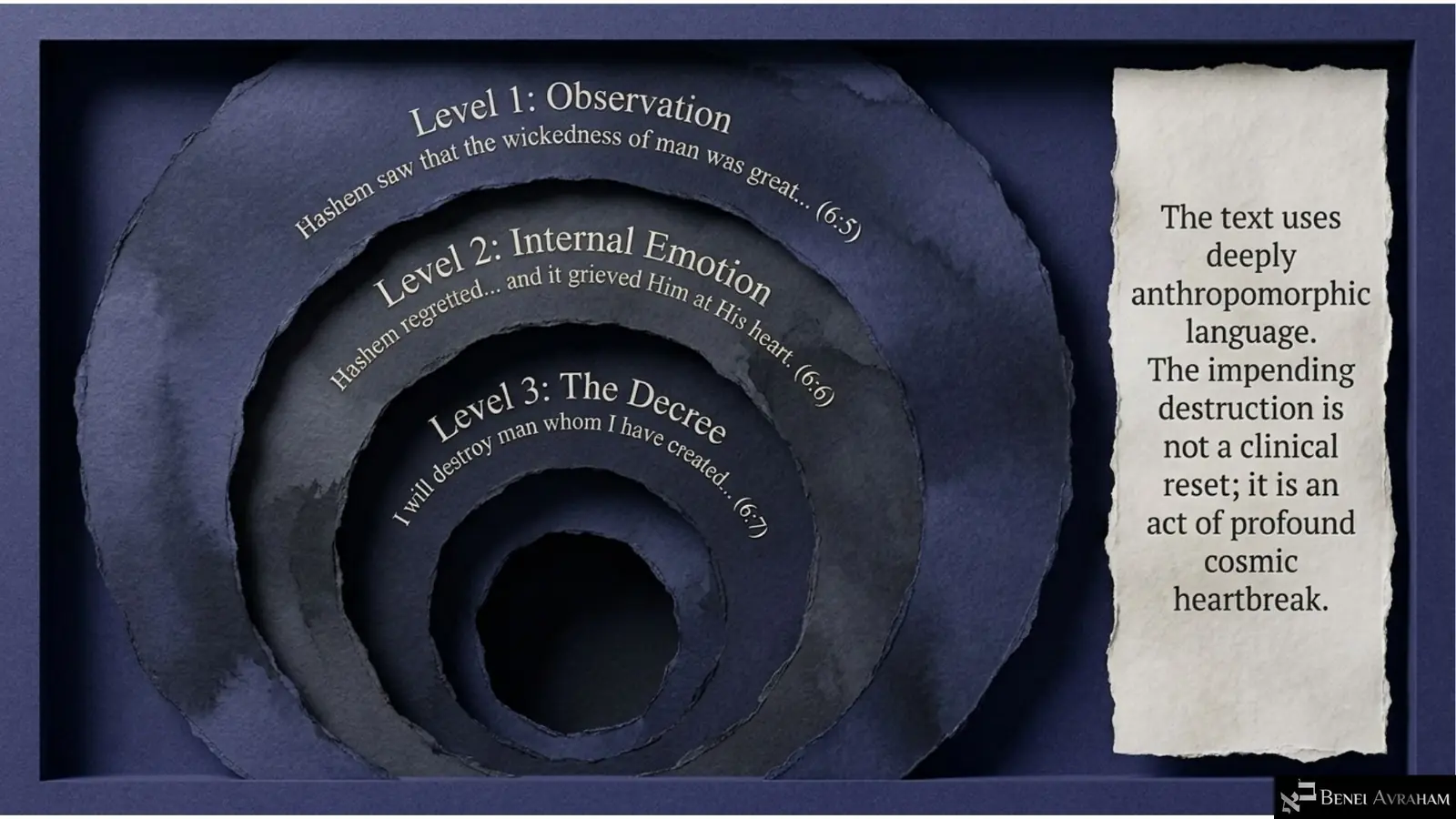
Three levels: observation, internal emotion, the decree (Genesis 6:5–7)
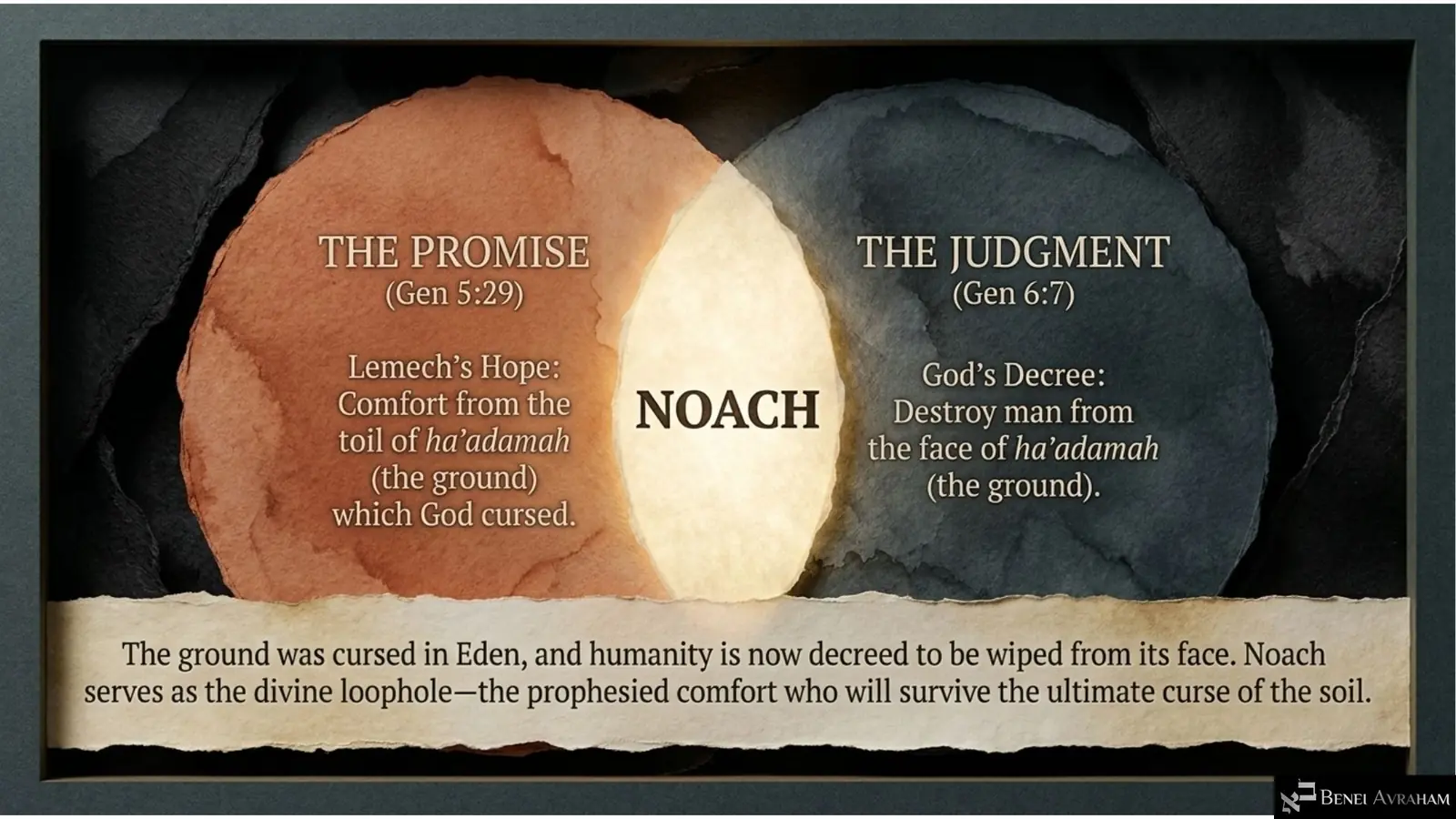
Noach between the promise (Genesis 5:29) and the judgment (Genesis 6:7)
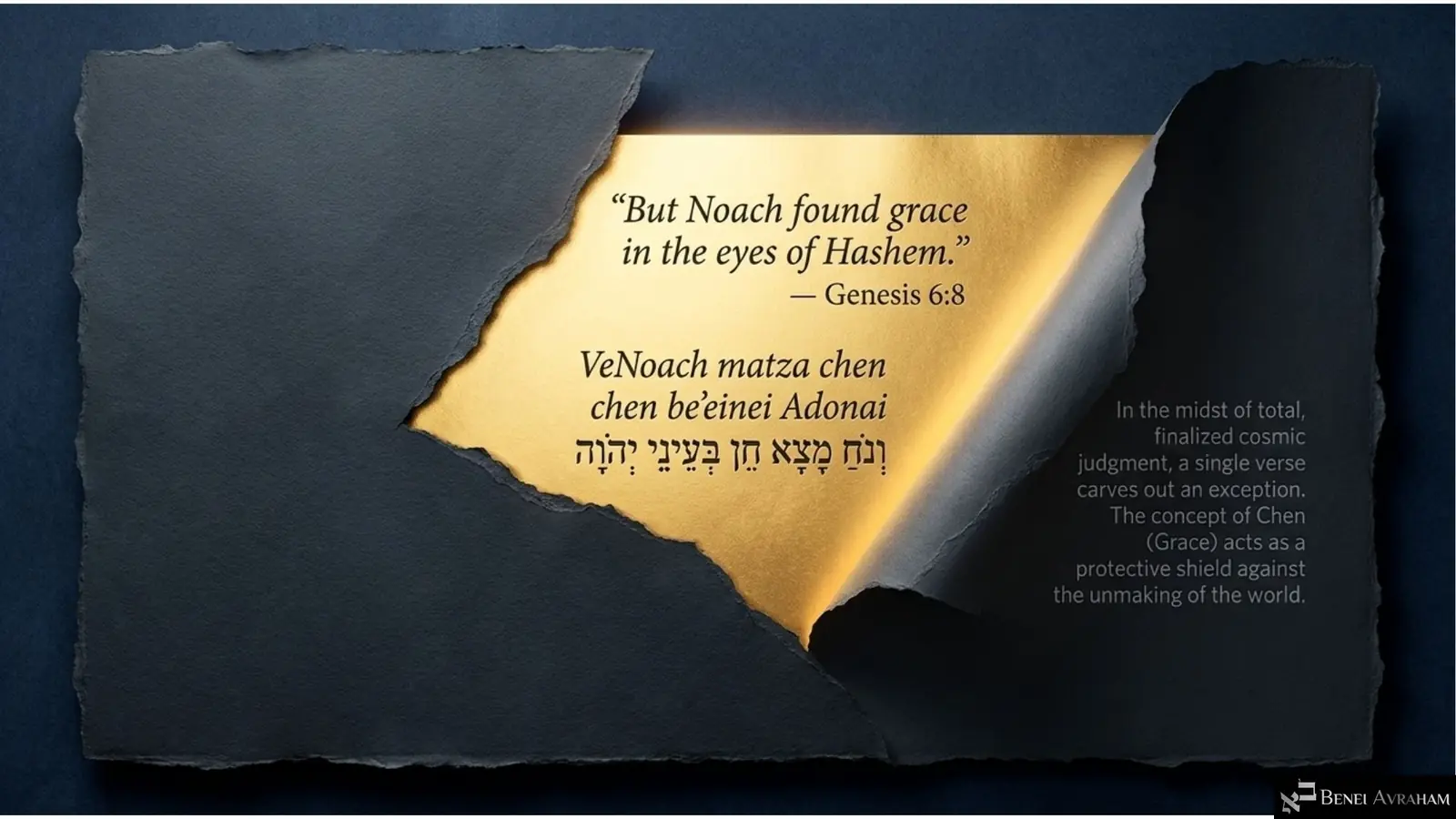
But Noach found grace in the eyes of Hashem (Genesis 6:8)
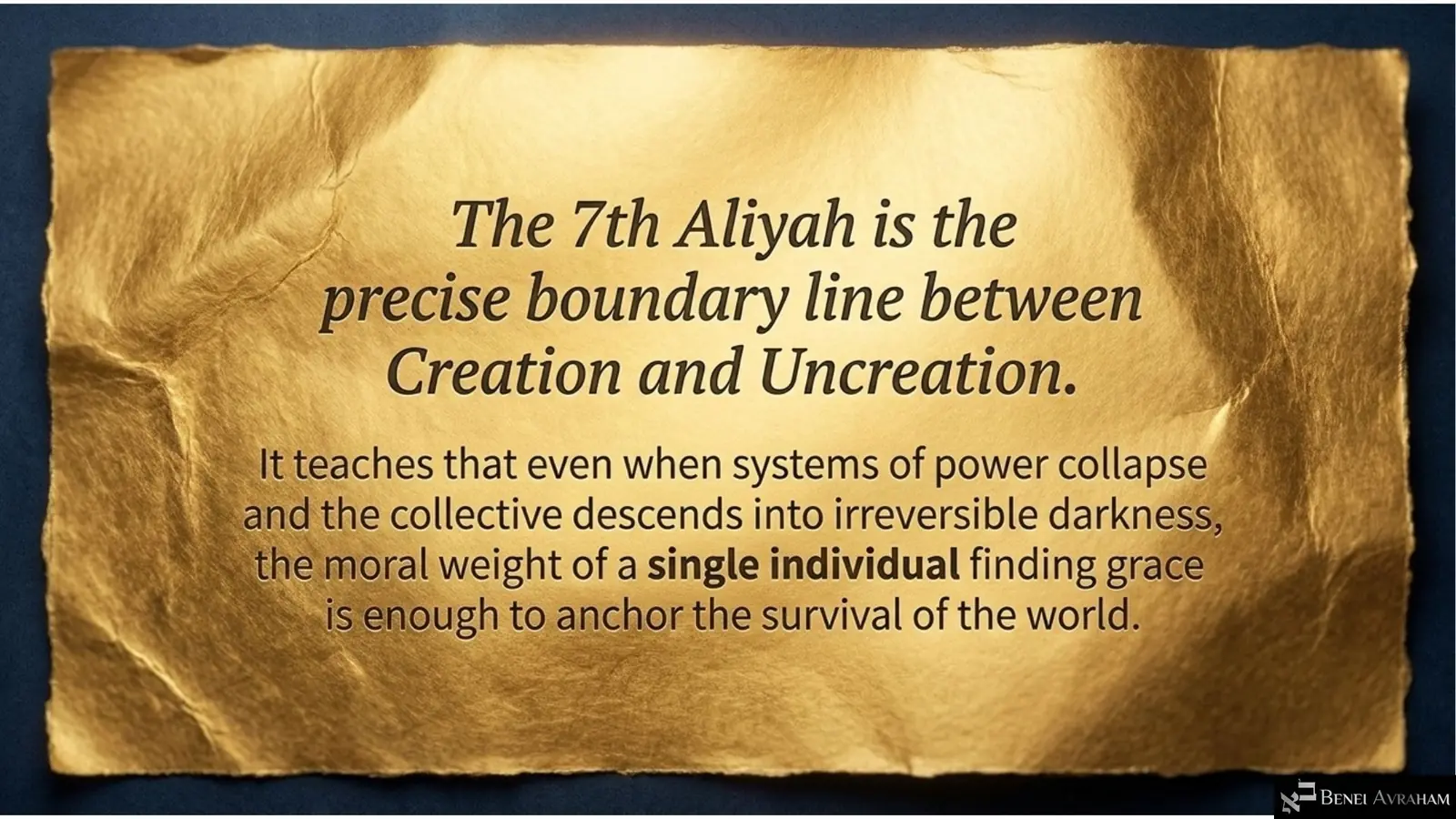
The Seventh Aliyah is the boundary line between Creation and Uncreation
Haftarah on Erev Rosh Chodesh · 1 Samuel 20:18–42

Haftarah: Machar Chodesh
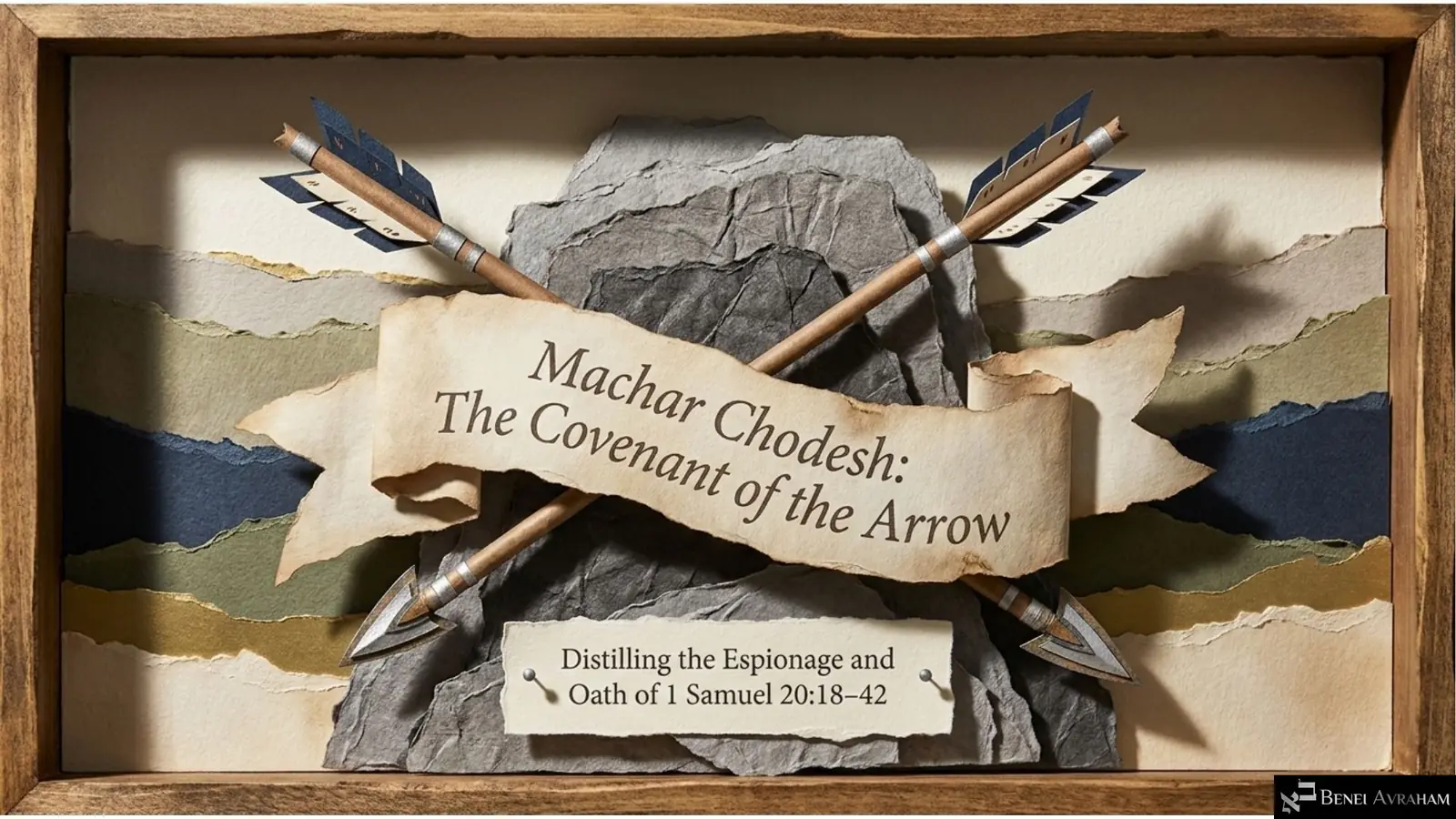
Machar Chodesh: The Covenant of the Arrow (1 Samuel 20:18–42)
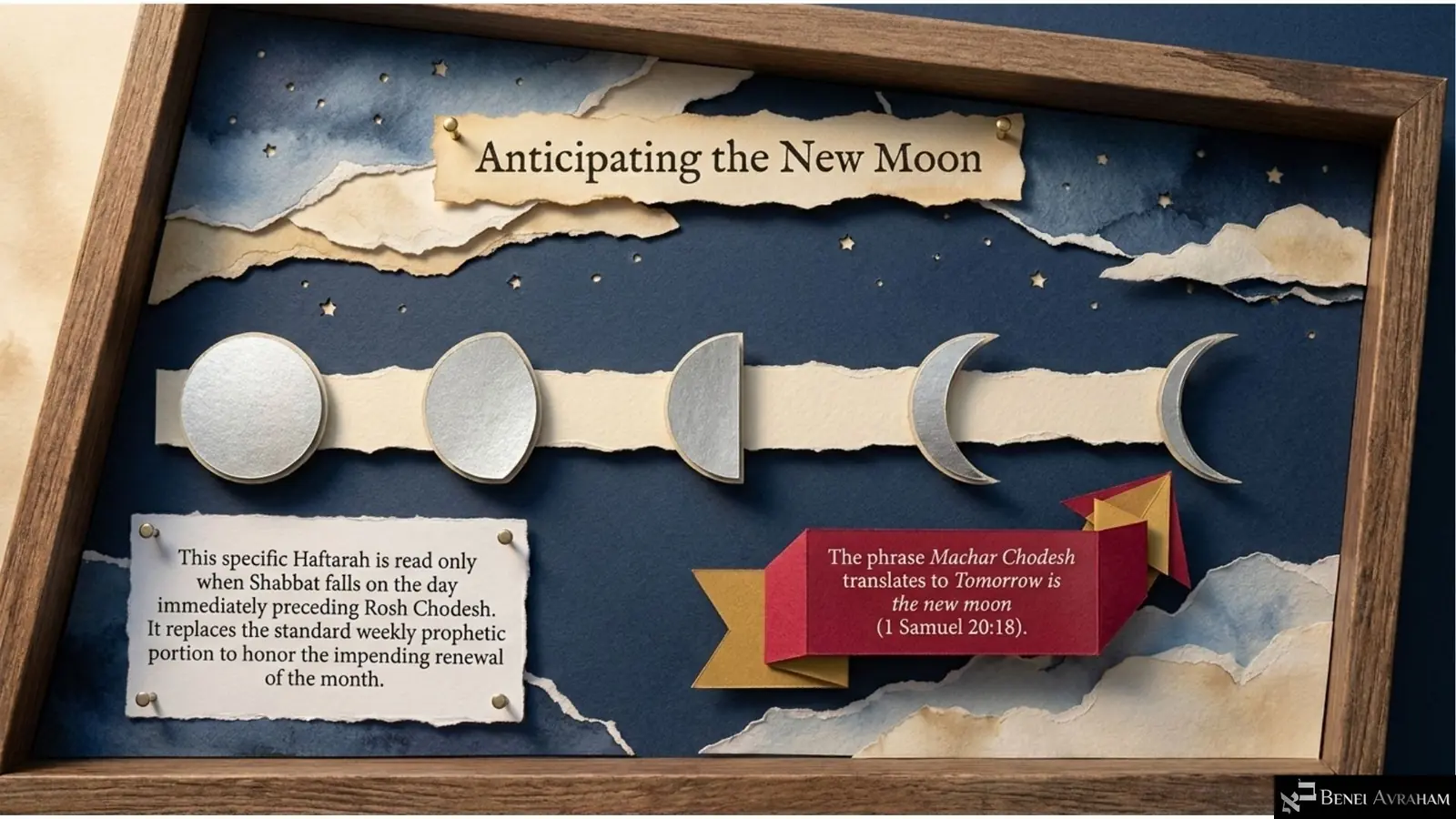
Anticipating the new moon: Machar Chodesh means “tomorrow is the new moon”
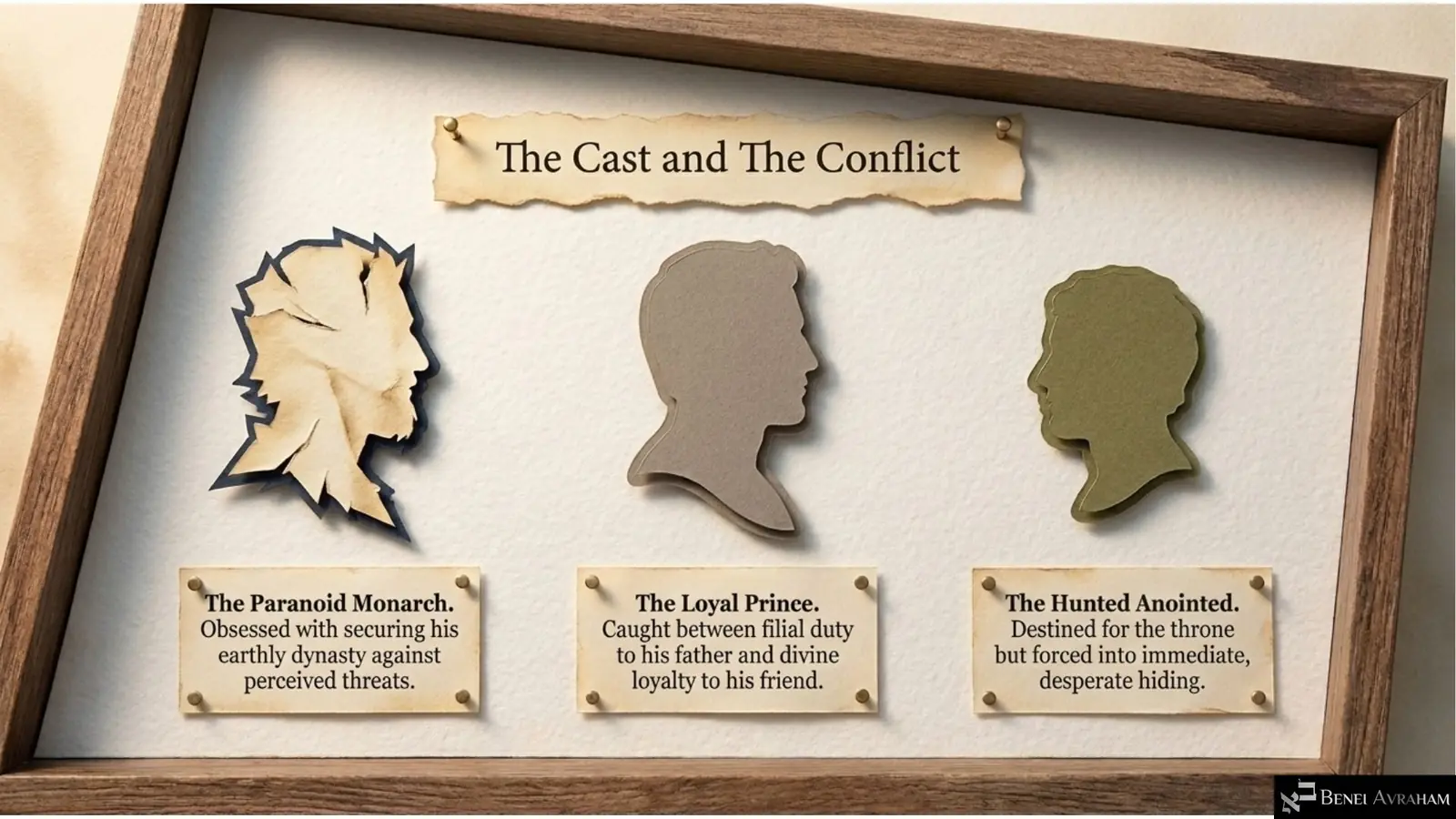
The cast and the conflict: Shaul, Yehonatan and David
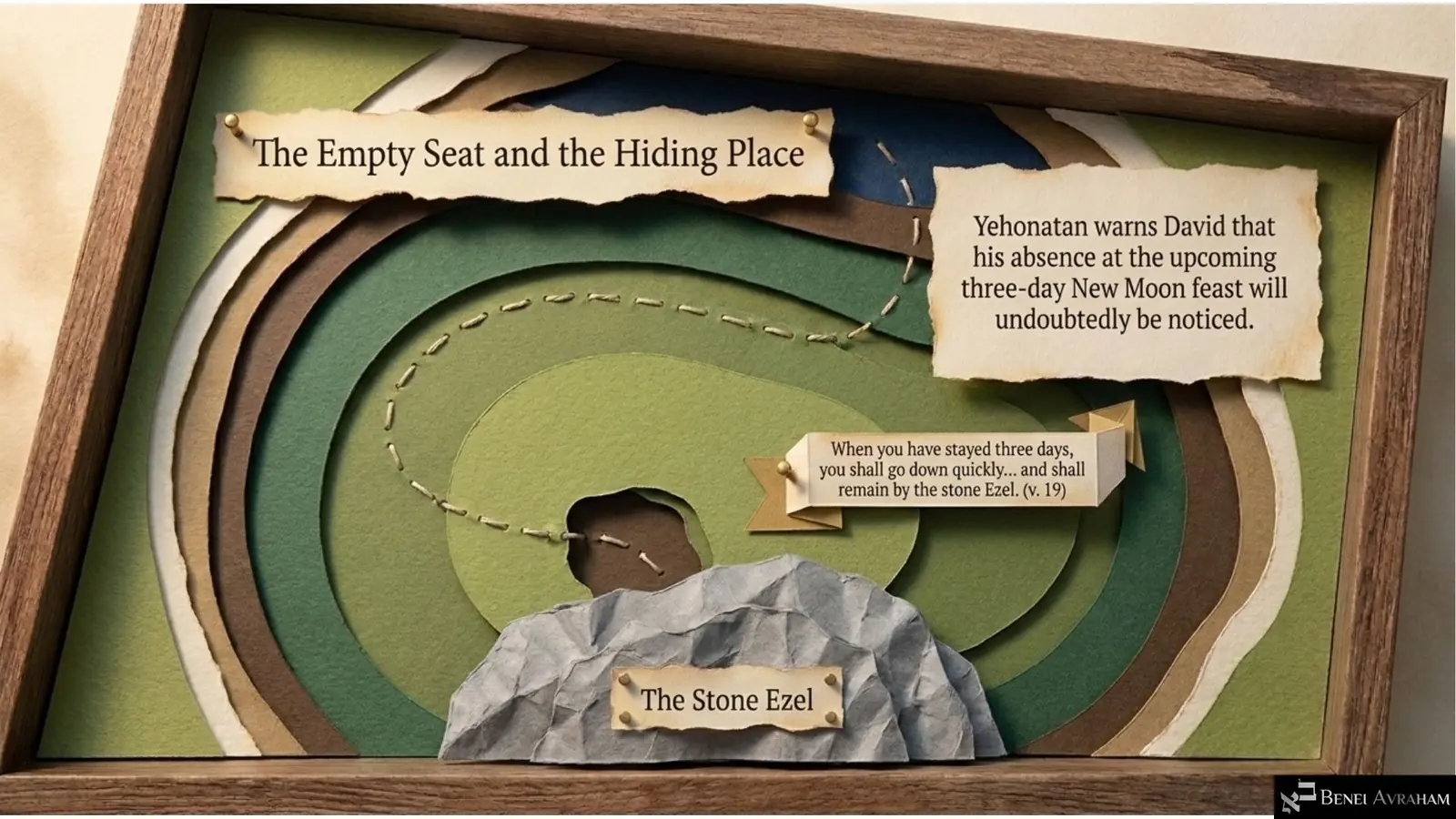
The empty seat and the hiding place: the stone Ezel (1 Samuel 20:18–19)
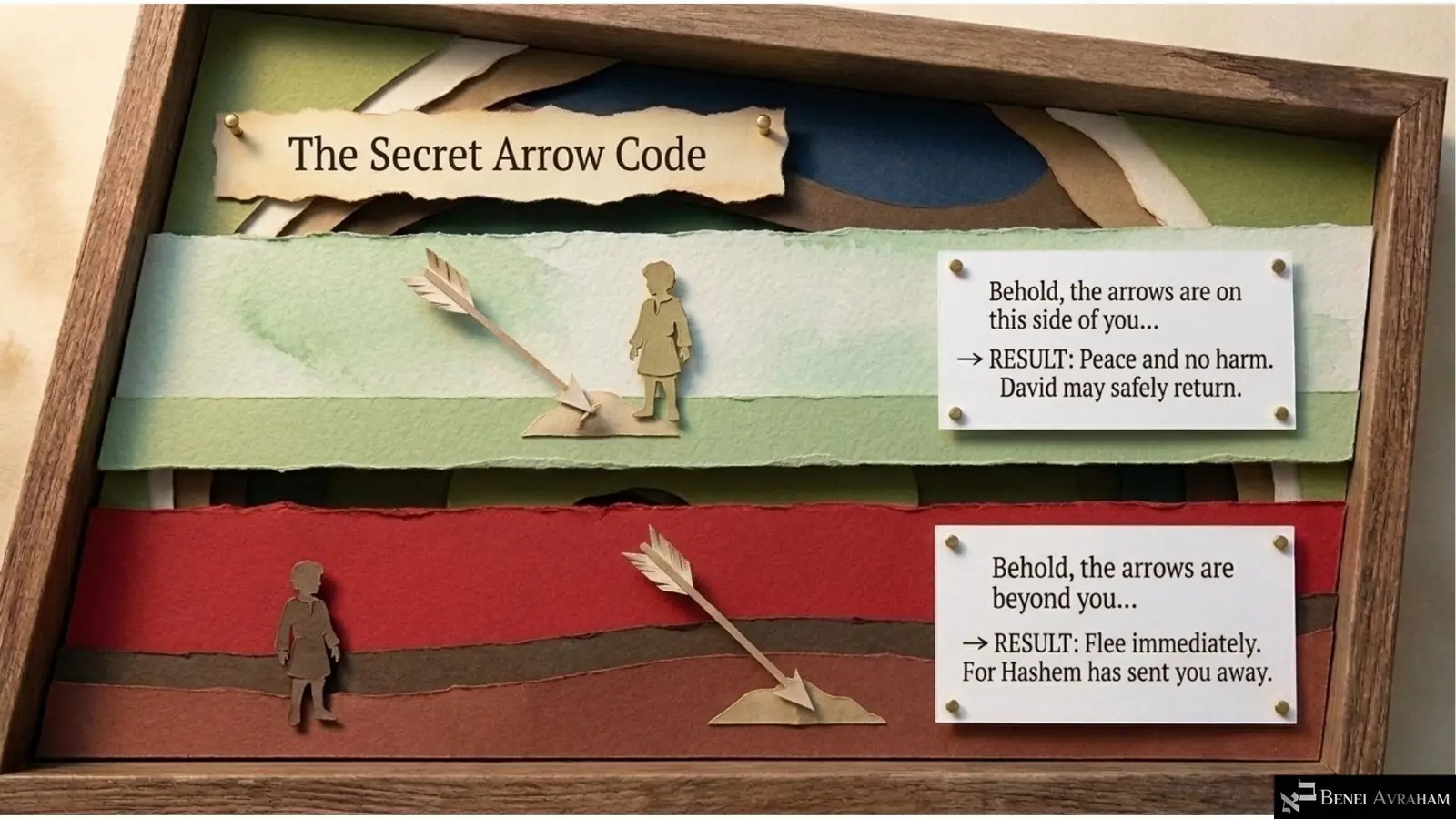
The secret arrow code (1 Samuel 20:20–22)
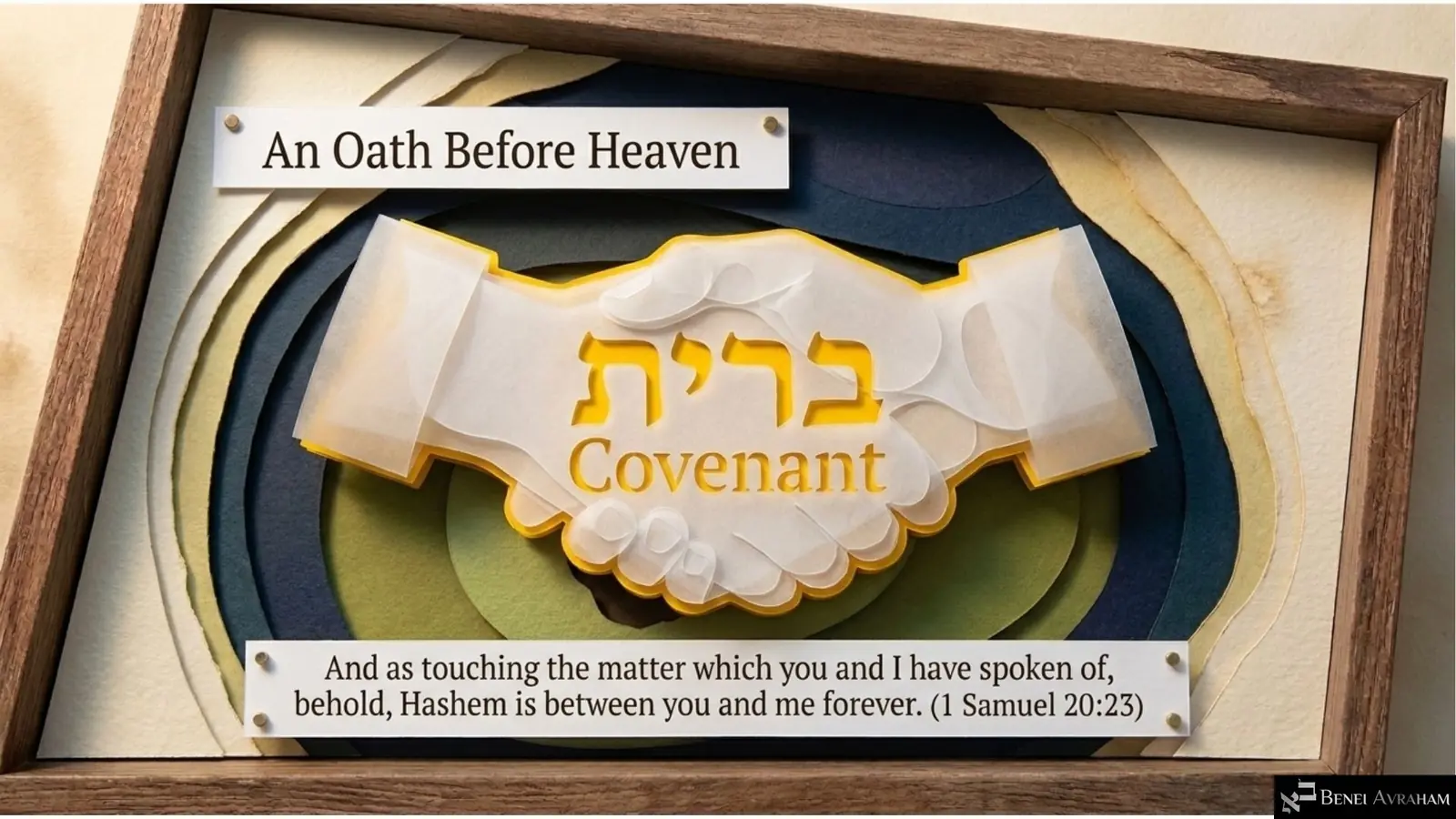
An oath before heaven: Hashem is between you and me forever (1 Samuel 20:23)
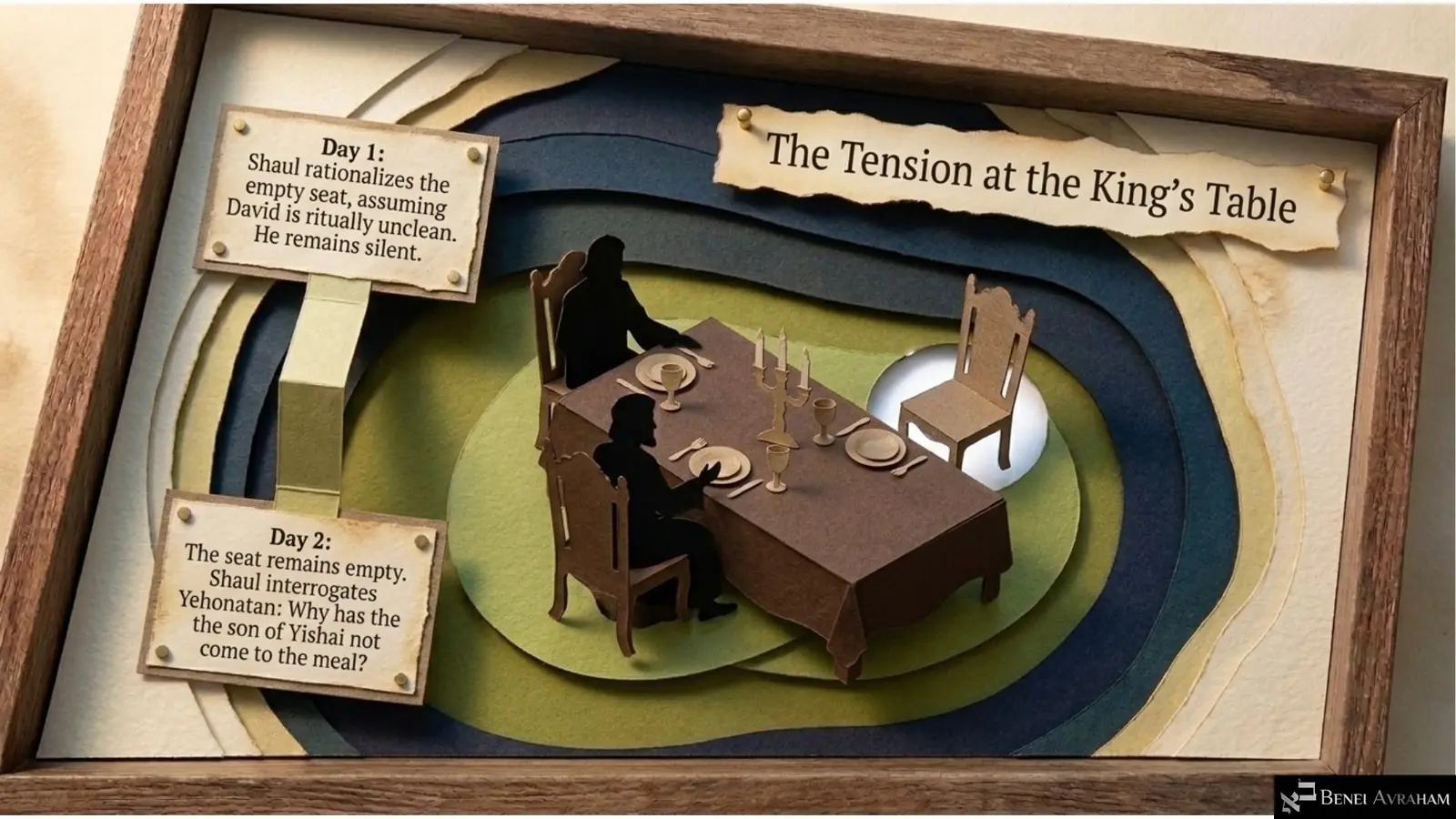
The tension at the king’s table: day one and day two (1 Samuel 20:24–27)
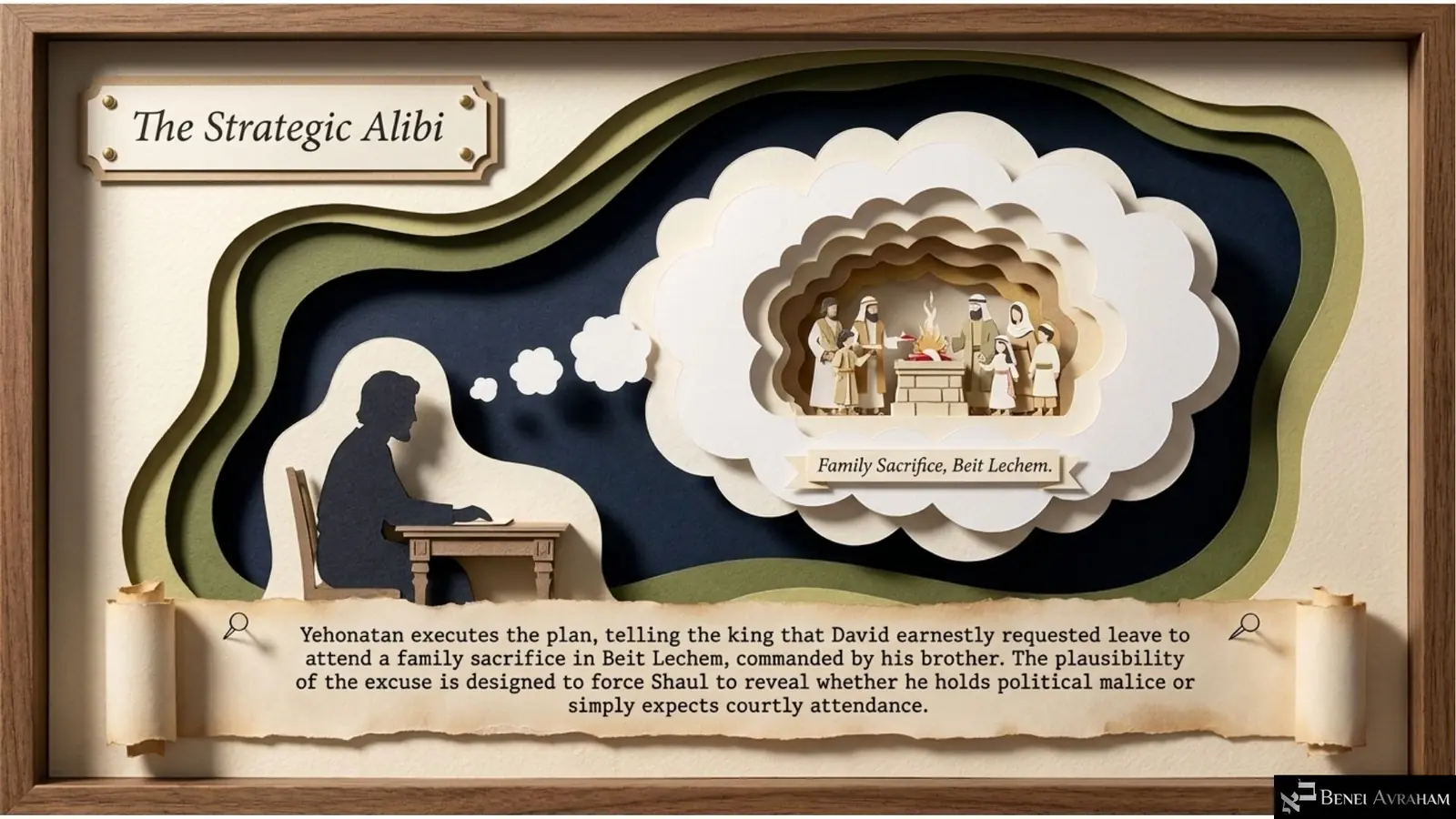
The strategic alibi: the family sacrifice in Beit Lechem (1 Samuel 20:28–29)
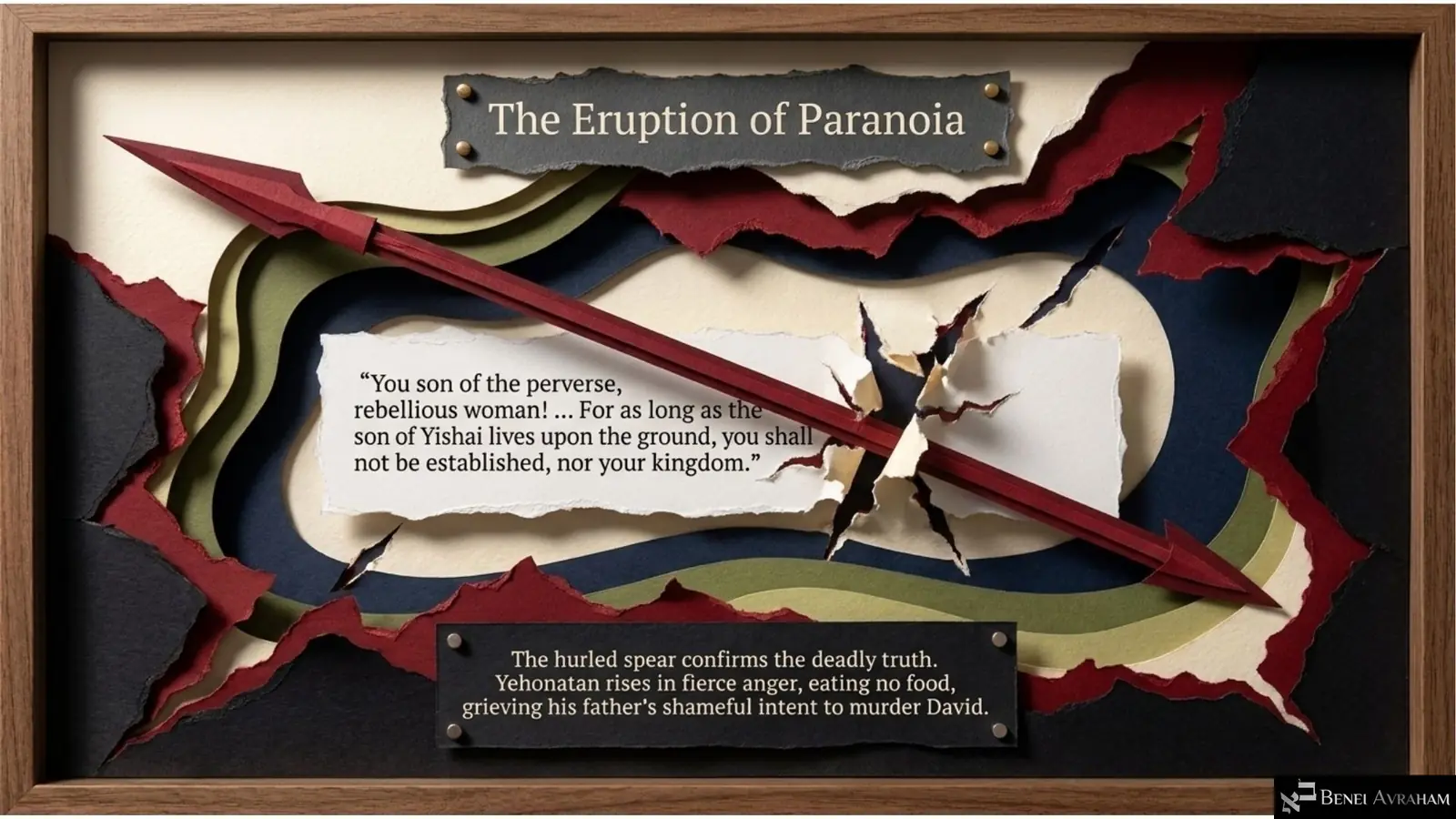
The eruption of paranoia: Shaul’s rage and the hurled spear (1 Samuel 20:30–34)
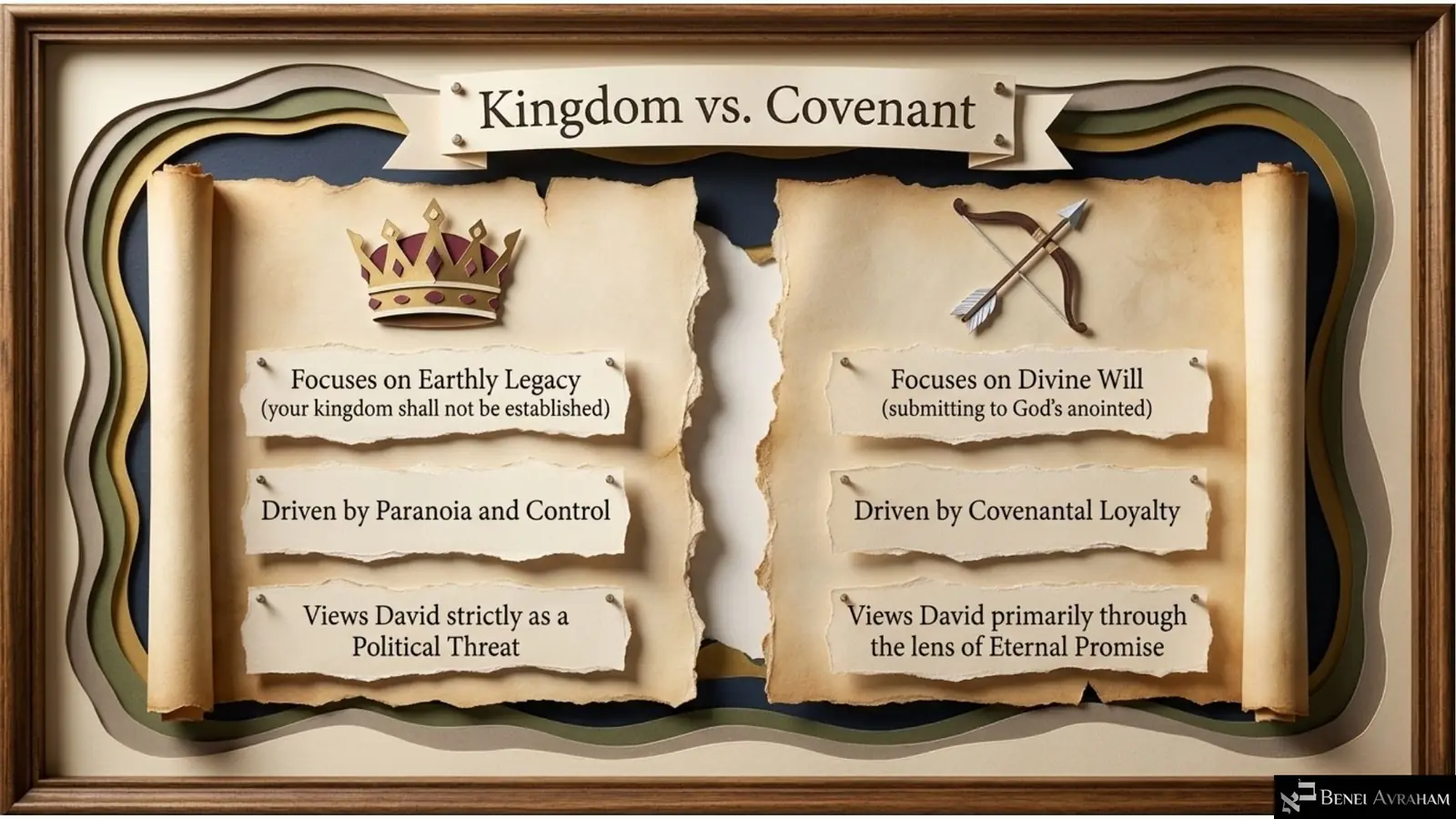
Kingdom versus covenant: Shaul and Yehonatan compared
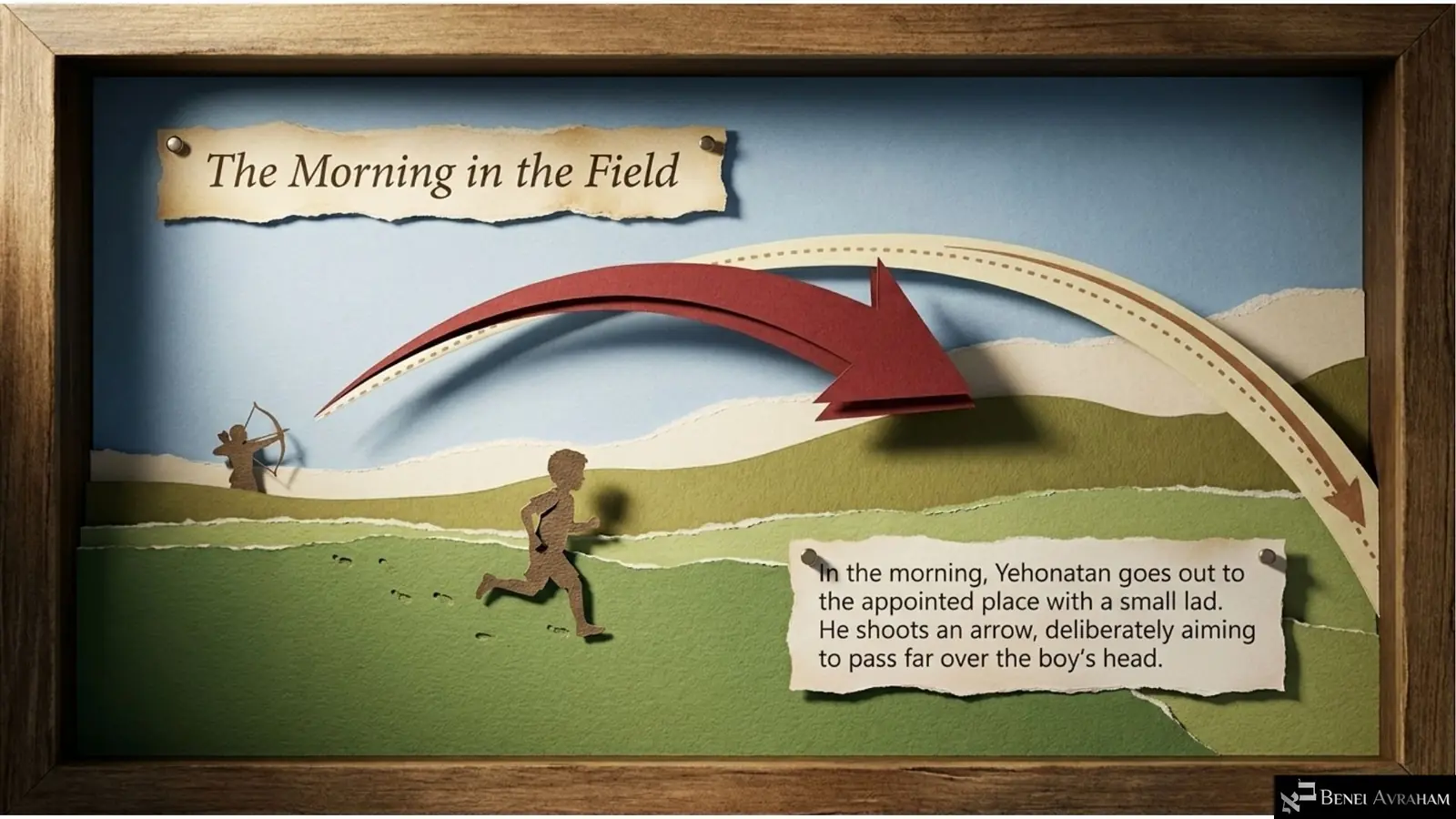
The morning in the field: the arrow shot beyond the lad (1 Samuel 20:35–37)
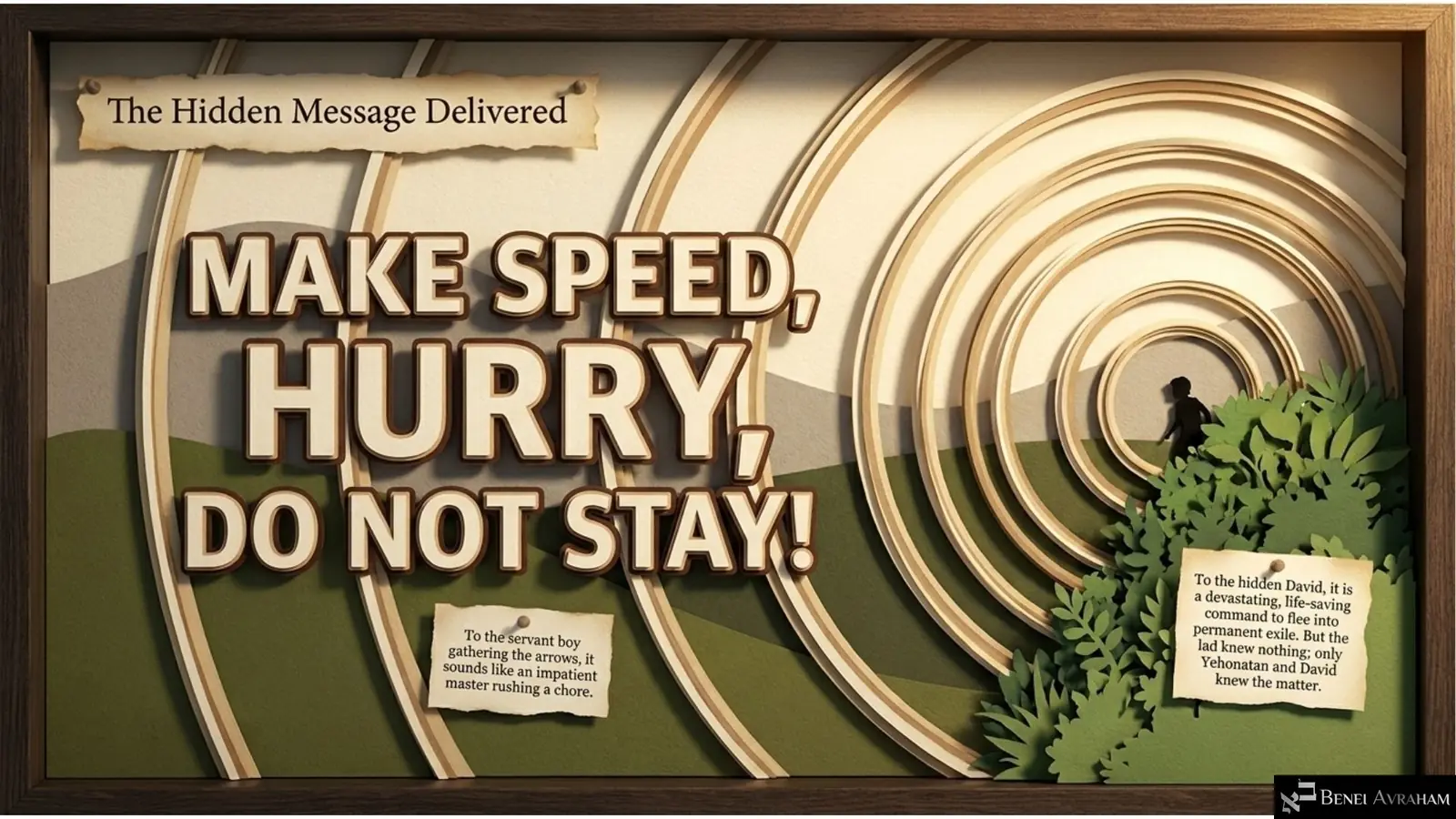
The hidden message delivered: make speed, hurry, do not stay (1 Samuel 20:38–40)
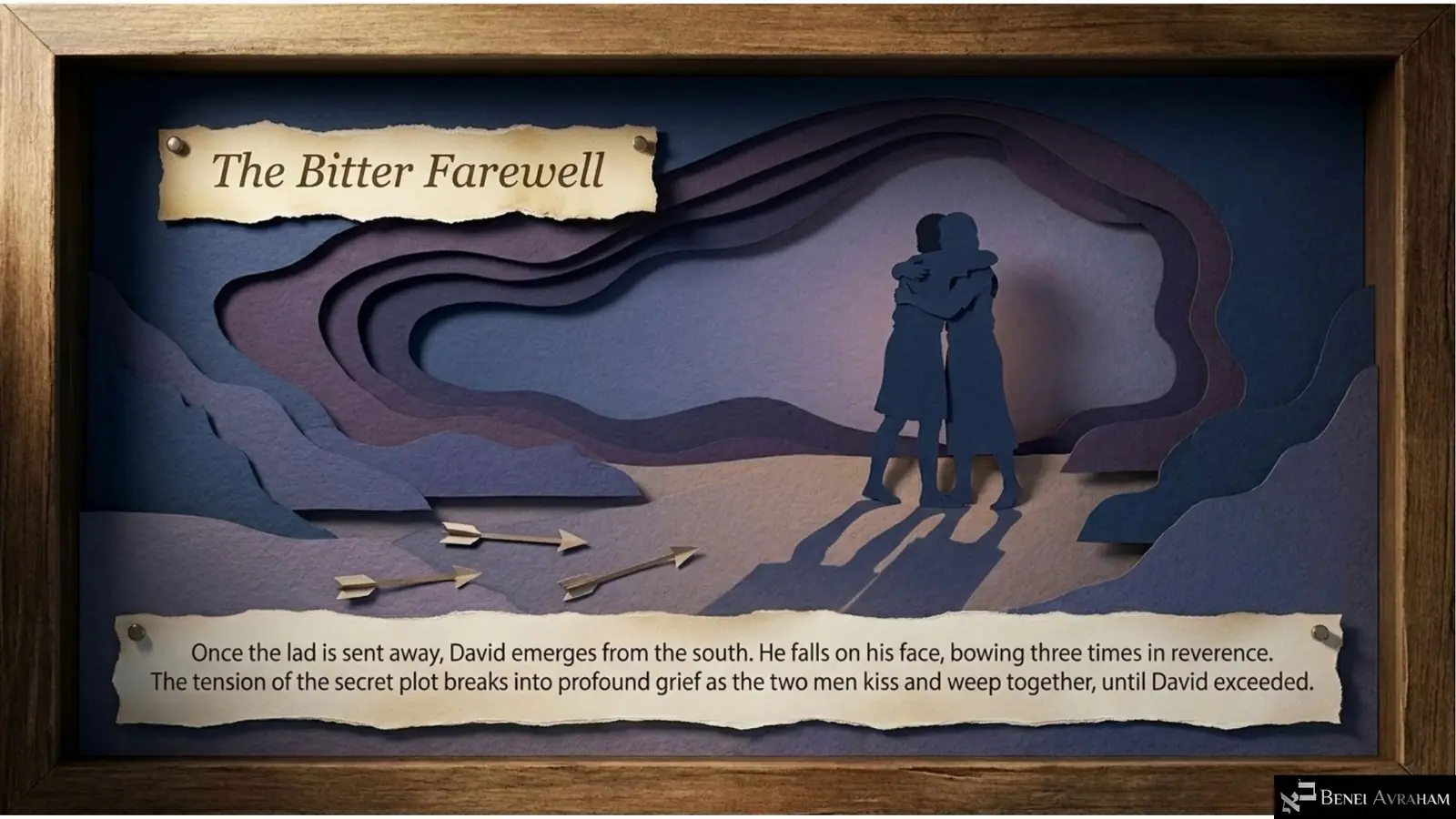
The bitter farewell (1 Samuel 20:41)
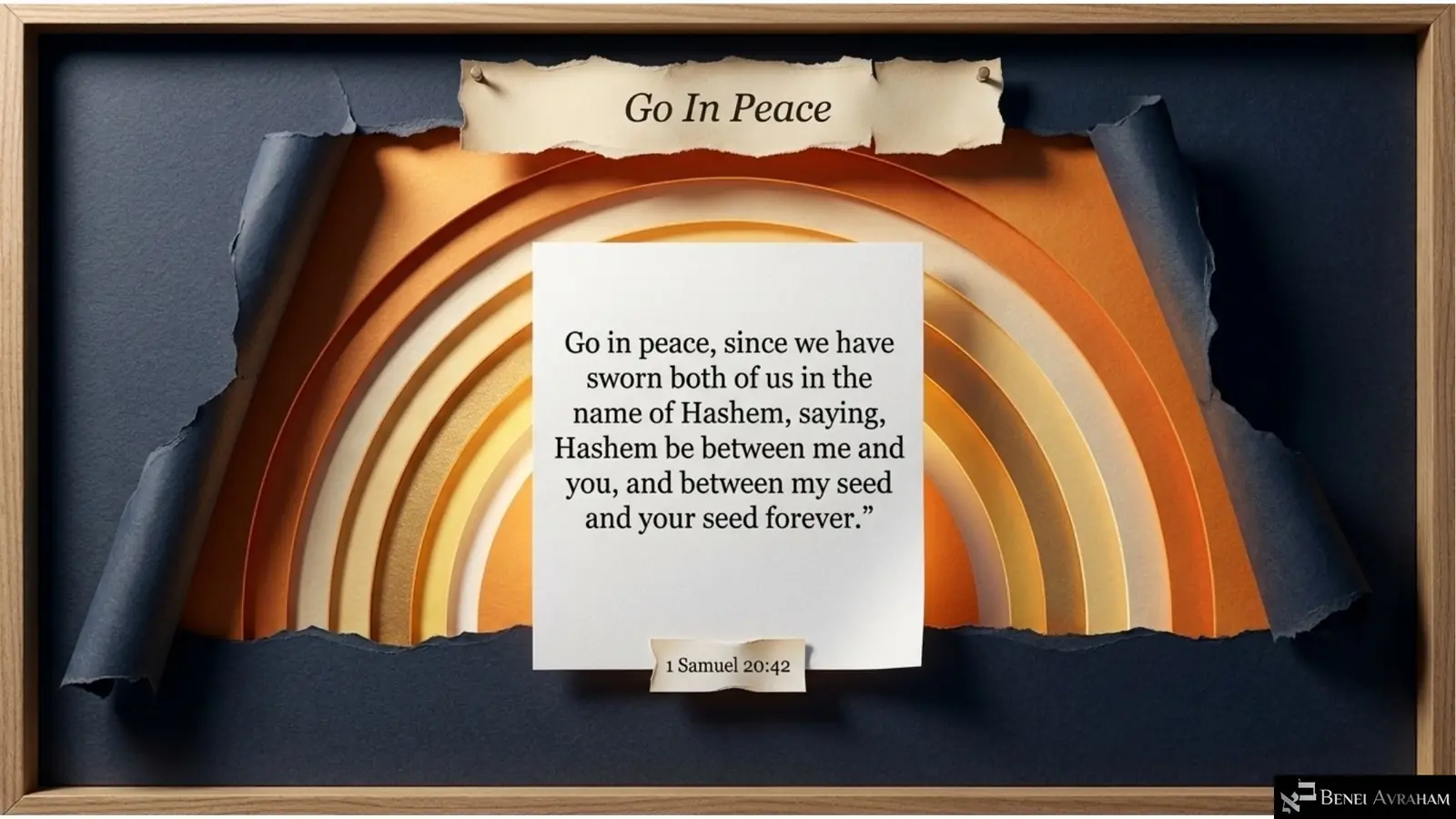
Go in peace (1 Samuel 20:42)
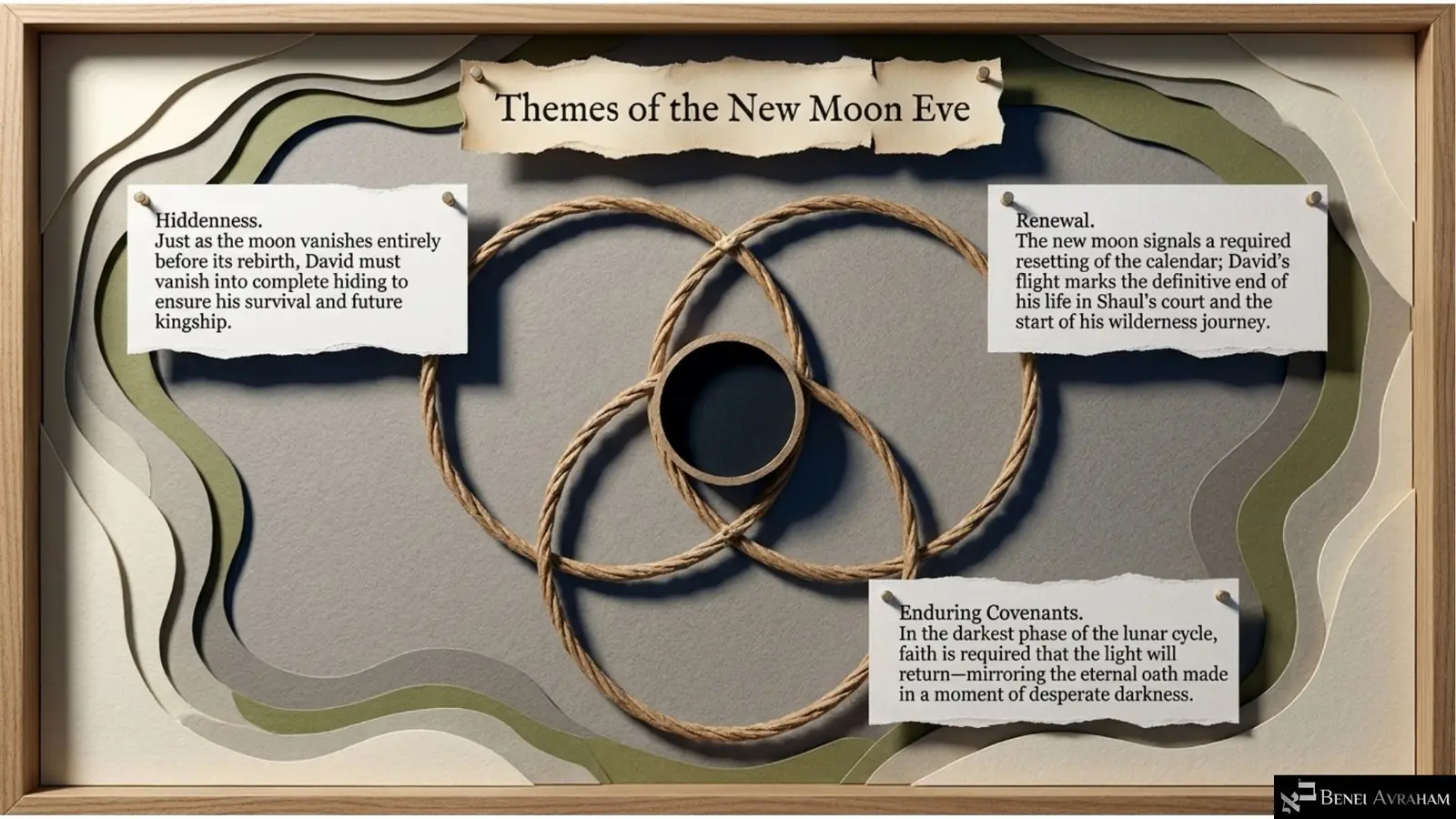
Themes of the New Moon eve: hiddenness, renewal, enduring covenants